Unfortunately, deliberate practice is not easy to obtain in
medicine due to the intrinsic hazards and complexities of
patient care.
While this approach allows for a self-contained, highly mobile solution, it tends to result in an expensive solution that is not easily scalable.
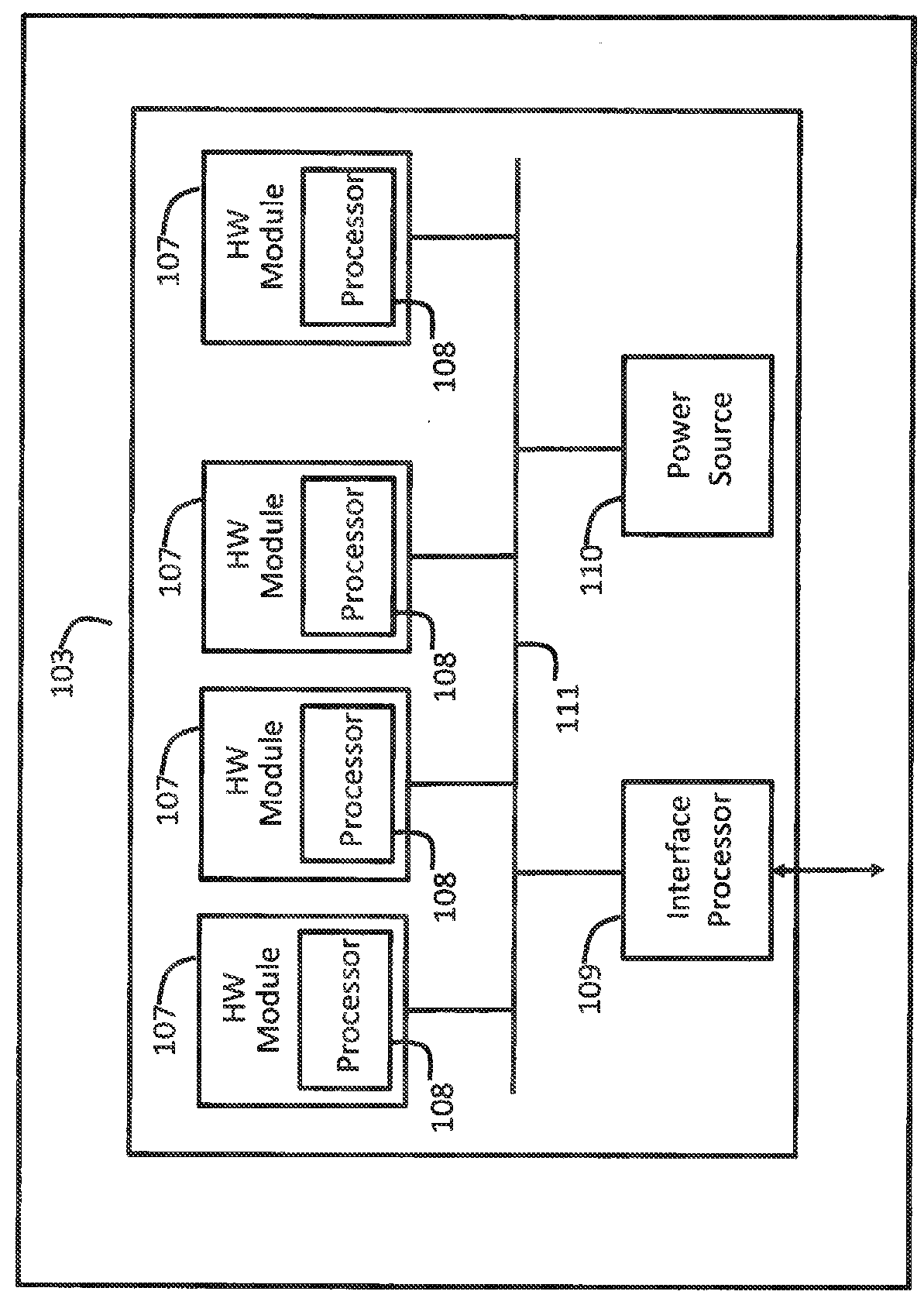
Special components need to be selected or designed to fit within the manikin, thereby limiting flexibility in the implementation and increasing cost.
In addition, these
embedded system components take up valuable space in the manikin that could be used to house modules to provide more training options.
Organizations providing
medical training (e.g., hospitals, medical schools, and
nursing schools) frequently have a mix of these manikin based simulator products to satisfy
training needs which results in significant cost,
physical space requirements, and maintenance difficulties.
Additionally, there is a large gap in the mid-range of the price and performance curve for medical simulators.
Thus, users are often forced to choose between low to mid-priced products focused on procedural training or high-end expensive products focused on
cognitive training.
There is very little compatibility and
interoperability between products, and there is limited
modularity and configurability of individual products.
For example, physical
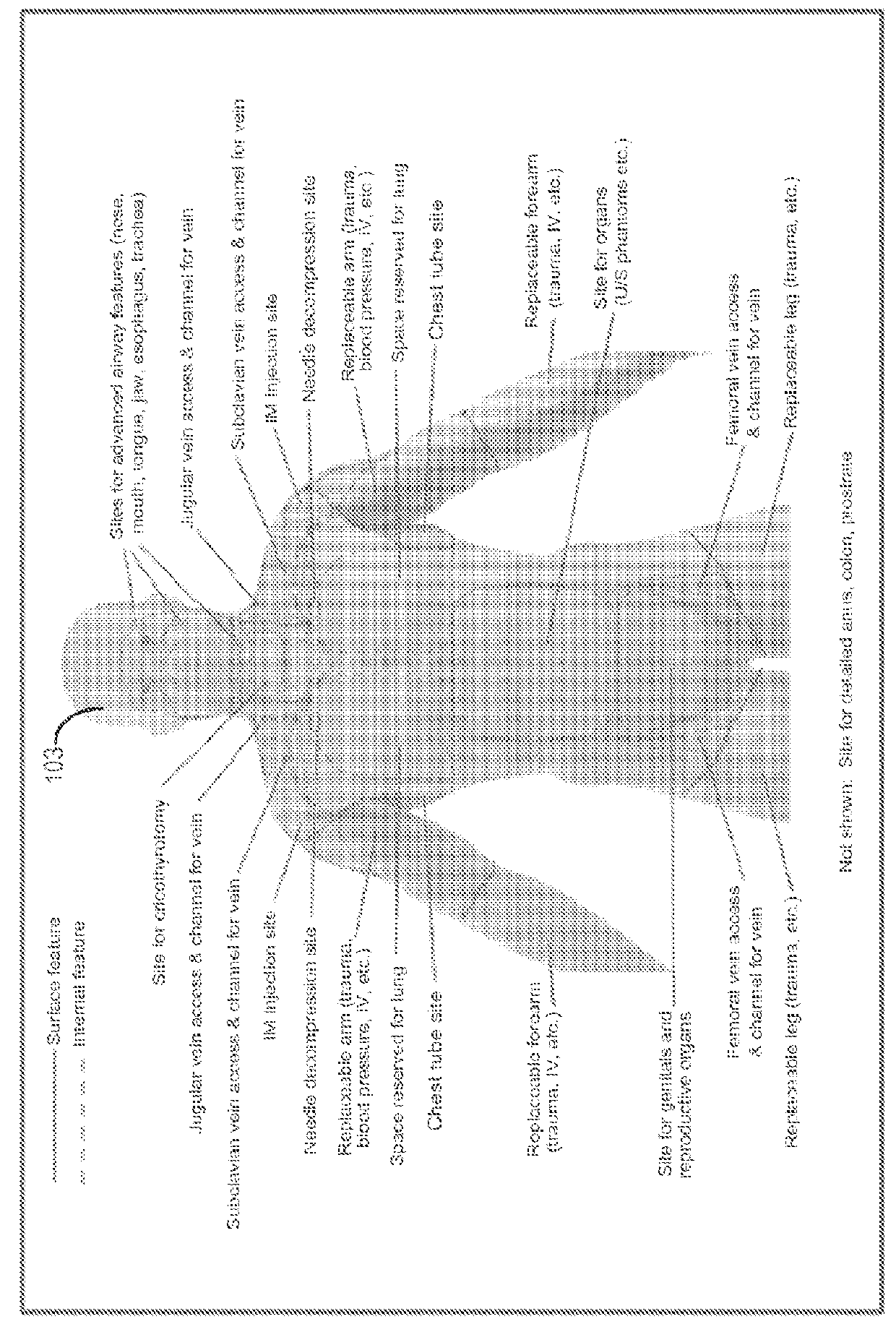
modularity in current products is typically limited to optional limbs (e.g., IV arm,
blood pressure arm, trauma limbs, etc.) or interchangeable genitalia.
As a result, simulators cannot be interchanged or easily configured for different
training needs to provide an open system having both physical and
software modularity manufacturers to be interchanged.
Any circuitry included for future functions typically adds cost and size to the core
electronics and may not get utilized.
Each
actuator or sensor typically needs to be plugged into a specific location in the
electronics adding to the complexity.
Another common issue in manikin based medical simulators is the generation of body sounds, such as heart, lungs, and bowel sounds.
However, this approach has many drawbacks and limitations.
For example,
sound quality can be poor due to resonances and vibrations in the manikin, and the low-end
frequency response can be poor due to limited speaker size.
In addition, localizing sounds to a particular area of the manikin can be difficult since sounds travel within the manikin.
Further,
noise from other system components, such as motors and solenoids, can easily be picked up with the
stethoscope.
In addition, a special
stethoscope must be used that is capable of receiving the transmitted sound or control signals which further increases the cost and complexity of the system.
Additionally, this technique requires constant attention from an instructor and prohibits standalone use by a trainee.
However, the realism and cost of these simulated physiological functions varies greatly depending on the particular implementation.
However, the compressor or pump adds significant cost, increases
power consumption, and can create undesirable
noise.
In addition, valves need to be used if the different pulse points need to be control separately, thereby adding to the cost and complexity of the implementation.
However, the resulting pulse tends to feel artificial due to the rigidity of the simulated
artery and / or the vertical movement, rather than a flowing and expanding movement.
This design also produces chest motion during compression that is not natural and limits the way that breath motion can be simulated.
Thus, none of the above described techniques produce a reliable, cost-effective and automatic means of creating realistic body sounds, pulses, and
breathing motions, More generally, the preceding examples serve to illustrate that there is a substantial body of open-source, publicly available material to provide the mathematical models and parameters describing physiological behaviors.
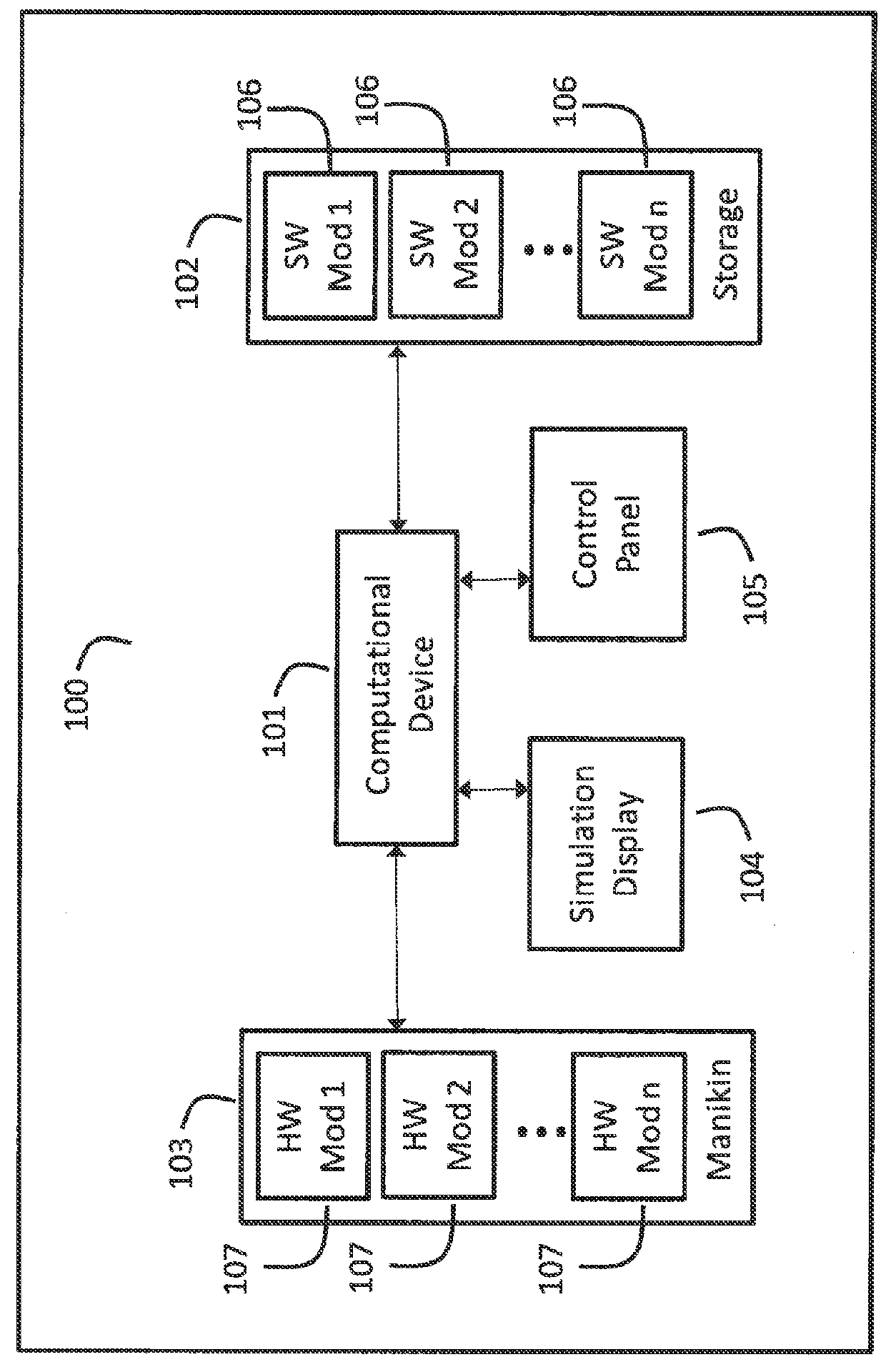
However, what is missing is a common platform that allows integration and
interoperability between models, tools that allow users to easily modify and test models within an integrated system, and integration with flexible and scalable output devices.


 Login to View More
  Login to View More