
Asymmetrical hydrogenation reaction of ketonic acid compound
a hydrogenation reaction and ketonic acid technology, applied in the field of ligand chemistry, can solve the problem that chiral catalysts actually obtained a little bad catalytic
- Summary
- Abstract
- Description
- Claims
- Application Information
AI Technical Summary
Benefits of technology
Problems solved by technology
Method used
Image

Examples
example 1
Preparation of 2-hydroxyl-2-phenyl acetic acid
[0030]
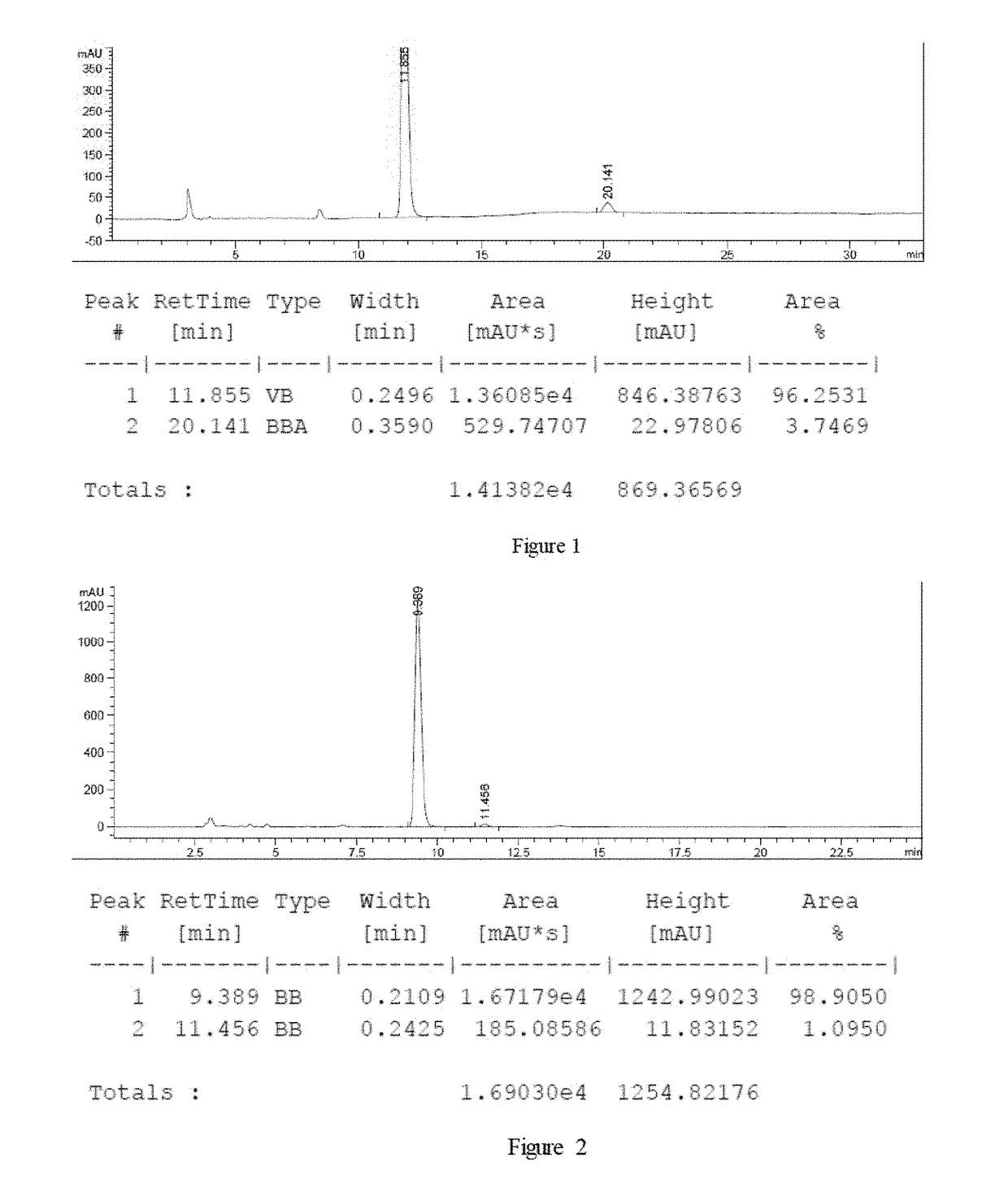
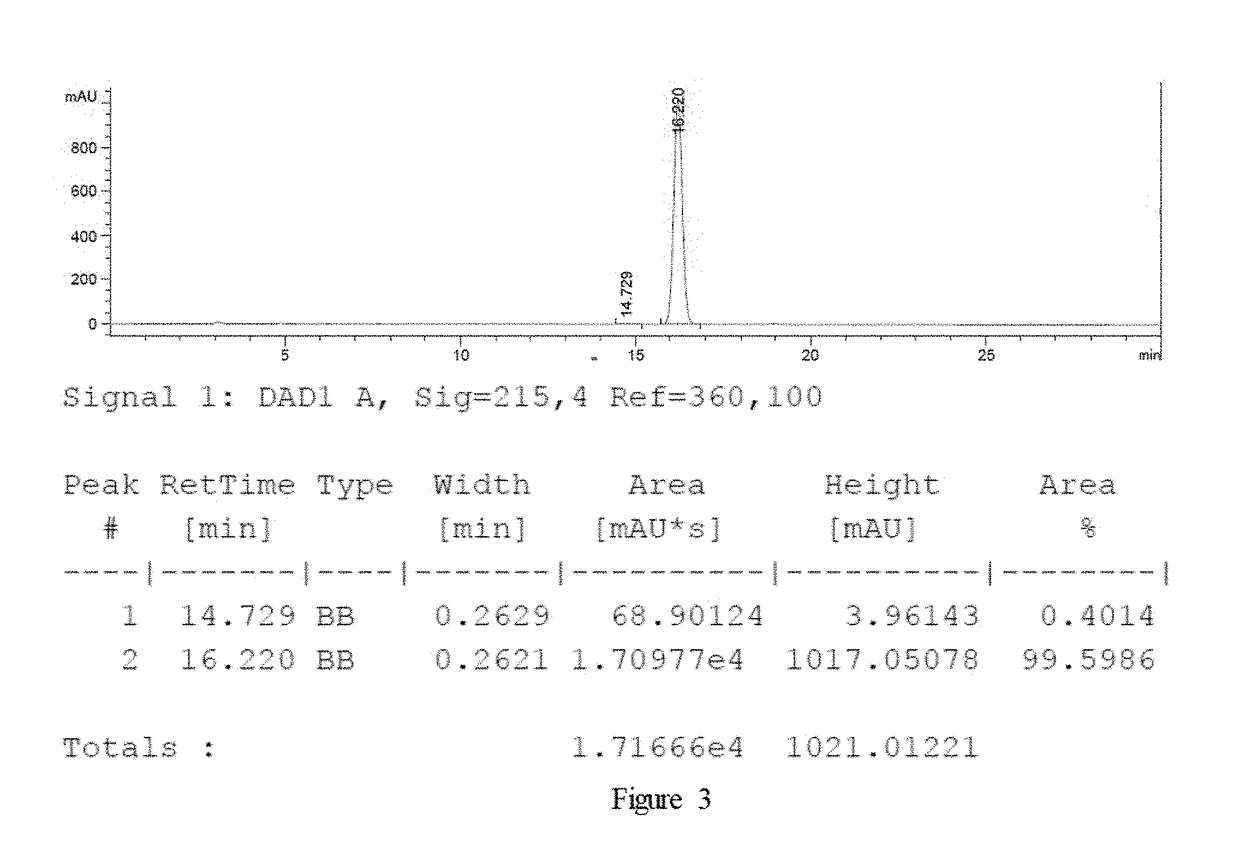
[0031]Under the protection of nitrogen atmosphere, to the inner hydrogenation tube (200 mL), were added substrate ∂-ketonic acid 2a (3 g, 20 mmol), potassium tert-butyl oxide (112 mg, 1 mmol), catalyst M (20 mg, 0.02 mmol, R=3-methyl) and solvent (50 mL). The inner reaction tube was placed into the hydrogenation reactor. After substitution by hydrogen, with hydrogen filled to a pressure of 15atm, the reaction was stirred under the hydrogen pressure at room temperature for 24 hours. After the hydrogenation was finished, release hydrogen, and open the hydrogenation reactor. The reaction solution was filtered through a short silica gel column to remove the catalyst, and the conversion rate and yield of the reaction were analyzed by nuclear magnetic resonance (NMR). And the optical purity of the product was analyzed after derived to methyl ester compound. The results are listed as table 1.
The experimental results of Example 2-15 in the...
example 31
Preparation of (R)-2-hydroxyl-2-(2-chlorin phenyl) acetic acid
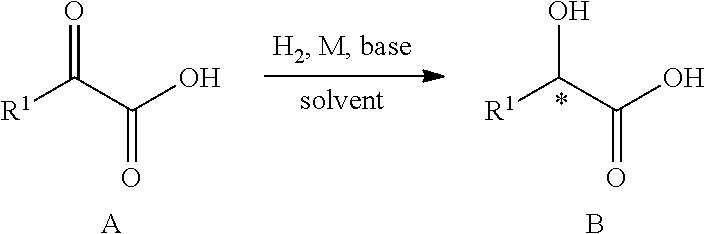
[0033]S / C=50000 Carry out the highly conversion experiment in accordance with the same method disclosed in Example 1.
example 32
Preparation of (S)-2-hydroxyl-2-phenyl acetic acid
[0034]
[0035]Under the protection of nitrogen atmosphere, to the inner hydrogenation tube (200 mL), were added substrate ∂-ketonic acid 2a (3 g, 20 mmol), potassium tert-butyl oxide (1.68 g, 30 mmol), catalyst 1c (20 mg, 0.02 mmol) and n-butanol(50 mL). The inner reaction tube was placed into the hydrogenation reactor. After substitution by hydrogen, with hydrogen filled to a pressure of 30 atm, the reaction was stirred under the hydrogen pressure at room temperature for 10 hours. After the hydrogenation was finished, release hydrogen and open the hydrogenation reactor. The reaction solution was filtered through a short silica gel column to remove the catalyst, and the conversion rate and yield of the reaction were analyzed by nuclear magnetic resonance (NMR). The conversion rate is 100%. And the optical purity of the product was analyzed after derived to methyl ester compound. The optical purity is 84% ee.
PUM
| Property | Measurement | Unit |
|---|---|---|
| hydrogen pressure | aaaaa | aaaaa |
| temperature | aaaaa | aaaaa |
| pressure | aaaaa | aaaaa |
Abstract
Description
Claims
Application Information
 Login to View More