On the other hand, as administration of infusions continues, because a sudden rise in the concentration of a
drug within the blood increases the risk of occurrence of
anaphylactic shock,
cardiac arrhythmia, and other such side effects, there is a need for physicians and nurses to carefully continue to adjust infusion administration
dose while monitoring the condition of the patient.
However, carrying out administration by adjusting amount by means of injection is difficult, and as
administration time goes on and the number of administrations increases, the patient experiences an increasing amount of
bodily pain and is placed under an increasing amount of stress.
However, with a conventional infusion set, even where caution is exercised there is a risk that an infusion may leak from the tip of the needle at the downstream-most end of the infusion set during priming, or that an accident could occur in which a hospital room or a hospital wing becomes contaminated, and so there has been a need for a strategy to prevent such accidents.
However, while it may be true that the risk of
contamination during initial priming is relatively low, the structure of the foregoing proposed infusion set is such that it permits leakage of the dangerous
drug from below, and so from the standpoint of whether it adequately prevents leakage of dangerous drugs to the outside environment, there has been a need for further ingenuity.
Furthermore, because the structure is such that terminal portions of the infusion set are open, operations have been complicated inasmuch as there has been a need to exercise care with respect to procedural
discharge of
physiological saline solution or other such solution used during priming from said terminal portions, and inasmuch as there has been a need for priming, which itself comprises multiple procedural steps, to be carried out twice, and so forth.
In addition, even where adequate care is exercised with respect to procedural
discharge of liquid, there is a risk of occurrence of damage to equipment and / or contamination of the hospital room interior as a result of unintentional
spillage of the
physiological saline solution that is discharged therefrom onto the infusion set, the stand, the equipment used to carry out intravenous
drip infusion, and / or the floor of the hospital room.
Furthermore, with a conventional infusion set, where a plurality of anticancer agents were administered, it has been necessary to remove used infusion container(s) from the infusion set and replace these with different infusion container(s), and so it has been entirely possible for contamination to occur due to the small amount of liquid which remains in spike(s) and / or connector portion(s).
However, particularly in conventional infusion sets such as those in which a plurality of sets of secondary tubing are arranged in advance, there has been a tendency for balance to become upset and there has been a risk of occurrence of accidents in which tubing at the plurality of sets of secondary tubing that have been arranged in advance gets caught on
peripheral equipment and / or the physician, nurse, or
pharmacist responsible for carrying out procedures and so forth.
Furthermore, even where the patient, physician, nurse, and
pharmacist have paid adequate attention with the intention of avoiding situations in which the infusion set tubing itself becomes twisted or tension acts thereon, there has been a tendency toward occurrence of pain at the location where the
drip infusion is inserted and: or other such
bodily pain on the part of the patient, and in situations where an intravenous drip needle inserted beneath the
skin has moved, causing anticancer agent solution to leak outside the
blood vessel, or further tension or forcible twisting has acted thereon, there has been an extremely large amount of stress during use, inasmuch as there has been a risk of occurrence of accidents in which the intravenous drip needle could become dislodged from the arm of the patient and / or the like.
For this reason, mixups with respect to the order in which spikes pierce containers,
confusion as to which infusion line should be used for different anticancer agent solutions, mistaken order of administration, and other such accidents can easily occur.



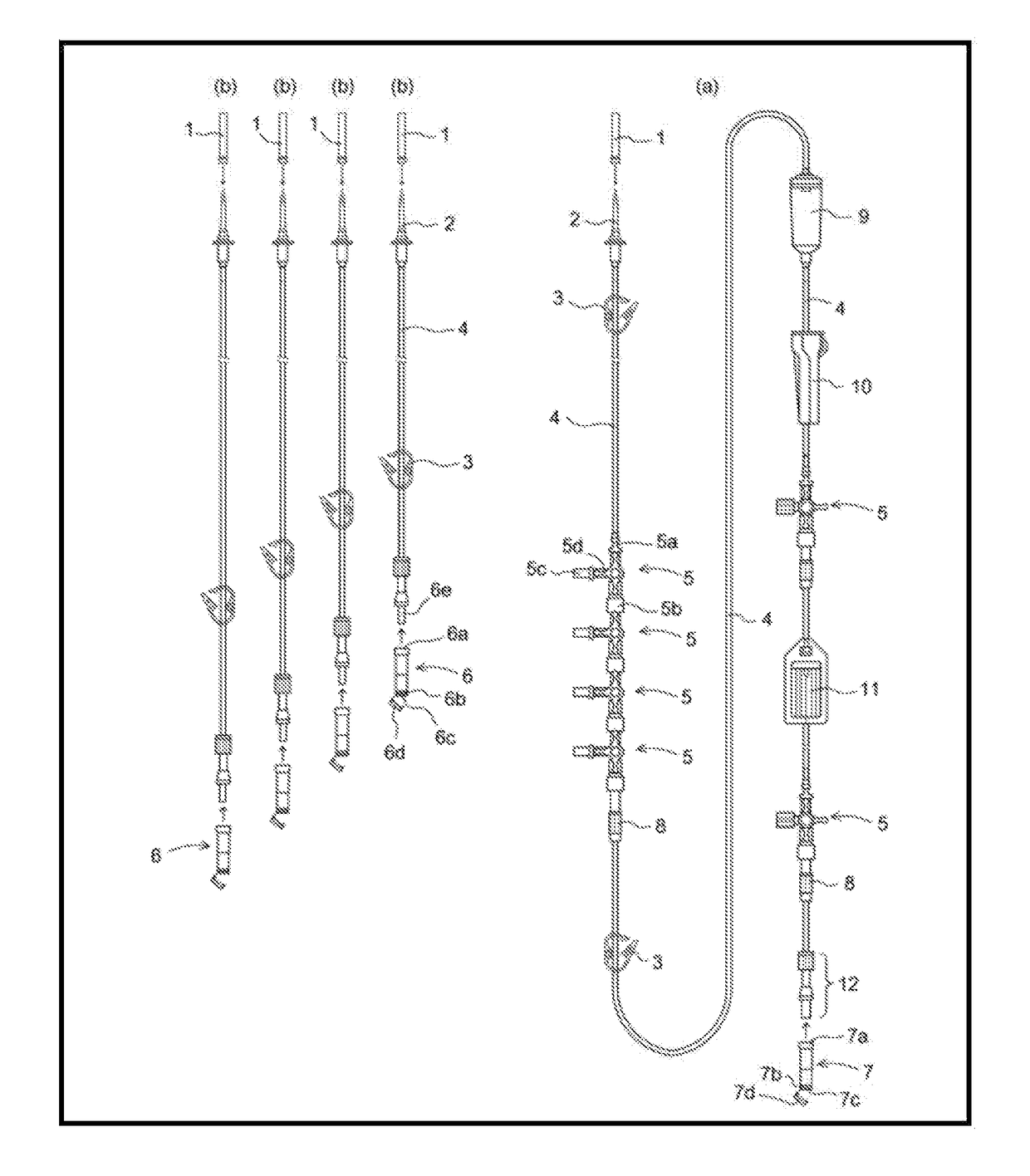
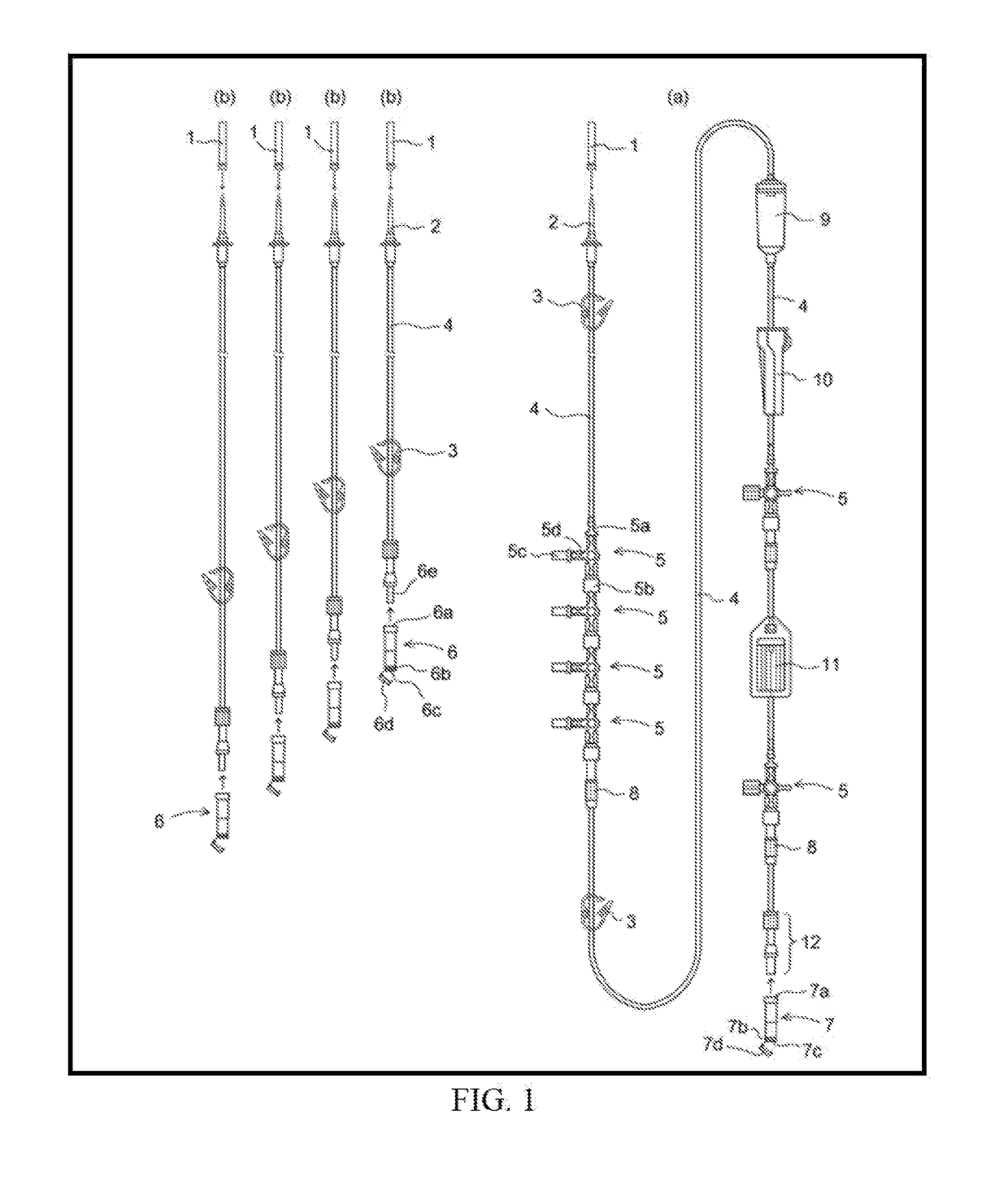
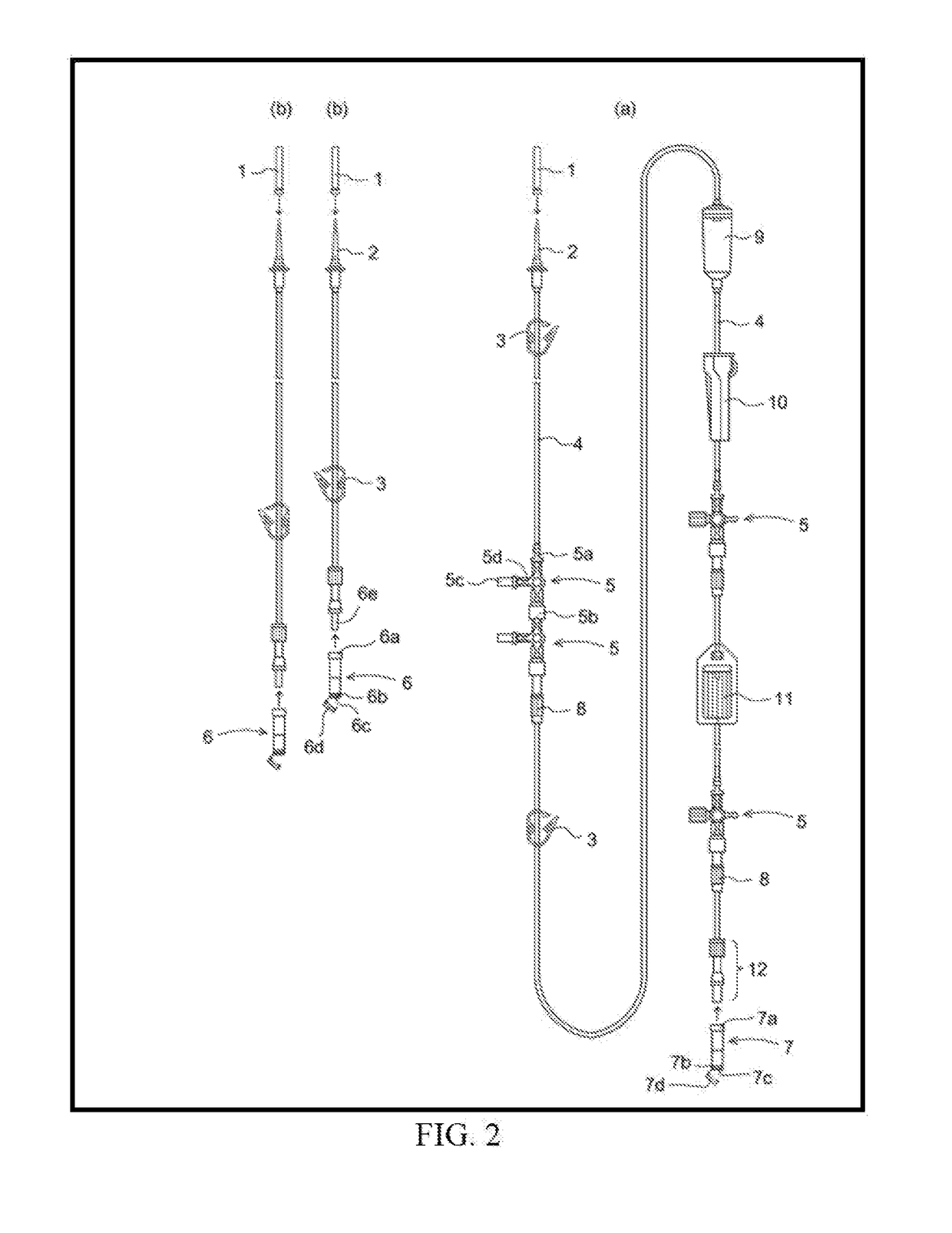
 Login to View More
  Login to View More