Weld electrode plugs with polymeric inserts for loss-of-cooling detection in welding systems

a technology of polymeric inserts and welding electrodes, applied in the direction of cooled electrodes, valve operating means/release devices, manufacturing tools, etc., can solve the problems of significant heat energy transfer to the cap, discrepant welds and damage to the cap and shank, and detectable leakage of fluid from the shank bore, so as to reduce the number of discrepant welds, reduce the number of electrode damage, and reduce the effect of cooling loss

US20190099830A1Active Publication Date: 2019-04-04GM GLOBAL TECH OPERATIONS LLC
5 Cites 2 Cited by

Patent Information

Authority / Receiving Office
US · United States
Patent Type
Applications(United States)
Current Assignee / Owner
Publication Date
2019-04-04

Smart Images

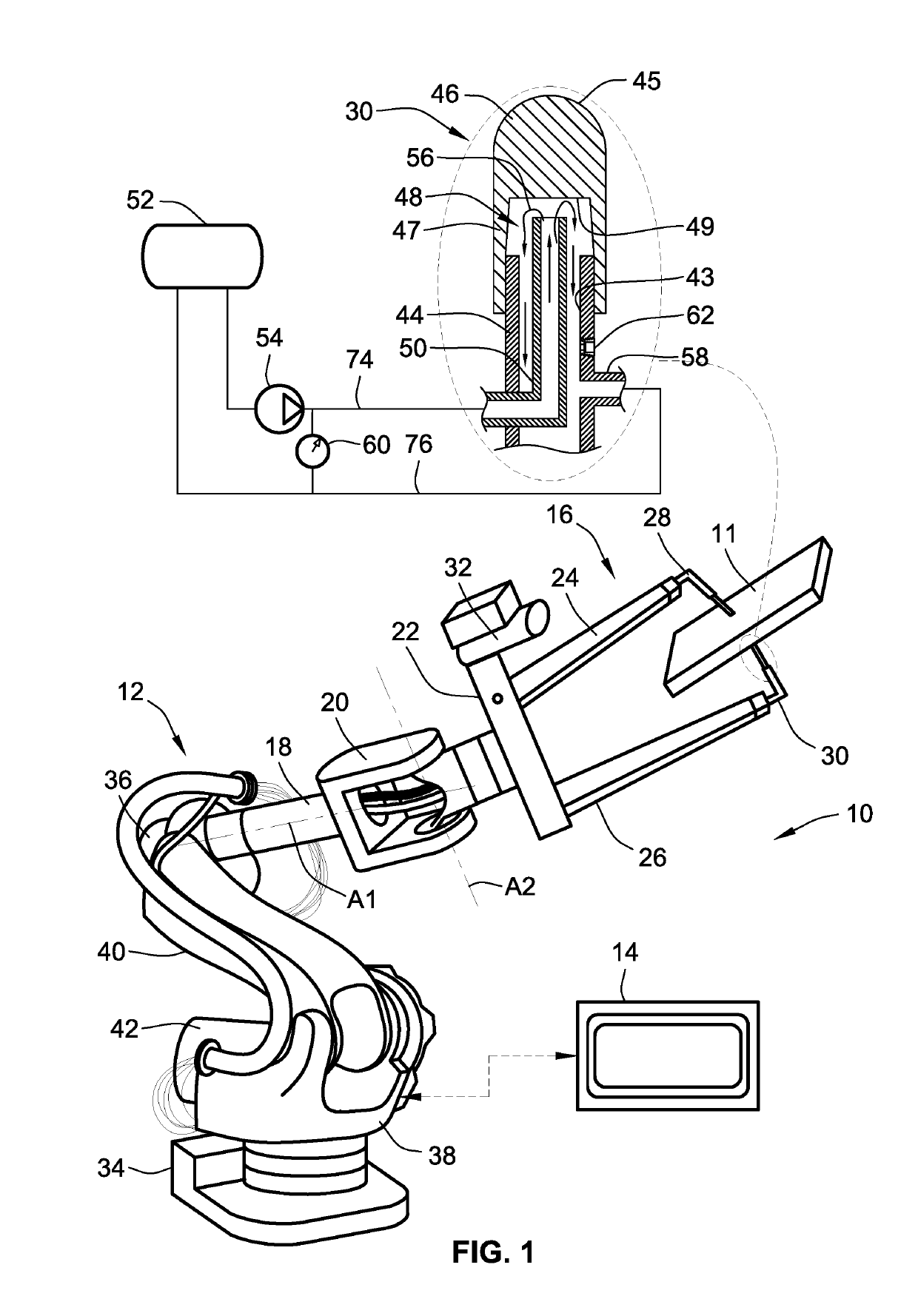
  • Figure 1
    Figure 1
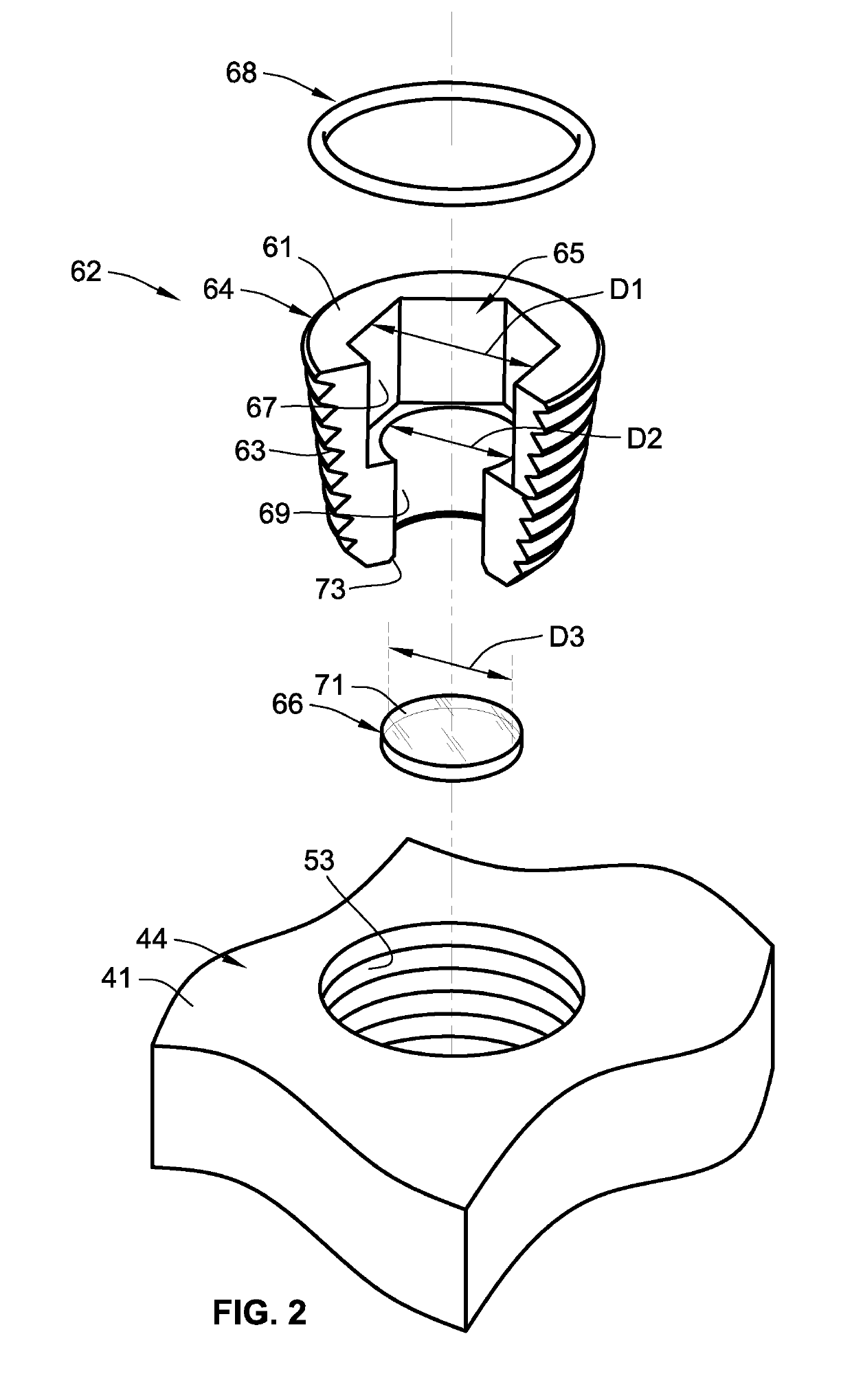
  • Figure 2
    Figure 2
Patent Text Reader

Abstract

Disclosed are weld electrode plugs with polymeric inserts for loss-of-cooling detection, methods for making or for using such weld electrode plugs, and electric welding systems equipped with loss-of-cooling detection plugs. A disclosed loss-of-cooling detection assembly includes a plug that attaches to the weld shank of a welding system such that the plug fluidly couples to a coolant bore within the shank. The plug includes a plug body with a clearance hole extending therethrough. An insert detachably mounts to the plug such that the insert fluidly seals the clearance hole. This insert is fabricated from a polymeric material, such as a shape memory polymer, that alters a physical property, such as shape / size, of the insert responsive to changes in temperature and / or pressure of coolant fluid in the shank's bore. When this physical property is altered, the insert unseals the clearance hole causing a detectable leak of fluid from the shank.
Need to check novelty before this filing date? Find Prior Art

Description

INTRODUCTION

[0001] The present disclosure relates generally to welding techniques for joining multiple workpieces or operating on a single workpiece. More specifically, aspects of this disclosure relate to systems, methods, and devices for detecting loss of cooling in a fluid-cooled weld electrode of a resistance welding system.

[0002] Welding is a manufacturing, sculpting, and repair process that bonds materials, usually metals or thermoplastics, by causing coalescence—the process by which two separate units or adjacent sections of a single unit grow together, fuse, or merge into a single body / section. In a joining operation, two workpieces are fused together by liquefying or plasticizing (softening without liquefying) the areas to be bonded together, generally through the application of heat and / or pressure. For some welding techniques, a filler material is added to form a localized pool of molten material (a “weld puddle”). Promoting coalescence of the liquefied or plasticized mater...

Examples

Embodiment Construction

[0014]This disclosure is susceptible of embodiment in many different forms. There are shown in the drawings and will herein be described in detail representative embodiments of the disclosure with the understanding that these illustrated examples are provided as an exemplification of the disclosed principles, not limitations of the broad aspects of the disclosure. To that extent, elements and limitations that are described, for example, in the Abstract, Summary, and Detailed Description sections, but not explicitly set forth in the claims, should not be incorporated into the claims, singly or collectively, by implication, inference or otherwise. For purposes of the present detailed description, unless specifically disclaimed: the singular includes the plural and vice versa; the words “and” and “or” shall be both conjunctive and disjunctive; the word “all” means “any and all”; the word “any” means “any and all”; and the words “including” and “comprising” and “having” mean “including ...