
Silicon carbide semiconductor device and method of manufacturing silicon carbide semiconductor device
- Summary
- Abstract
- Description
- Claims
- Application Information
AI Technical Summary
Benefits of technology
Problems solved by technology
Method used
Image

Examples
Embodiment Construction
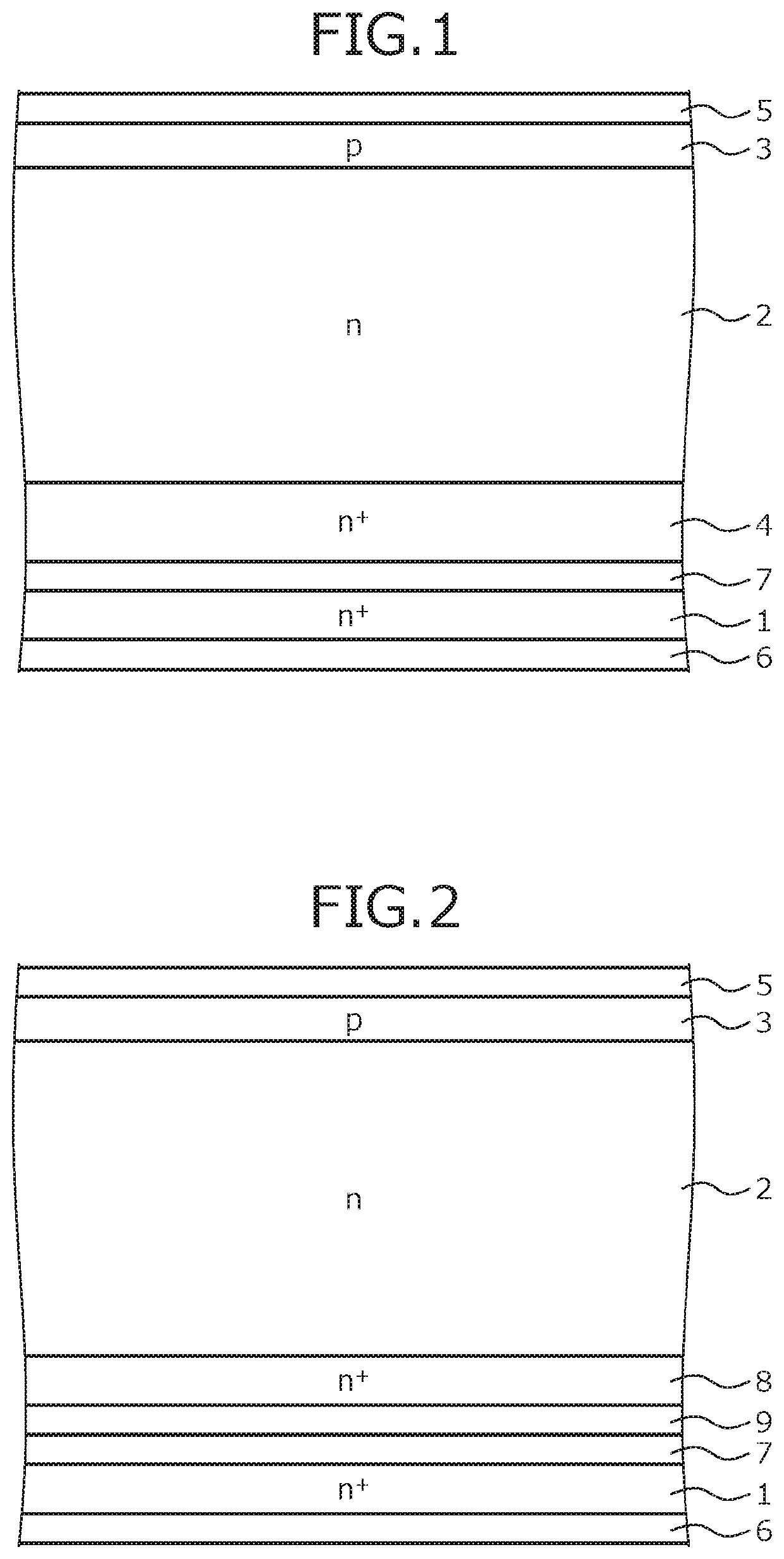
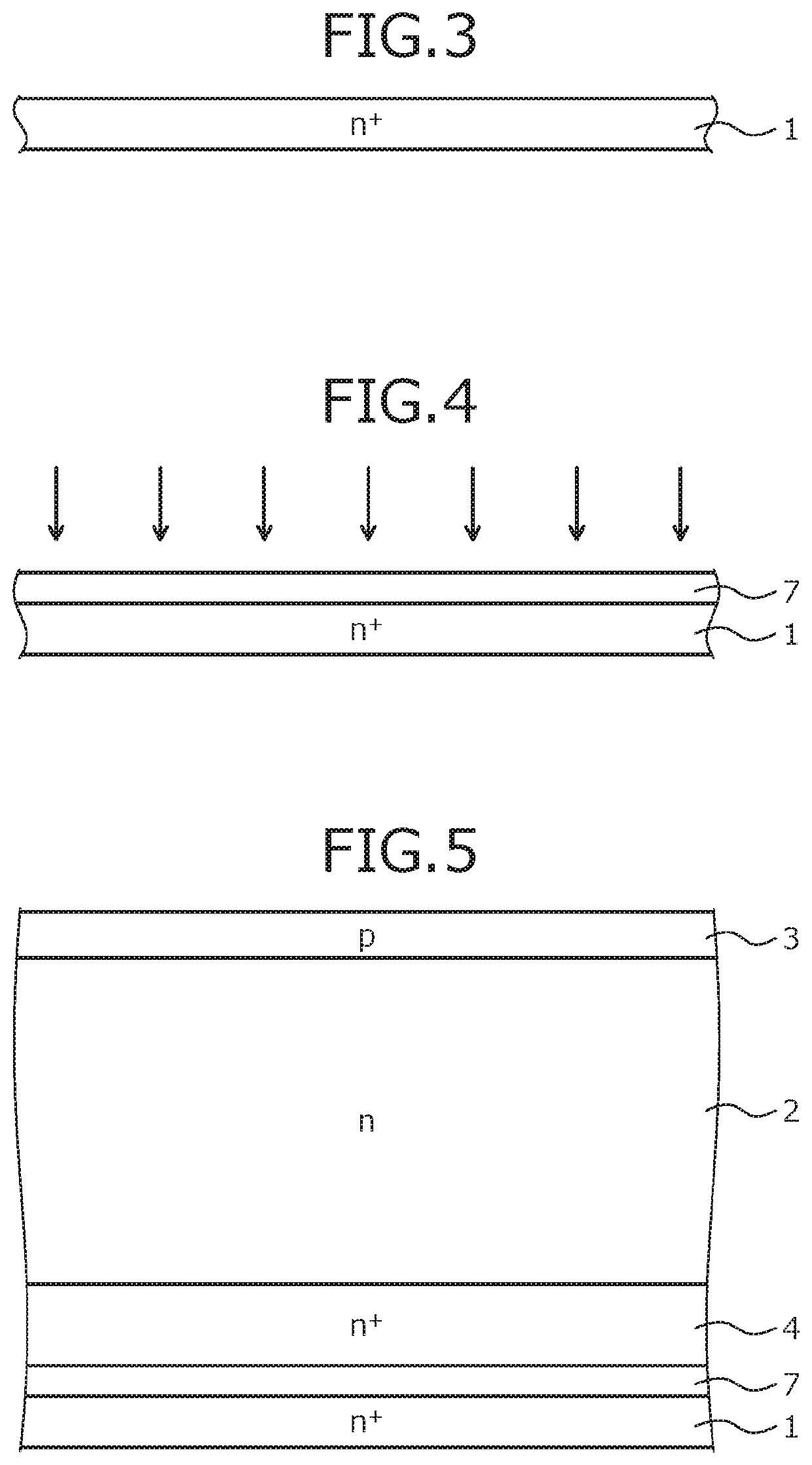
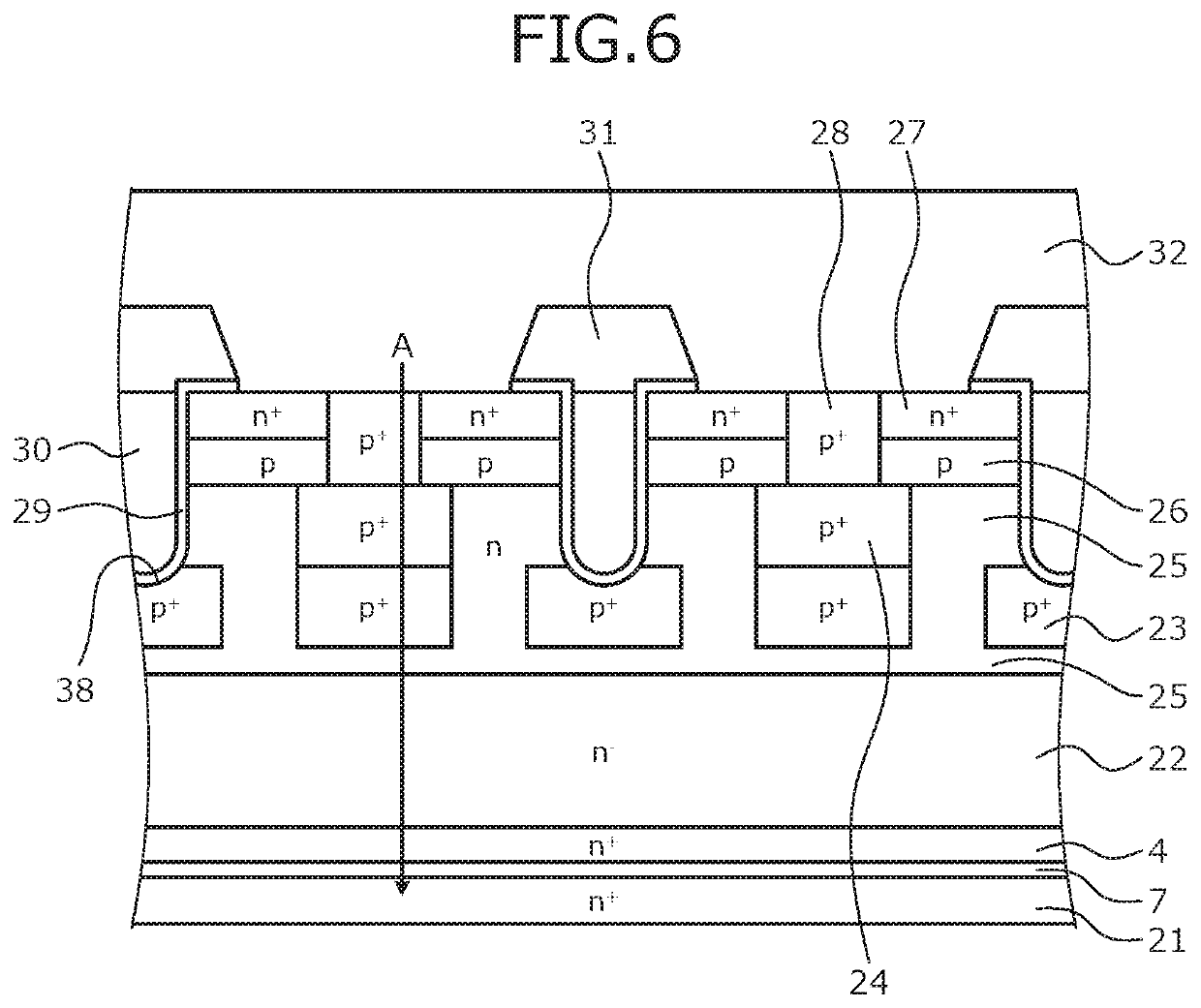
[0025]First, problems associated with the conventional techniques will be discussed. Forming the high-concentration nitrogen layer to have a uniform impurity concentration and a uniform film thickness is difficult. Furthermore, when the nitrogen concentration is too high at 2×10¹⁹ / cm3 or higher, double Shockley stacking faults (DSFs) occur. Therefore, there is a limit to suppressing the occurrence of Shockley stacking faults due to the high-concentration nitrogen layer.
[0026]Further, in the co-doped layer, after the formation of the co-doped layer, the different co-doped element may remain in a reactor (hereinafter, epi-growth reactor) of epitaxial growth equipment and management of impurities in the epi-growth reactor is difficult. This becomes particularly problematic when in the same epi-growth reactor, a drift layer of a long-lifetime such as the n-type silicon carbide layer 102 is formed successively after a buffer layer of a short-lifetime like the short-lifetime layer 104. Fu...
PUM
 Login to View More
 Abstract
Description
Claims
Application Information
 Login to View More