
Redundancy system and method
a technology of redundancy plan and redundancy plan, which is applied in the direction of automatic control system, process and machine control, instruments, etc., can solve the problems of plurality of plural computing devices being incapable of operating autonomous vehicles, etc., and achieves lower speed operation and high speed operation
- Summary
- Abstract
- Description
- Claims
- Application Information
AI Technical Summary
Benefits of technology
Problems solved by technology
Method used
Image

Examples
Embodiment Construction
[0020]Autonomous Vehicle Overview
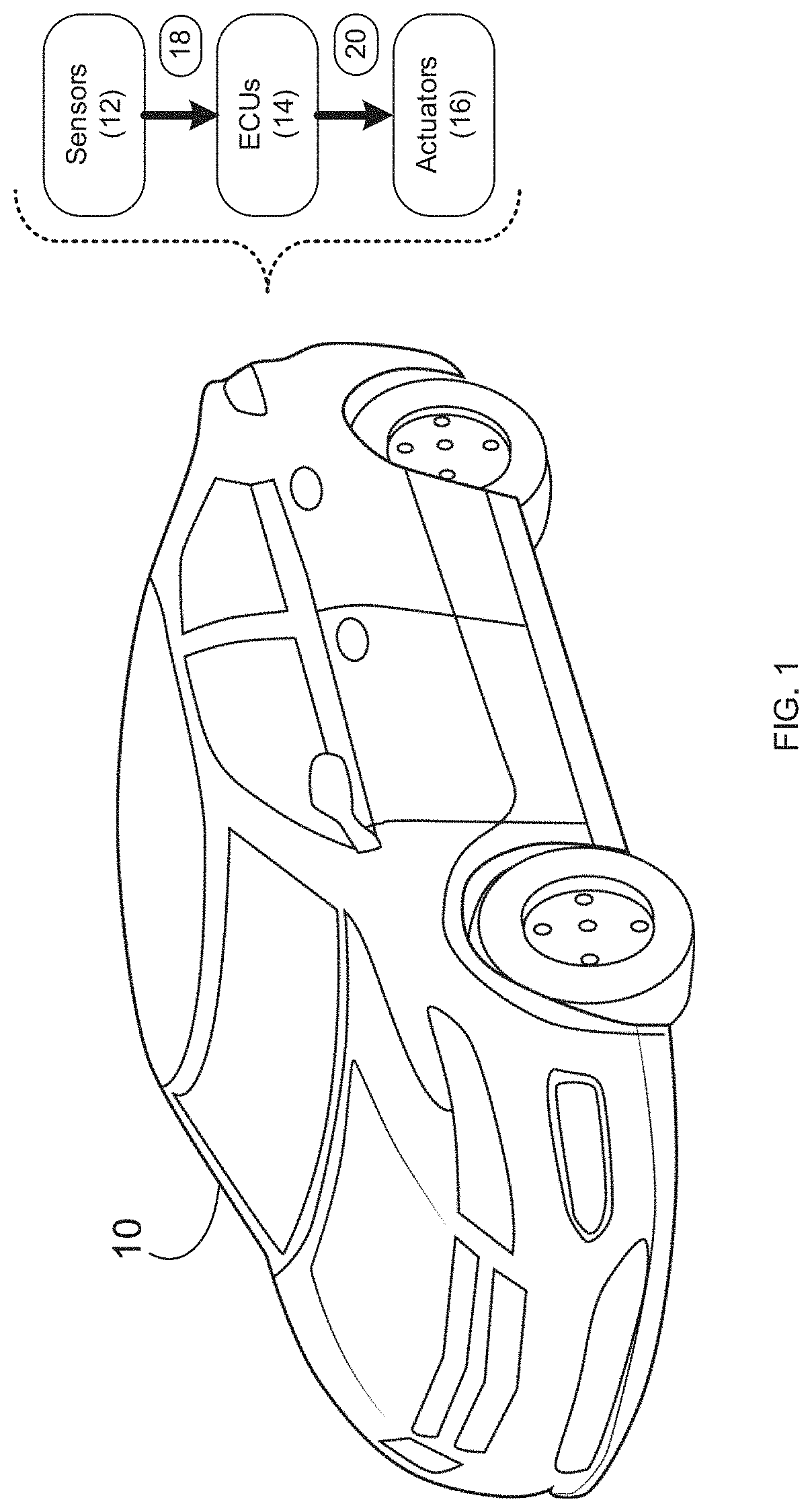
[0021]Referring to FIG. 1, there is shown autonomous vehicle 10. As is known in the art, an autonomous vehicle (e.g. autonomous vehicle 10) is a vehicle that is capable of sensing its environment and moving with little or no human input. Autonomous vehicles (e.g. autonomous vehicle 10) may combine a variety of sensor systems to perceive their surroundings, examples of which may include but are not limited to radar, computer vision, LIDAR, GPS, odometry, temperature and inertial, wherein such sensor systems may be configured to interpret lanes and markings on a roadway, street signs, stoplights, pedestrians, other vehicles, roadside objects, hazards, etc.
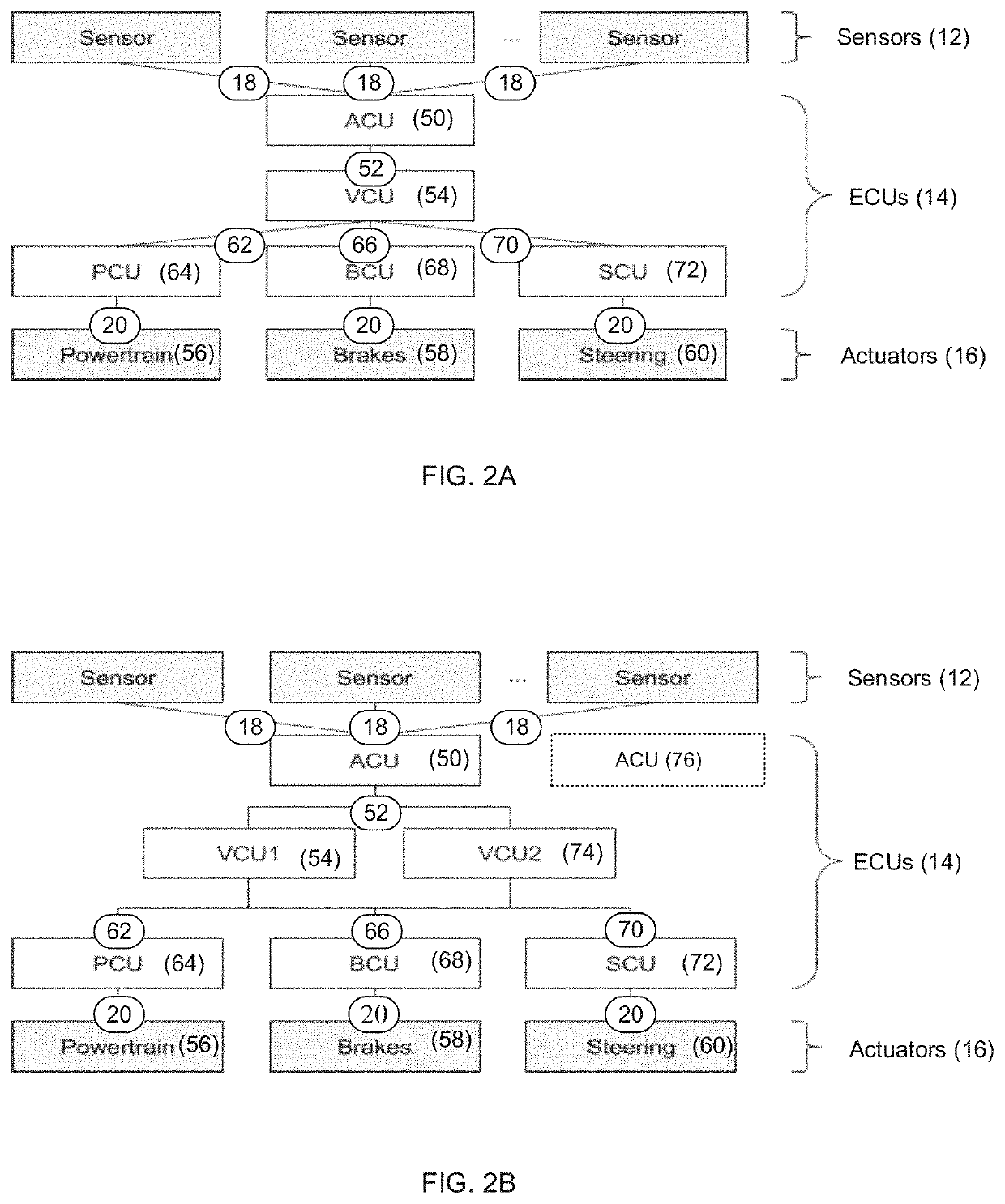
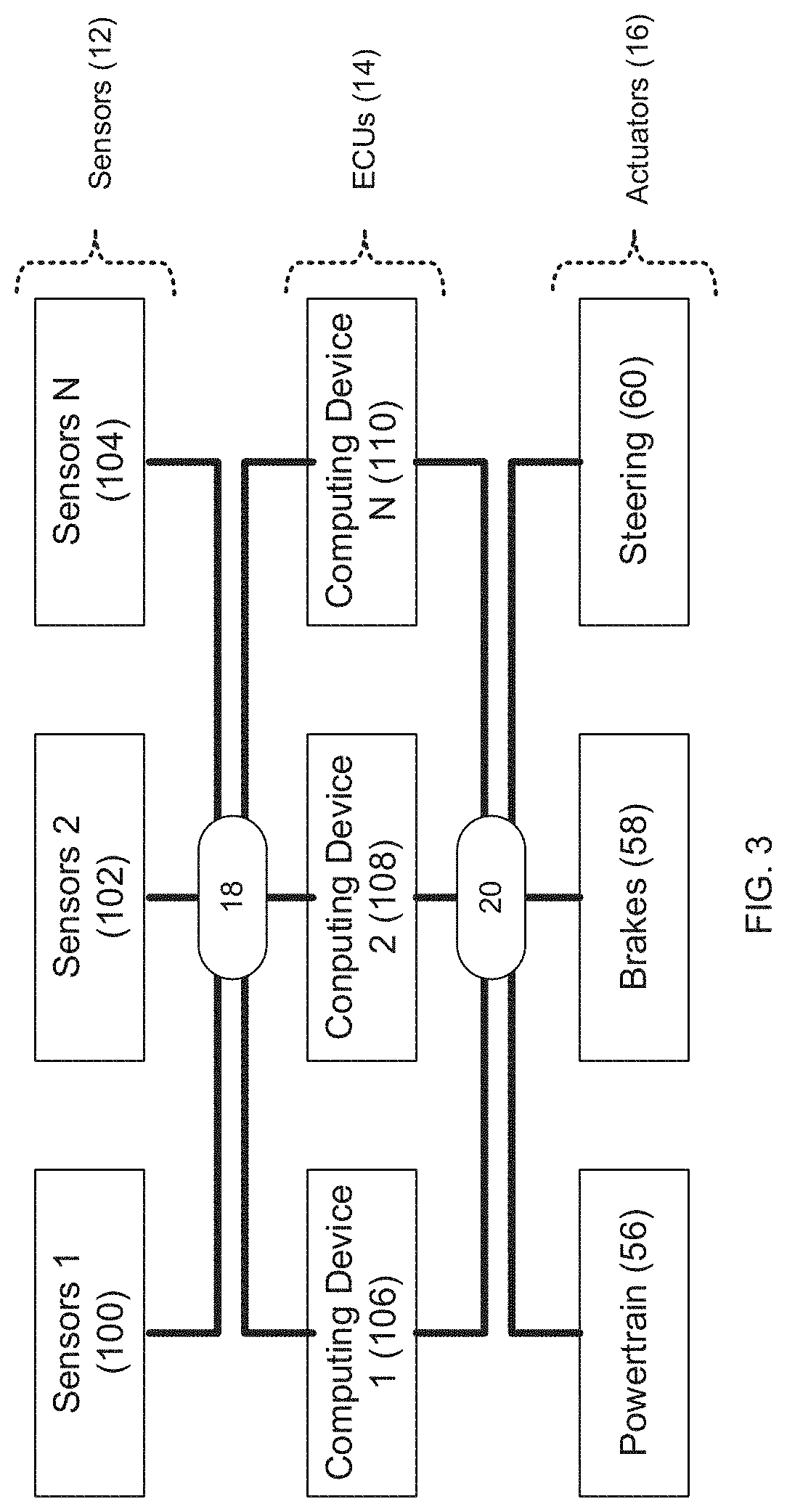
[0022]Autonomous vehicle 10 may include a plurality of sensors (e.g. sensors 12), a plurality of electronic control units (e.g. ECUs 14) and a plurality of actuators (e.g. actuators 16). Accordingly, sensors 12 within autonomous vehicle 10 may monitor the environment in which autonomous vehicle 10 is ...
PUM
 Login to View More
 Abstract
Description
Claims
Application Information
 Login to View More