

Fusion protein and nucleic acid molecule for exogenous stimulant-dependent stress granule assembly
a technology of exogenous stimulants and nucleic acids, which is applied in the direction of peptides, polypeptides with enzyme fusion, peptide sources, etc., can solve the problems of confounding studies, the dynamics of these structures, and the assembly and/or assembly of these structures
- Summary
- Abstract
- Description
- Claims
- Application Information
AI Technical Summary
Benefits of technology
Problems solved by technology
Method used
Image

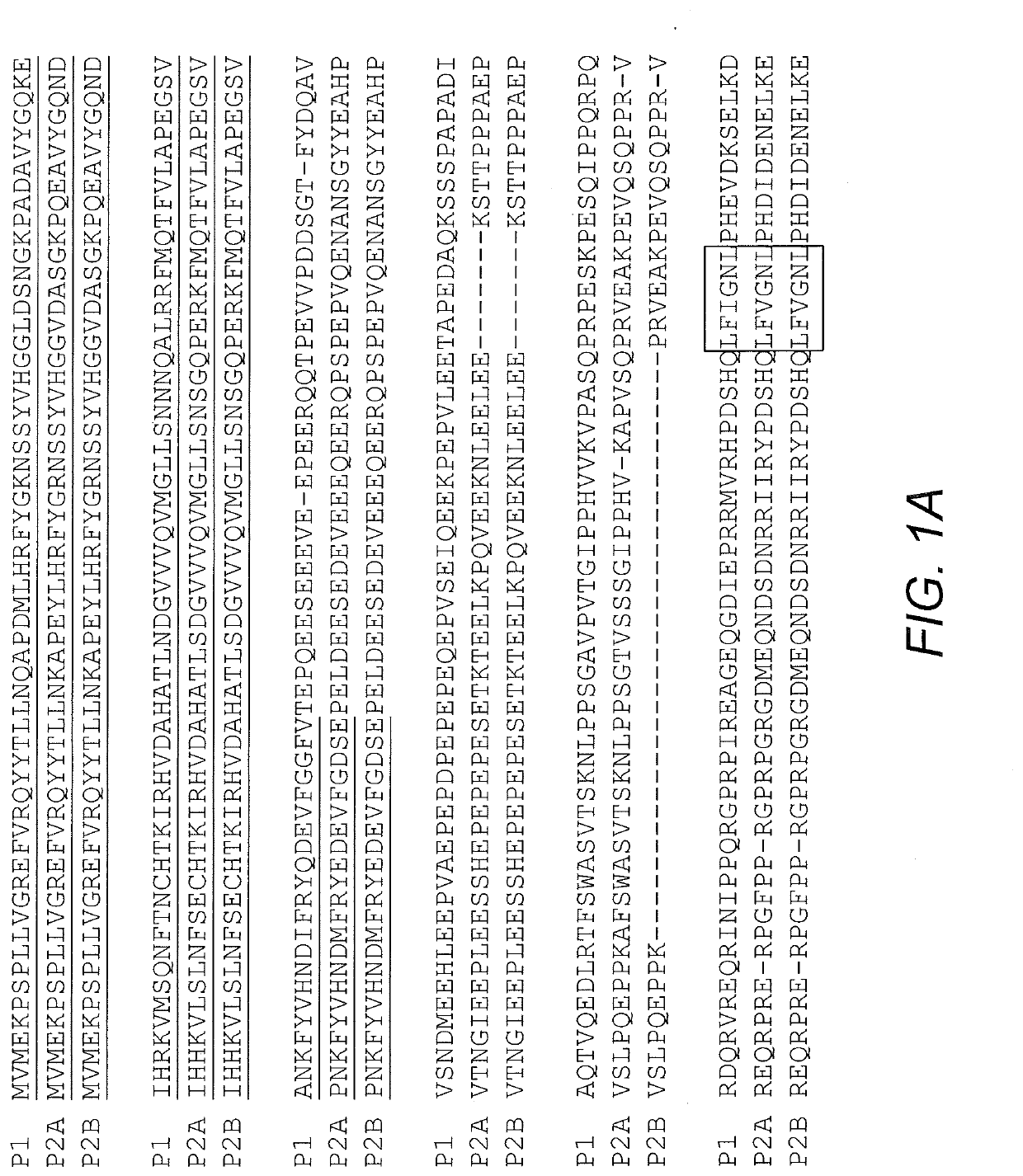
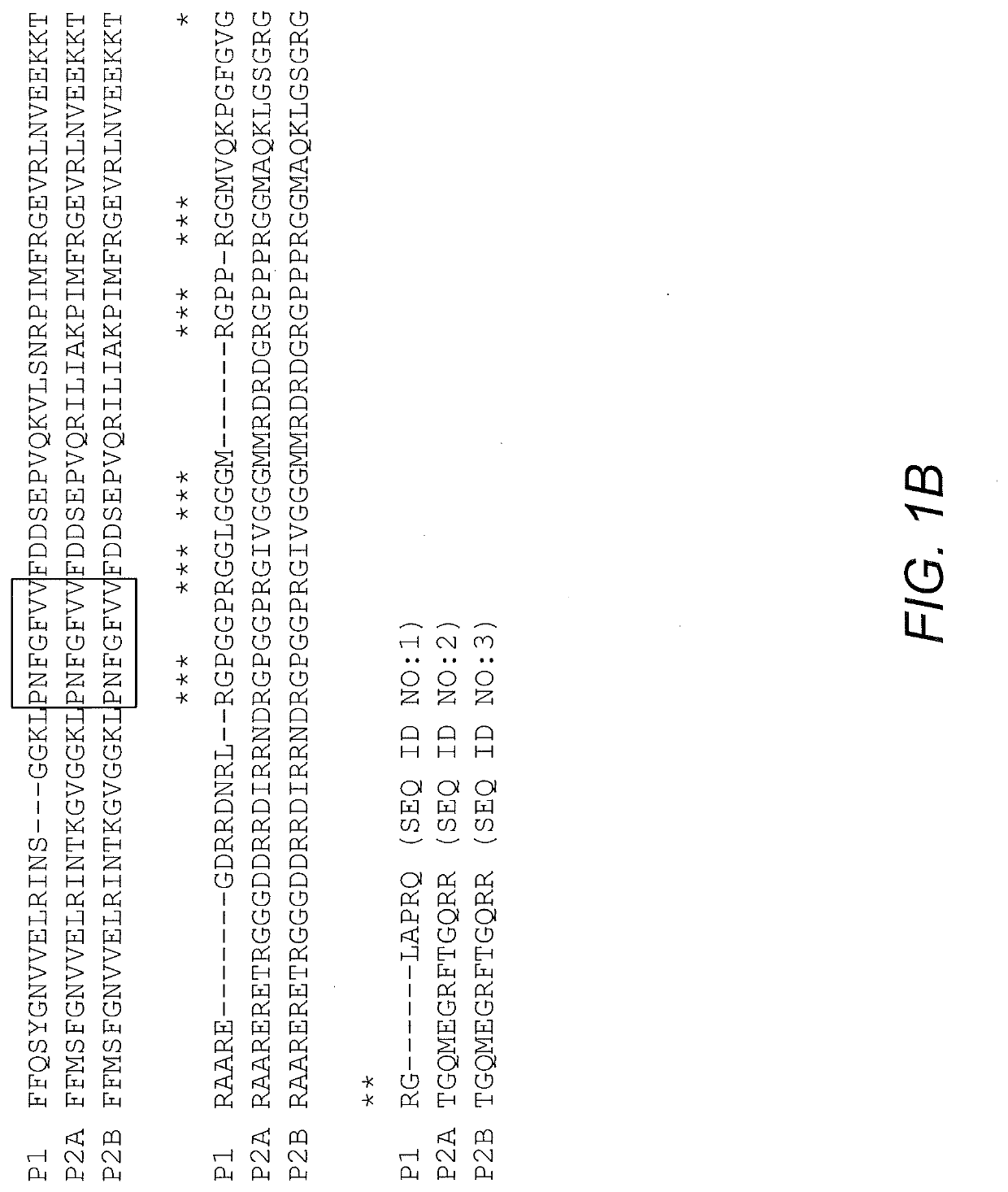
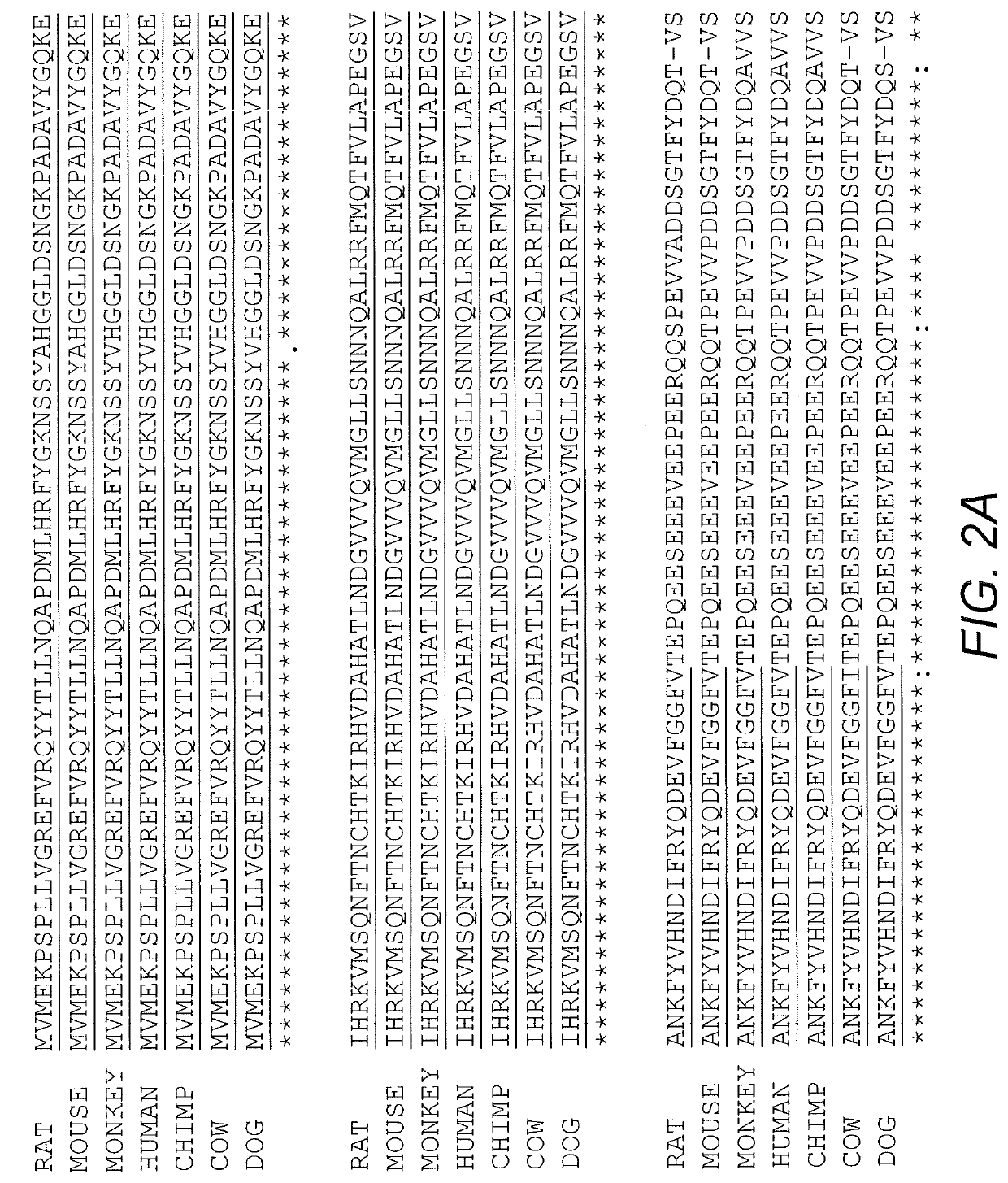
Examples
example 1
Wild-Type G3BP1 (G3BP1FL) with the Photolyase Homology Region of CRY2 (CRYPHR) Leads to Stress Granule Formation
[0056]N-terminal photolyase homology region (PHR) of Arabidopsis thaliana cryptochrome 2 (CRY2) simultaneously oligomerize upon blue light stimulation (Bugaj, et al. (2013) Nature Methods 10:249; Kennedy, et al. (2000) Nature Methods 7:973-5). Expression of CRY2PHR-mCherry alone in mammalian cells induces negligible visible cluster after blue light activation (Lee, et al. (2014) Nature Methods 11:633-636). Fusing Intrinsically Disordered (IDR) proteins to CRY2 causes reversible droplets in living cells upon blue light stimulation (Shin, et al. (2017) Cell 168:159-171). This system, termed OptoDroplets, creates membraneless organelles by switching on light-activated-proteins. Initially, it was determined whether OptoDroplets of FUS and TDP43 could incorporate the stress granule component G3BP1 into the droplets. This analysis indicated that G3BP1 could not be incorporated i...
example 2
nt of NTF2-Like Domain of G3BP1 (G3BP1D1-142) with CRYPHR Leads to Stress Granule Formation
[0058]G3BP is essential for stress granules assembly as condensate (Kedersha, et al. (2016) J. Cell Biol. 212:845). The NTF2-like domain of G3BP1 contributes to the stress granules formation by mediating oligomerization and mutual interaction with USP10 and Caprin1 (Kedersha, et al. (2016) J. Cell Biol. 212:845; Tourrière, et al. (2003) J. Cell Biol. 160:823). To reconstitute stress granules with a light inducible system, the NTF2-like domain of G3BP1 was deleted (residues 1-142; G3BP1D1-142) and replaced with mCherry-tagged CRY2PHR.
[0059]It has been reported that CRY2PHR alone shows some nuclear bodies and little cytoplasm clustering upon blue light stimulation, while the CRY2PHR E490G (CRY2olig) rapidly forms light-dependent clusters (Lee, et al. (2014) Nature Methods 11:633-636; Shin, et al. (2017) Cell 168:159-171; Taslimi, et al. (2014) Nat. Commun. 5:4925). Consistent with previous repor...
example 3
PHR-mCherry-G3BP1D1-142 Granules are Characteristic of Stress Granules
[0060]It was subsequently determined whether these CRY2PHR-mCherry-G3BP1D1-142 granules were stress granules. First, stress granules marker GFP-TIA1 was co-expressed with the CRY2PHR-mCherry-G3BP1D1-142 fusion protein. With blue light activation, CRY2PHR-mCherry-G3BP1D1-142 assembled into granules and GFP-TIA1 was incorporated into these granules. As a control, it was observed that GFP-TIA1 could not be incorporated into CRY2olig clusters. Another stress granules component TDP43 was also incorporated into CRY2PHR-mCherry-G3BP1D1-142 granules. As such, the CRY2PHR-mCherry-G3BP1D1-142 granules were positive for stress granule proteins.
[0061]Stress granules are composed of proteins and mRNA (Kedersha, et al. (2016) J. Cell Biol. 212:845; Panas, et al. (2016) J. Cell Biol. 215:313-323). To investigate whether polyadenylated mRNA were present in CRY2PHR-mCherry-G3BP1D1-142 granules just as in canonical stress granules,...
PUM
| Property | Measurement | Unit |
|---|---|---|
| nucleic acid | aaaaa | aaaaa |
| chemical | aaaaa | aaaaa |
| heat stress | aaaaa | aaaaa |
Abstract
Description
Claims
Application Information
 Login to View More