While in general terms an object-oriented framework mechanism can be properly characterized as an object-oriented solution, there is nevertheless a fundamental difference between a framework mechanism and a basic object-oriented solution. The difference is that framework mechanisms are designed in a way that permits and promotes customization and extension of certain aspects of the solution. In other words, a framework mechanisms amount to more than just a solution to the problem. The mechanisms provide a living solution that can be customized and extended to address individualized requirements that change over time. Of course, the customization / extension quality of framework mechanisms is extremely valuable to framework consumers because the cost of customizing or extending a framework is much less than the cost of a replacing or reworking an existing solution.
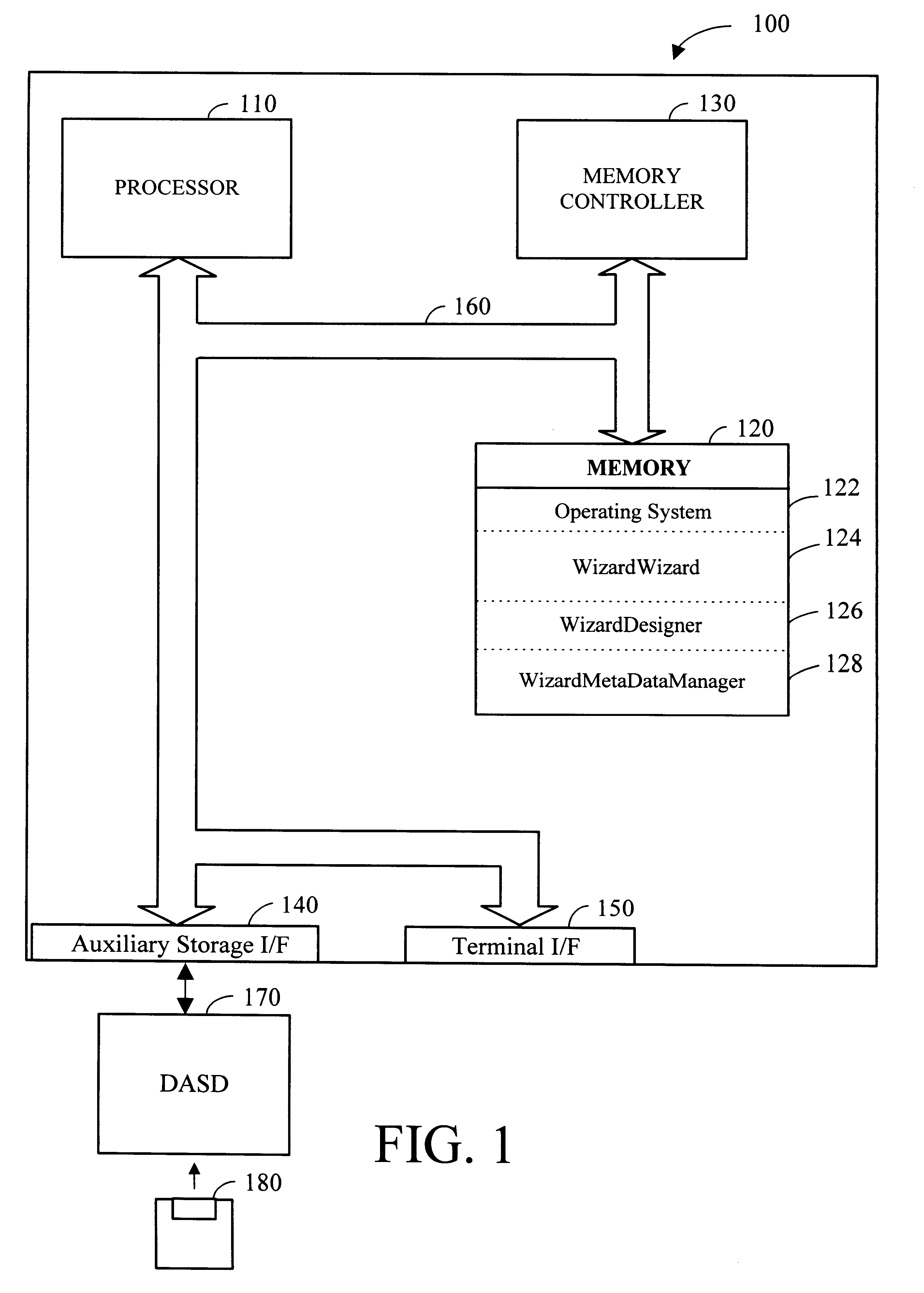
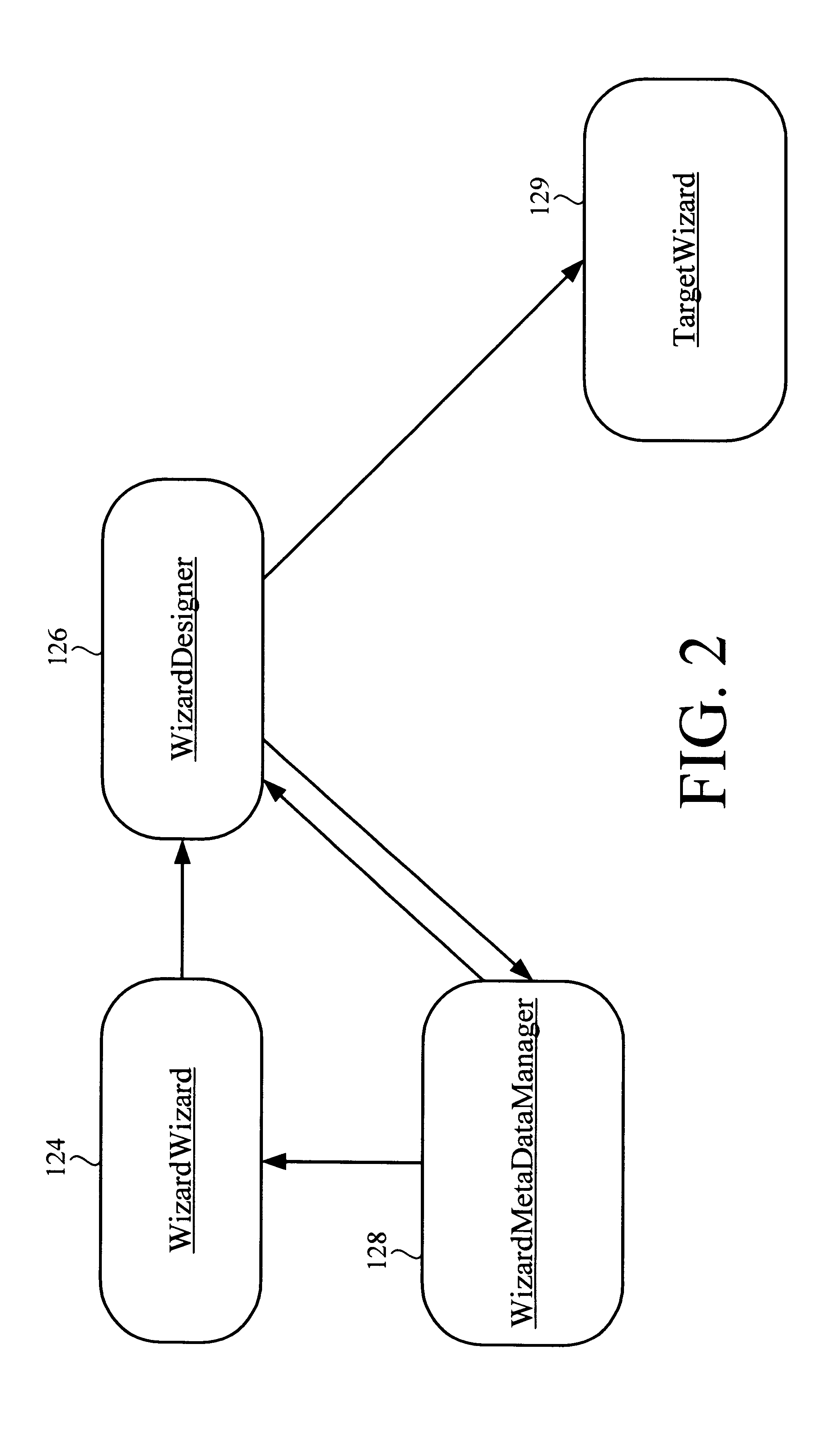
In accordance with the preferred embodiment of the present invention, WizardWizard 124 provides an environment and set of facilities that assists users in the creation of new target wizards. In this application, the term "target wizard(s)" is meant to refer to wizard(s) that are created using the preferred embodiment. WizardWizard 124 guides users through the process of creating the core elements of a target wizard. These core elements include the basic "objects" that make up the target wizard. This set of objects that make up the basic elements of a target wizard will be referred to as a "target wizard skeleton".
In accordance with the preferred embodiment of the present invention, WizardDesigner 126 provides an environment and set of facilities that assists users in the creation and modification of target wizards. In particular, WizardDesigner 126 guides users through the process of specializing a target wizard skeleton to perform in a particular manner. WizardDesigner 126 can also be used to modify and / or further specialize a previously created target wizard.
In accordance with the preferred embodiment of the present invention, WizardMetaDataManager 128 provides the ability to persist meta data for created target wizards, and the ability to retrieve target wizard meta data for further modification and specialization when desired.
WizardWizard 124 and WizardDesigner 126 can both use WizardMetaDataManager 128 to persist and retrieve meta data for target wizards. The storage of meta data allows the specialized target wizard skeleton to be used again to create additional target wizards. In particular, the stored meta data can be used as a starting point by the WizardWizard 124 for the creation of a wizard skeleton The stored meta data can also be used to by the WizardDesigner 128 to create additional target wizards from the stored meta data. In this way, a developer can quickly and easily reuse existing meta data to create and specialize additional target wizards.
In the preferred embodiment the WizardWizard 124 and WizardDesigner 126 provides a programming environment that can be used to easily and effectively create new target wizards as instantiations of the component based wizard framework. The component based wizard framework thus defines all the classes and objects that constitute a target wizard. For example, in the preferred embodiment the wizard framework defines state, default and panel objects that are used to store data values obtained from a defaults file or a wizard user which are then used in the
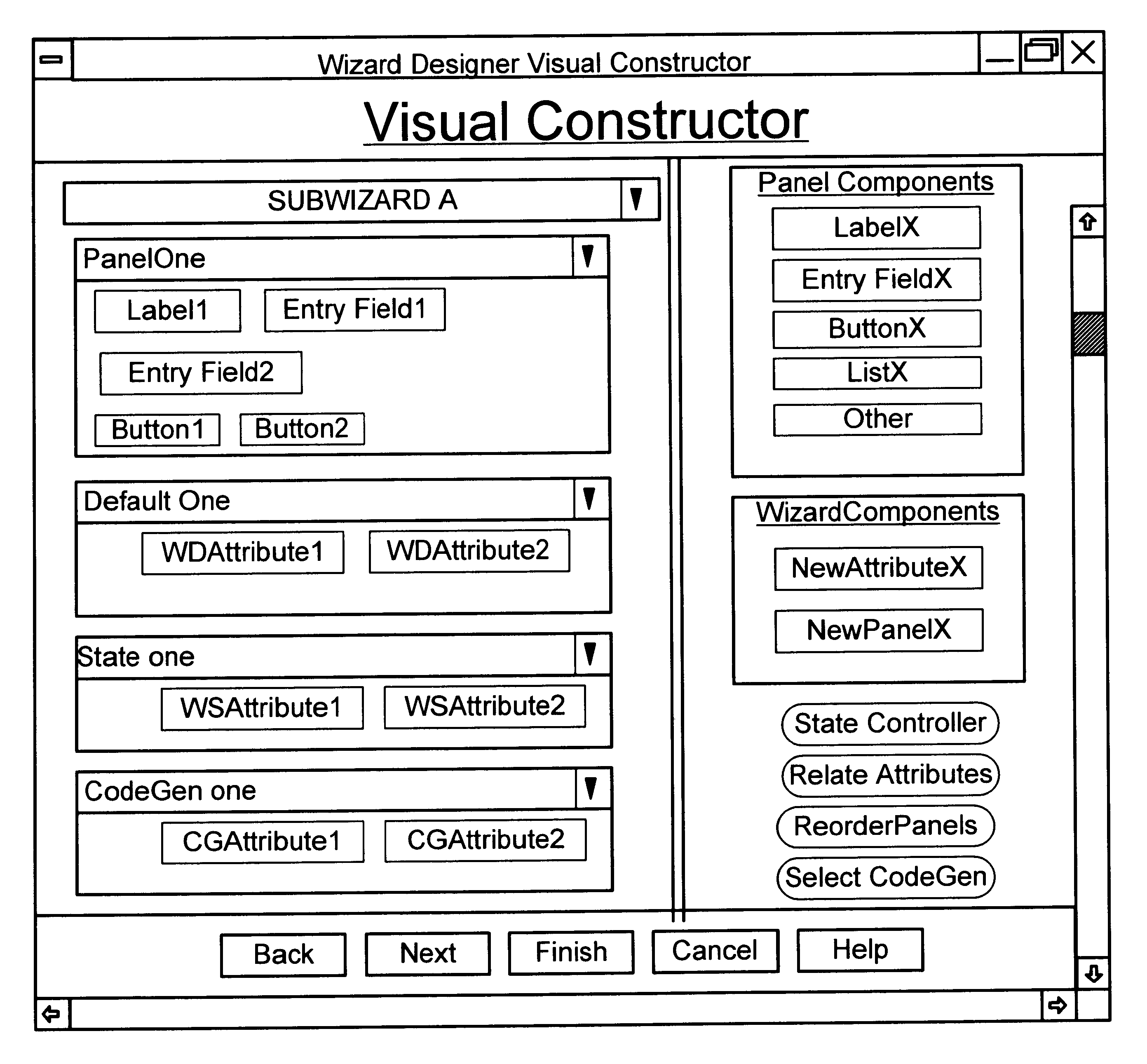
code generation phase of a wizard execution. The framework also preferably includes objects to define and implement the GUI elements used by the present invention. GUI elements would typically include frame, panel and button objects. The frame objects define the exterior of the GUI interface, and would typically include standard GUI elements such as slider bars for
scrolling through the interface, a header, and buttons to minimize and maximize the size of the interface. The panel objects define the majority of the interface, and typically include components such as text, entry fields, buttons, lists, pull-down menus, etc. These components would serve to instruct the developer, provide options to the developer, receive input from the developer (i.e., in the form of text, or selected entries), etc. The button objects define one or more standard GUI buttons that would be typically be included in the panels. Example of buttons would include "next", "back", "cancel" and "help".



 Login to View More
  Login to View More