There is a high demand for
thermal energy produced by these large industrial boilers, and they exhibit a high cost associated with shutting down and subsequently bringing the boilers back up to operating temperatures.
This means that large amounts of ash, which is continuously generated by the boiler, must be removed while the boiler remains in operation.
Further,
fly ash tends to adhere and solidify into
slag that accumulates on high-temperature interior boiler structures, including the furnace walls, the
superheater platens, and the other heat exchangers of the boiler.
If the slag is not effectively removed while the boiler remains in operation, it can accumulate to such an extent that it significantly reduces the
heat transfer capability of the boiler, which reduces the thermal output and economic value of the boiler.
In addition, large unchecked accumulations of slag can cause huge chunks of slag to break loose, particularly from the platens, which fall through the boiler and can cause catastrophic damage and failure of the boiler.
This low-sulphur
coal has a higher ash content and produces more tenacious slag deposits that accumulate more quickly and are more difficult to remove, particularly from the
superheater platens.
However, slag deposits in some boiler superheaters have proven to be so tenacious that this type of steam cleaning is insufficient.
A difficulty arises with the use of water as a cleaning fluid because the
thermal shock imposed on the
heat exchanger tubes is much greater when water is used as the cleaning fluid.
Eventually, water shock can cause the
heat exchanger tubes to crack and fail, which requires a major boiler renovation.
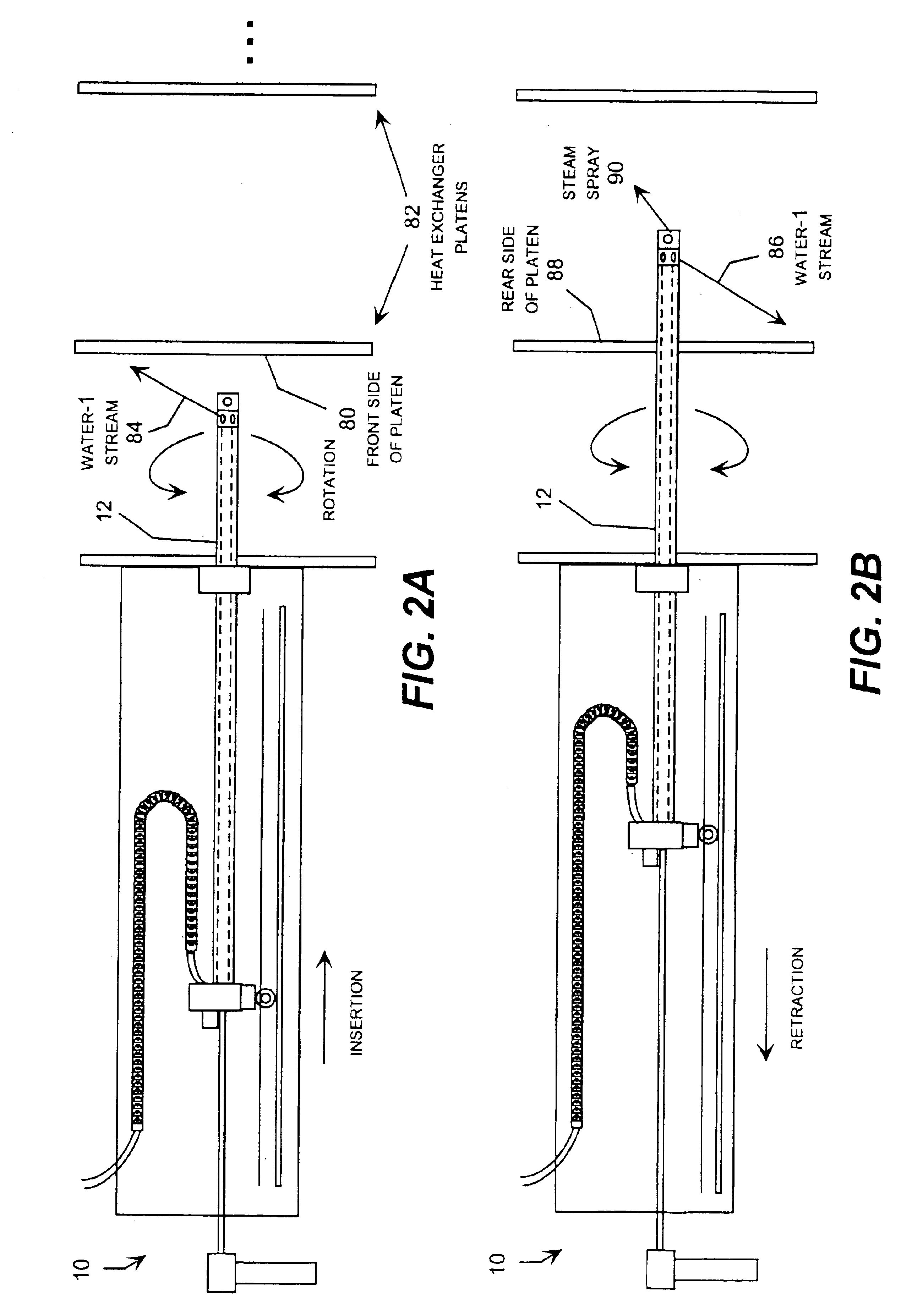
Furthermore, water cleaning tends to cause slag to be removed from the platens in fairly large sections, as the water penetrates the slang and flashes to steam, which blows chunks of slag away from the platen.
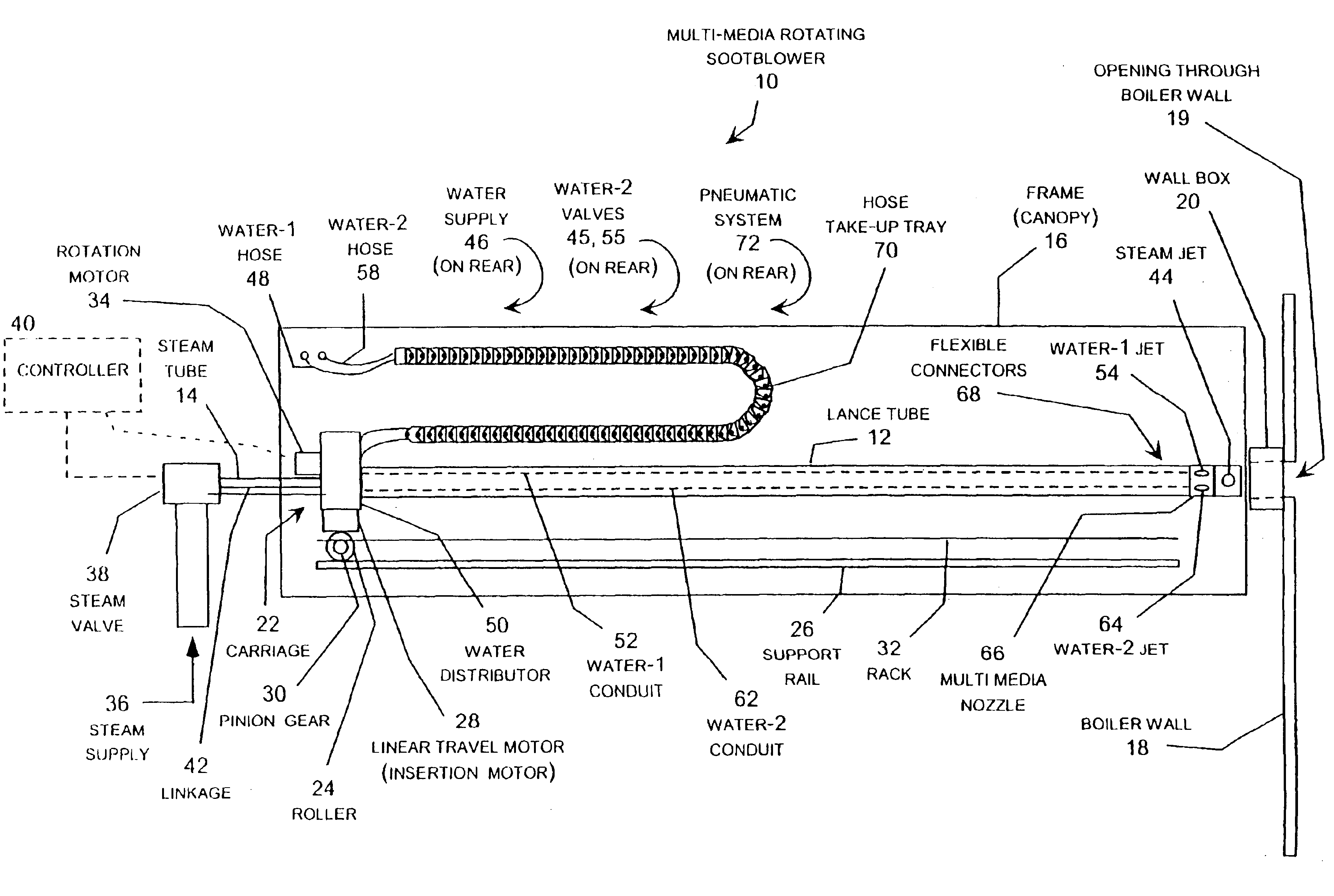
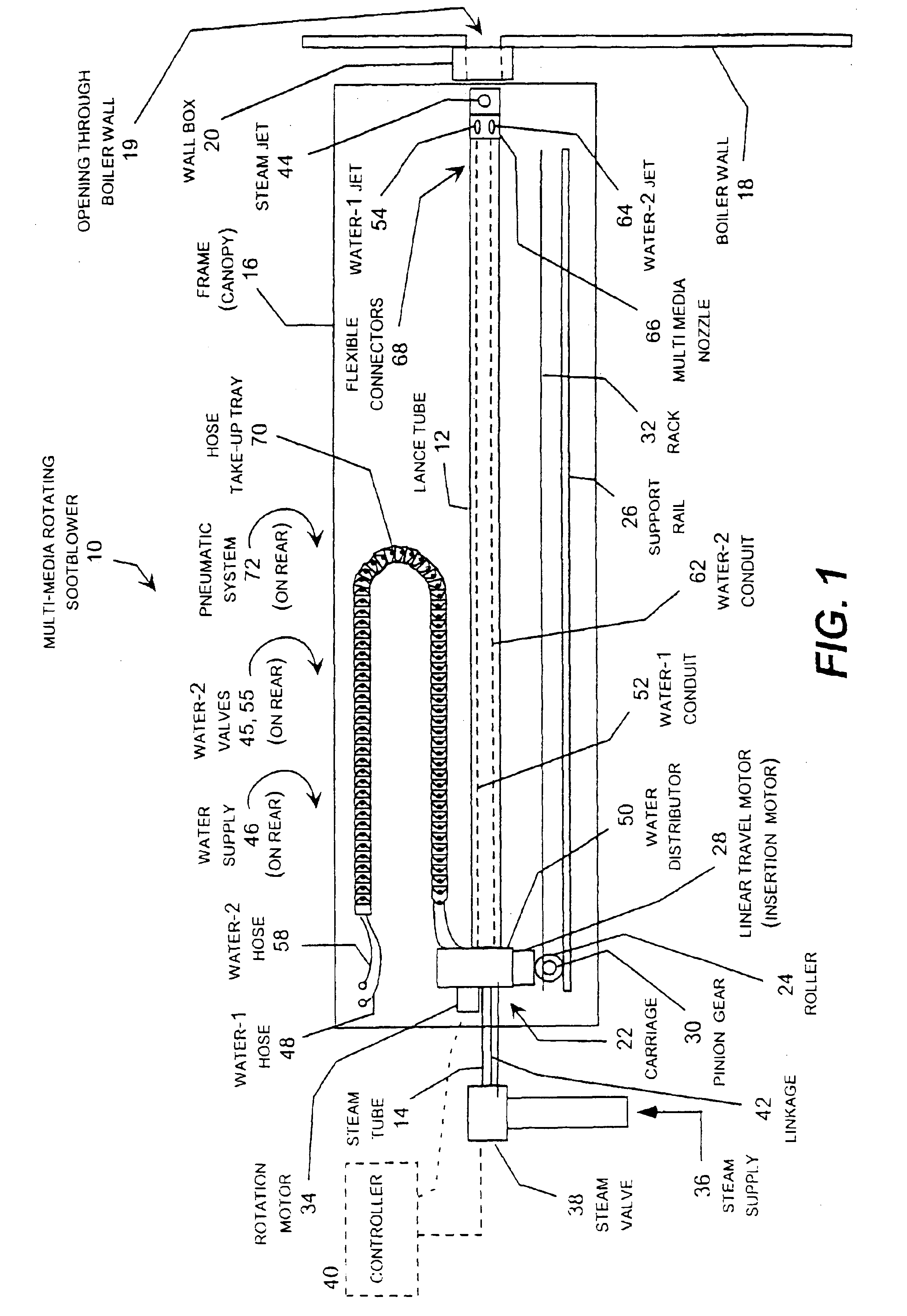
However, the objective of delivering both steam and water through a single lance has proved difficult to attain because water lances are typically tethered to water hoses, whereas steam lances rotate feely.
Incorporating these capabilities into a water lance that also delivers steam as a cleaning fluid has not been successfully accomplished.
These difficulties are accentuated in the harsh environment of the interior of an operating industrial boiler.
Metal structures, such as tubes, hoses, couplers and nozzles experience
extreme heat expansion and expansion-related stresses in this type of environment.
Further, the need for long periods of active duty with very low failure rates is almost as critical for the boiler cleaning equipment as for the interior components of the boiler itself, which reduces the availability of complicated systems with intricate
moving parts for interior boiler operations.



 Login to View More
  Login to View More