Pneumatic human power conversion system based on children's play

US7005757B2Inactive Publication Date: 2006-02-28PANDIAN SHUNMUGHAM RAJASEKARA

Image

Smart Image Click on the blue labels to locate them in the text.
Viewing Examples
Smart Image
  • Pneumatic human power conversion system based on children's play
  • Pneumatic human power conversion system based on children's play
  • Pneumatic human power conversion system based on children's play

Examples

Experimental program
Comparison scheme
Effect test

Embodiment Construction

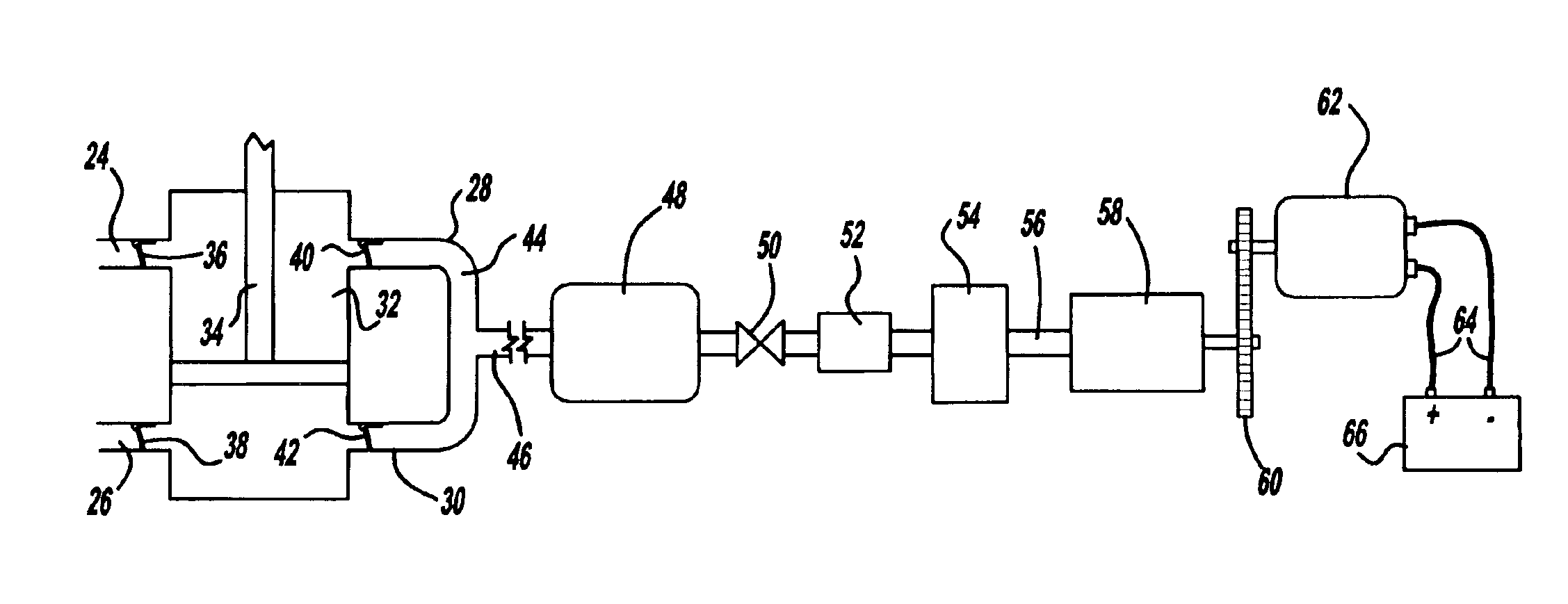
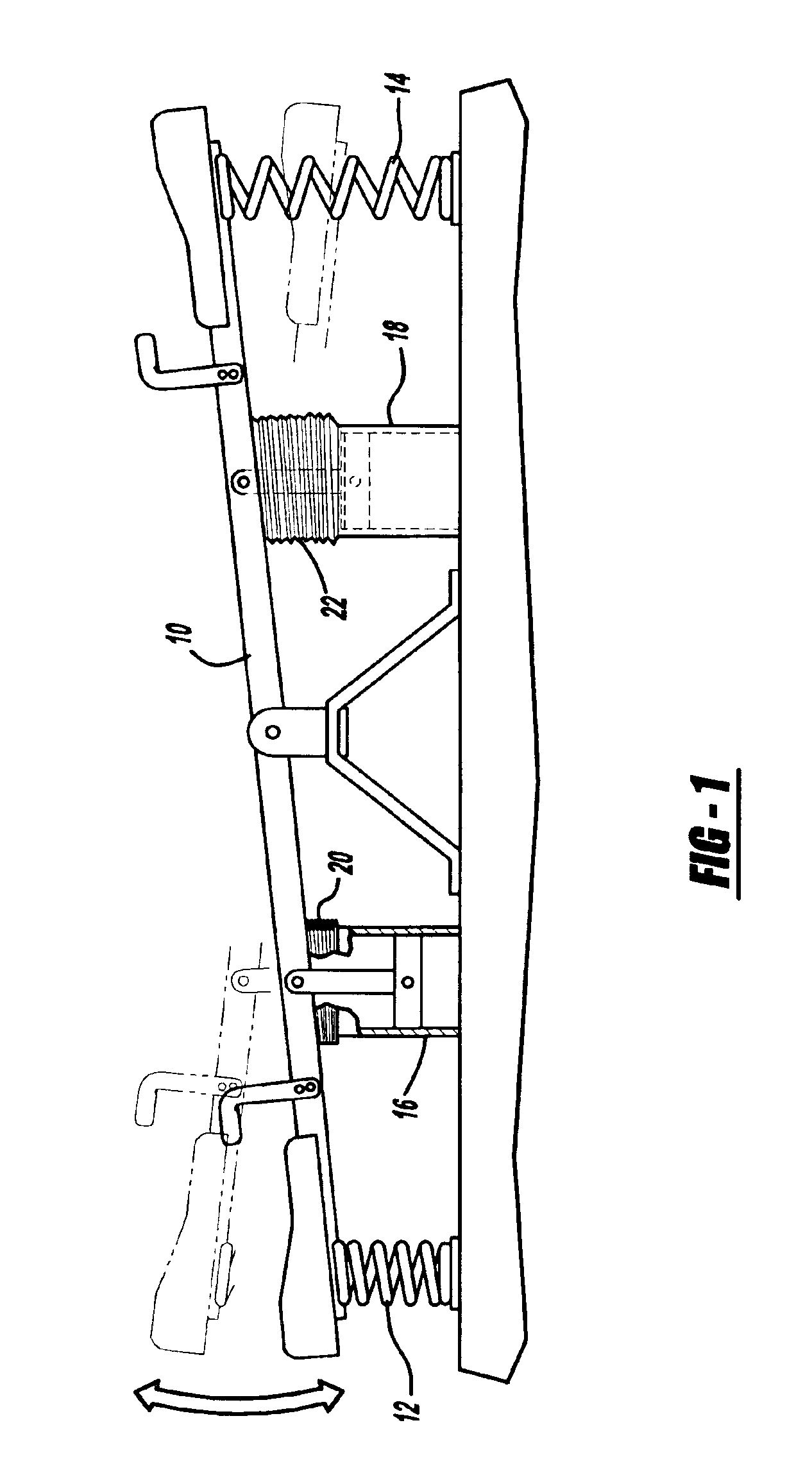
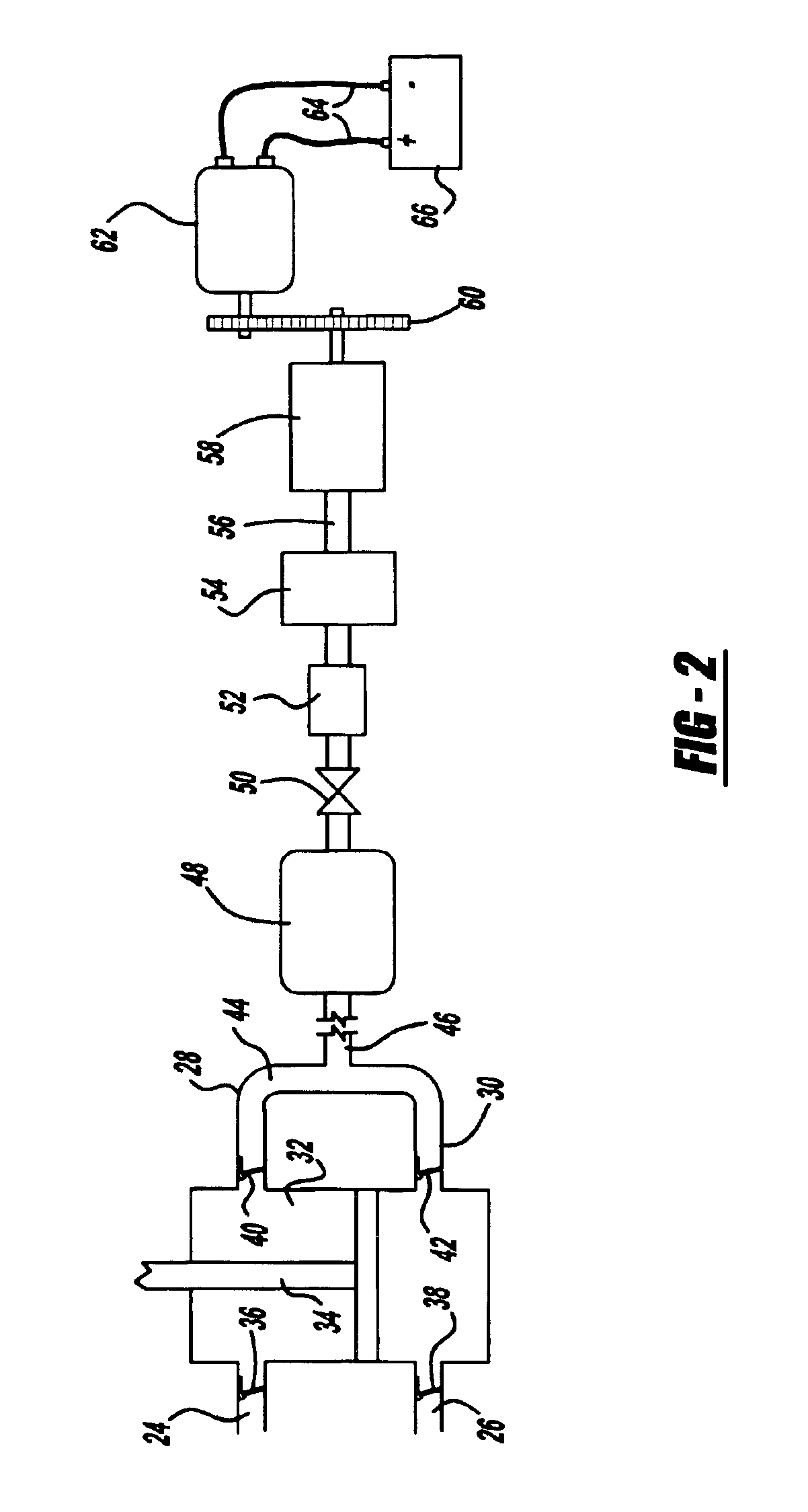
[0031]FIGS. 1 and 2 illustrate the basic principle of the new invention. For simplicity, we limit our discussion to power conversion based on a seesaw. The cases of a swing and a merry-go-around can be considered similarly.

[0032]In FIG. 1, the seesaw 10 is often supplied with hard cylindrical helical springs 12, 14 to smoothen the actions of the seesaw mechanism. In the present mechanism, instead of the springs we employ two pneumatic cylinders 16, 18 on the two sides of the seesaw. To prevent any accidents and injuries to players' limbs from the moving pistons, we provide a bellows-type flexible sheath between the bottom of seesaw and the top of the cylinder as shown 20, 22. The outer bodies of the cylinders would get heated due to the compression of air inside. This would require shielding of the outer bodies too (not shown here).

[0033]To simplify the system and make it portable, the bottom end of the cylinders can also be fixed to the central support of the seesaw, rather than be...

the structure of the environmentally friendly knitted fabric provided by the present invention; figure 2 Flow chart of the yarn wrapping machine for environmentally friendly knitted fabrics and storage devices; image 3 Is the parameter map of the yarn covering machine
Login to View More

PUM

No PUM Login to View More

Abstract

When large numbers of children play in a playground, part of the power of their play could be usefully harnessed resulting in large energy storage. This stored energy can then be converted for basic, low-power, applications in the school such as lighting, communication, or operating fans. Energy can be produced through the use of pneumatic (i.e., compressed air) systems such as cylinders, motors, valves, and regulators for the conversion of human power of children's play in school playgrounds and other public places. The energy of the compressed air can then be converted to electricity for purposes such as lighting and communication. This provides a low-cost, low-resource means of generation of electricity, especially for use in developing countries.

Description

TECHNICAL FIELD[0001]The present invention is based on the use of pneumatic (i.e., compressed air) systems such as cylinders, motors, valves, and regulators for the conversion of human power of children's play in school playgrounds and other public places. The energy of the compressed air can then be converted to electricity for purposes such as lighting and communication. This provides a low-cost, low-resource means of generation of electricity, especially for use in developing countries.BACKGROUND OF THE INVENTION[0002]The current state-of-art inventions using human power are mainly based on harnessing human power at the individual level. Therefore, they are limited to producing low power output and are discontinuous. For example, rotating the crank of a clockwork radio for a few minutes produces enough power for the radio for about half hour or for several seconds of lighting.[0003]By contrast, the present invention is based on harnessing the collective energy of a number of chil...

Claims

the structure of the environmentally friendly knitted fabric provided by the present invention; figure 2 Flow chart of the yarn wrapping machine for environmentally friendly knitted fabrics and storage devices; image 3 Is the parameter map of the yarn covering machine
Login to View More

Application Information

Patent Timeline
28 Feb 2006
Publication
US7005757B2
IPC
A63B71/00; F03G5/00; F03G5/06
CPC
F03G5/06; F03G5/00; F03G5/095; F03G5/103; F03G5/062; F03G5/086
Inventors
PANDIAN, SHUNMUGHAM RAJASEKARA