
Apparatus and method for reducing the risk of decubitus ulcers
- Summary
- Abstract
- Description
- Claims
- Application Information
AI Technical Summary
Benefits of technology
Problems solved by technology
Method used
Image

Examples
Embodiment Construction
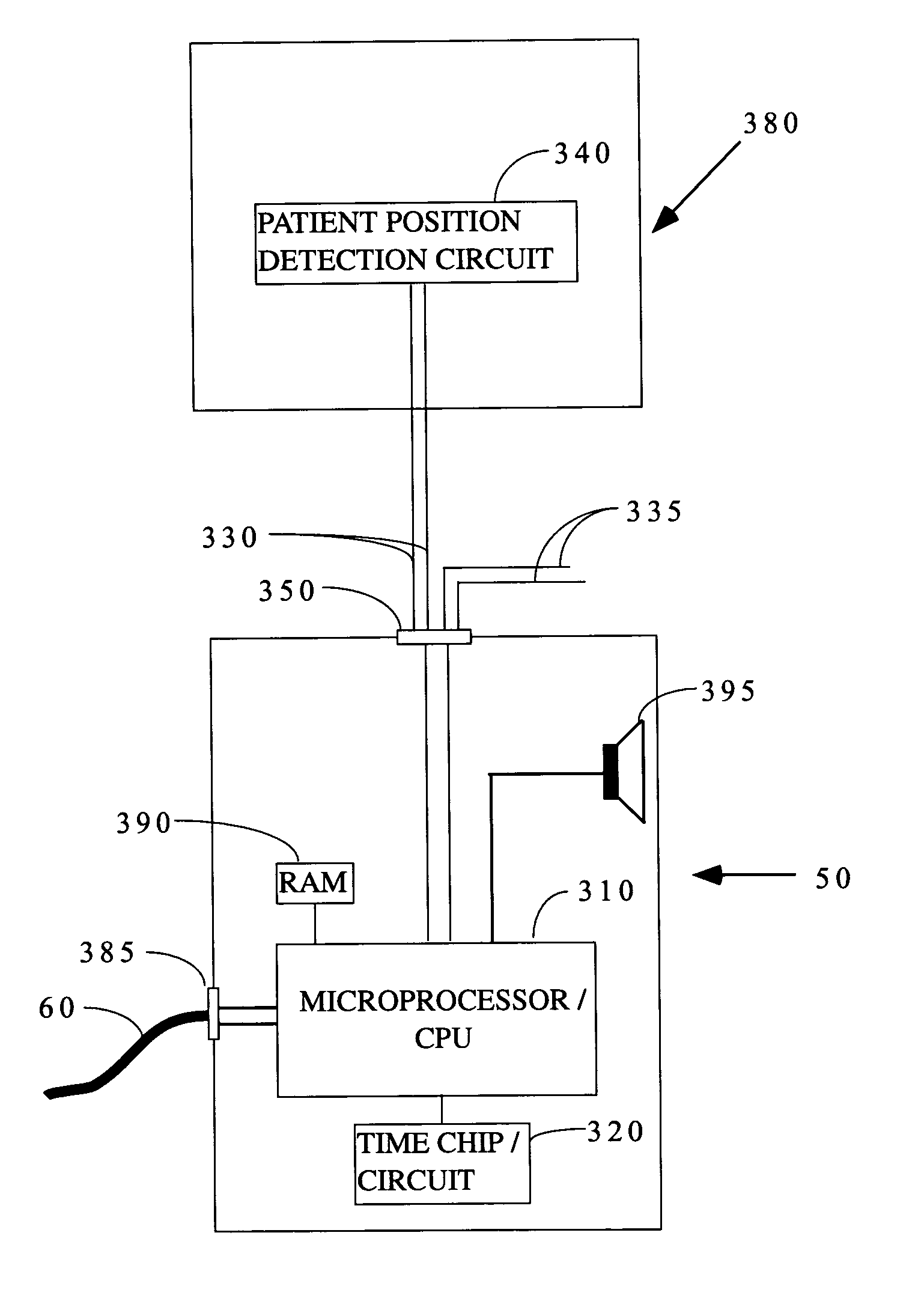
[0040]According to a preferred aspect of the instant invention, there is provided a monitor and sensor, wherein the sensor is configurable to sense a position of a patient in a bed, chair, etc., and be responsive to changes therein. The electronic monitor, which is preferably kept in regular communication with the sensor, tracks the status of the sensor and responds according to its pre-programmed instructions when a patient moves or when a patient does not move for some period of time.
Preferred Electronic Monitor Embodiments
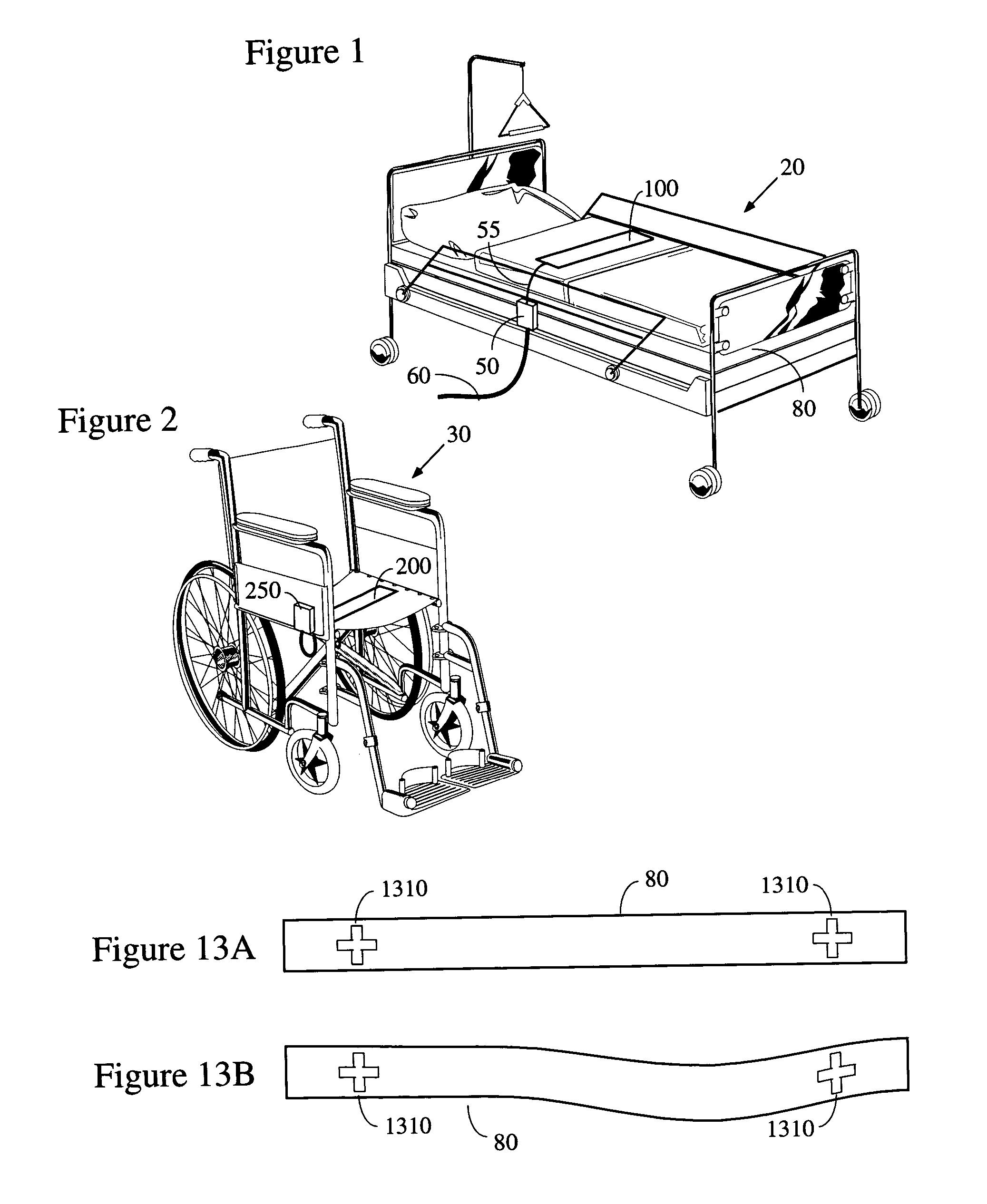
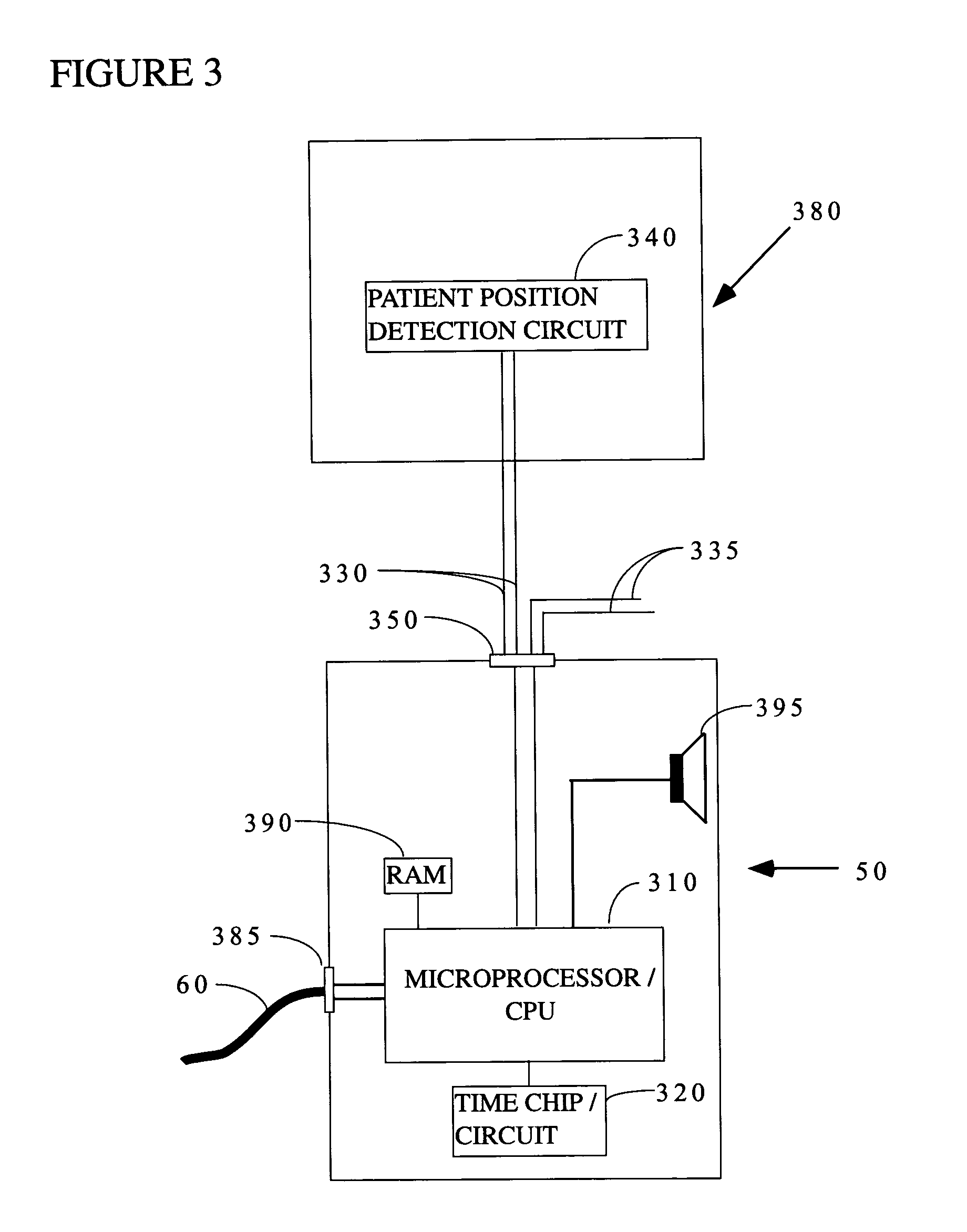
[0041]As is illustrated in FIG. 1, in the preferred embodiment the instant invention utilizes both an electronic patient monitor 50 and a sensor 100 which is interconnected to the monitor 50 by electrical line 55. The function of the electronic monitor is to track changes in patient position (as measured via the sensor) and act on those changes according to its pre-programmed instructions (e.g., FIG. 4). Note that the monitor might be battery powered or supplied...
PUM
 Login to View More
 Abstract
Description
Claims
Application Information
 Login to View More