
Method of manufacturing a floating gate and method of manufacturing a non-volatile semiconductor memory device comprising the same
a semiconductor memory and floating gate technology, applied in the direction of semiconductor devices, electrical devices, transistors, etc., can solve the problems of inconvenient assembly, inconvenient operation, and inability to precisely align the gates, so as to facilitate high-speed reading and writing of data without consuming a large amount of power, and enhance the efficiency of electron discharging and injecting. , the effect of high degree of integration
- Summary
- Abstract
- Description
- Claims
- Application Information
AI Technical Summary
Benefits of technology
Problems solved by technology
Method used
Image

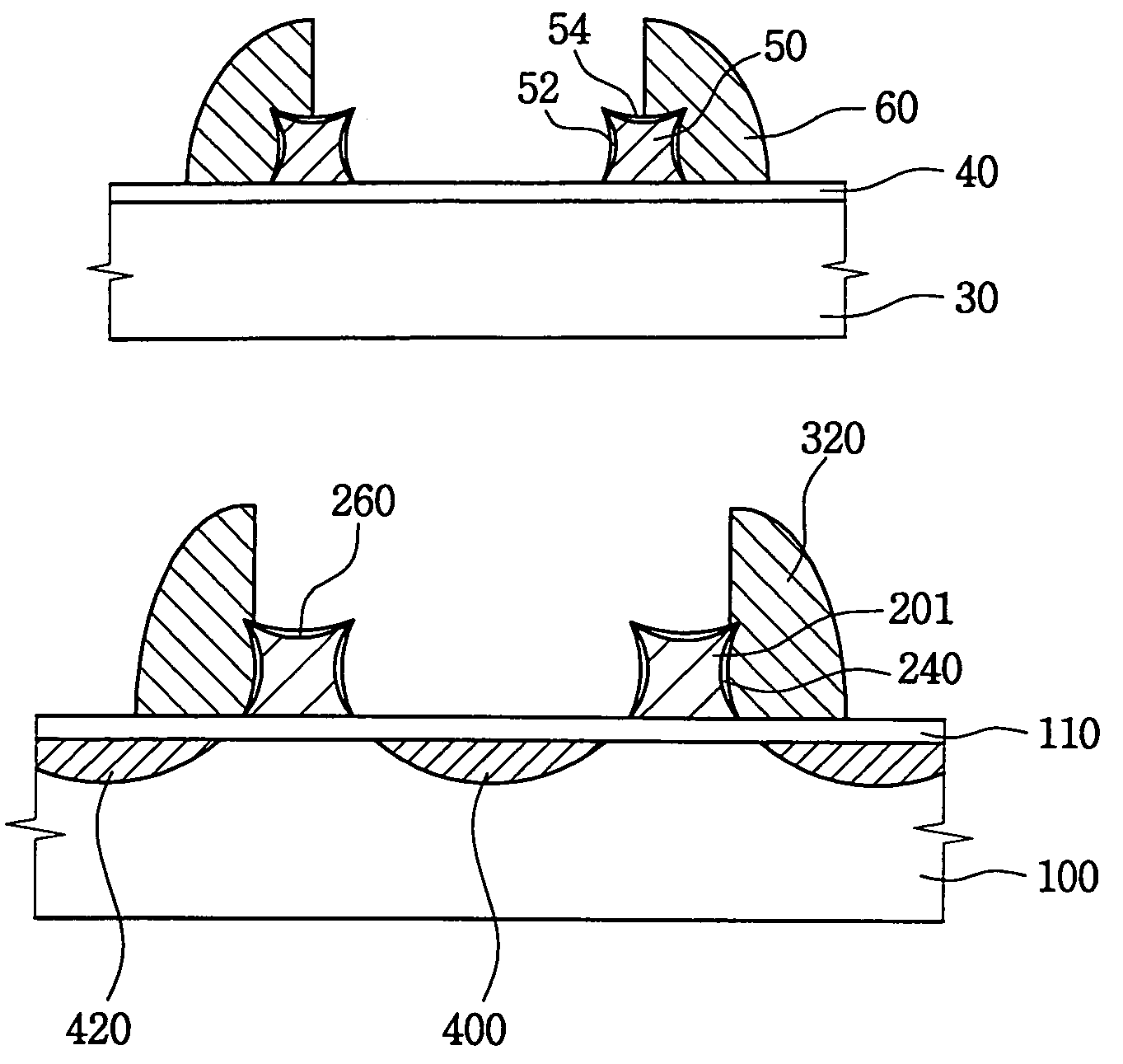
Examples
Embodiment Construction
[0025]The present invention now will be described more fully hereinafter with reference to the accompanying drawings. Note, like reference numbers designate like elements throughout the drawings. Also, the relative thickness of layers may be exaggerated in the drawings for clarity in illustrating the present invention.
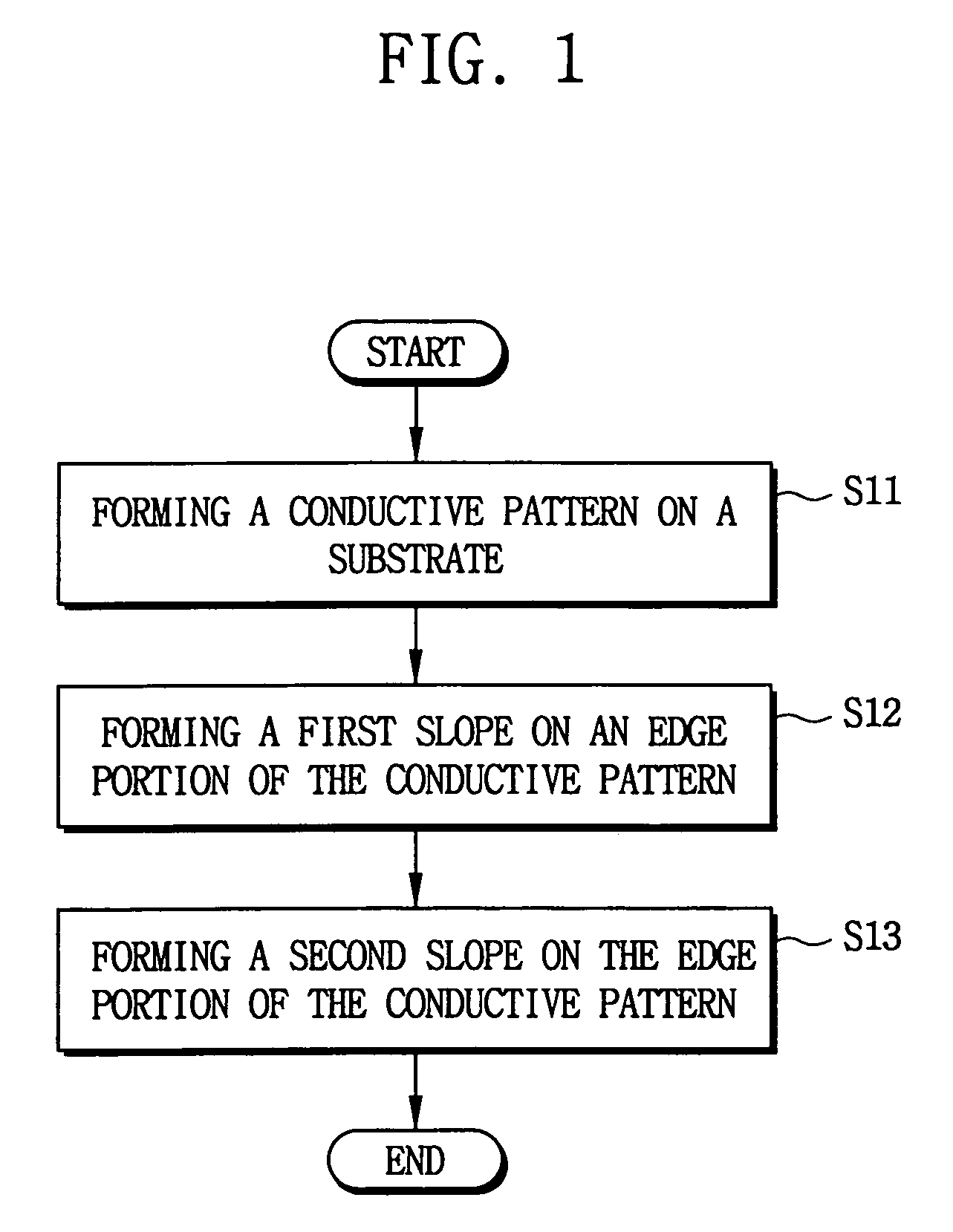
[0026]FIG. 1 outlines a first embodiment of a method of manufacturing a floating gate according to the present invention.
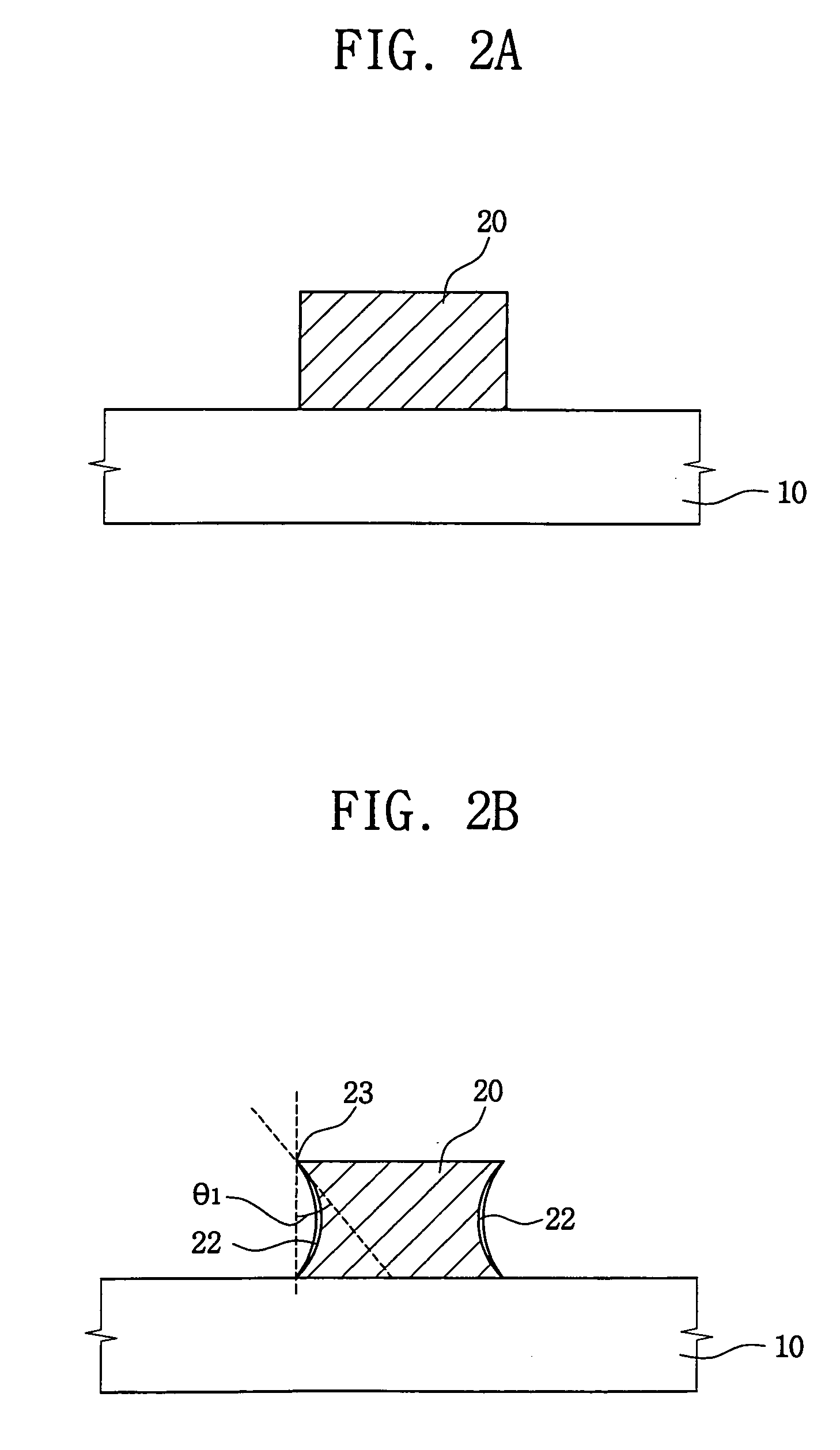
[0027]Referring to FIG. 1, a conductive layer of silicon (Si), e.g., amorphous silicon, polysilicon, or silicon doped with impurities, is formed on a semiconductor substrate (step S11). Then, the conductive layer is patterned using a photolithographic process to form a conductive pattern on the semiconductor substrate. Alternatively, the conductive layer may comprise a metal such as copper (Cu), tungsten (W), aluminum (Al), titanium (Ti), and the like.
[0028]Next, a first insulation layer is formed on a sidewall of the conductive pattern so that an ed...
PUM
 Login to View More
 Abstract
Description
Claims
Application Information
 Login to View More