Multi-media contact center

a contact center and multi-media technology, applied in the field of multi-media contact centers, can solve problems such as customer dissatisfaction and dropped calls

US7272223B2Active Publication Date: 2007-09-18AVAYA INC
7 Cites 21 Cited by

Patent Information

Authority / Receiving Office
US · United States
Patent Type
Patents(United States)
Current Assignee / Owner
Publication Date
2007-09-18

Smart Images

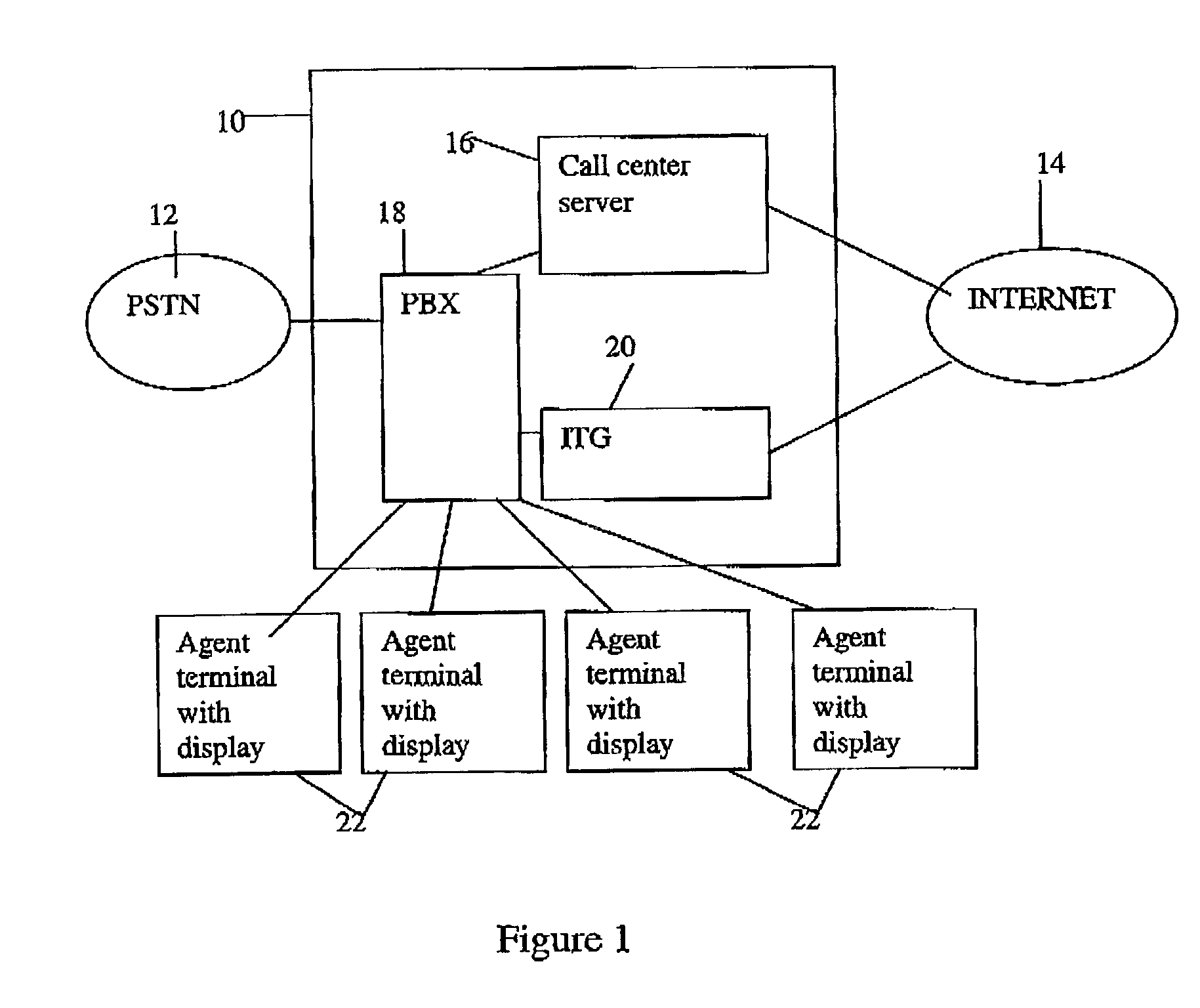
  • Figure 1
    Figure 1
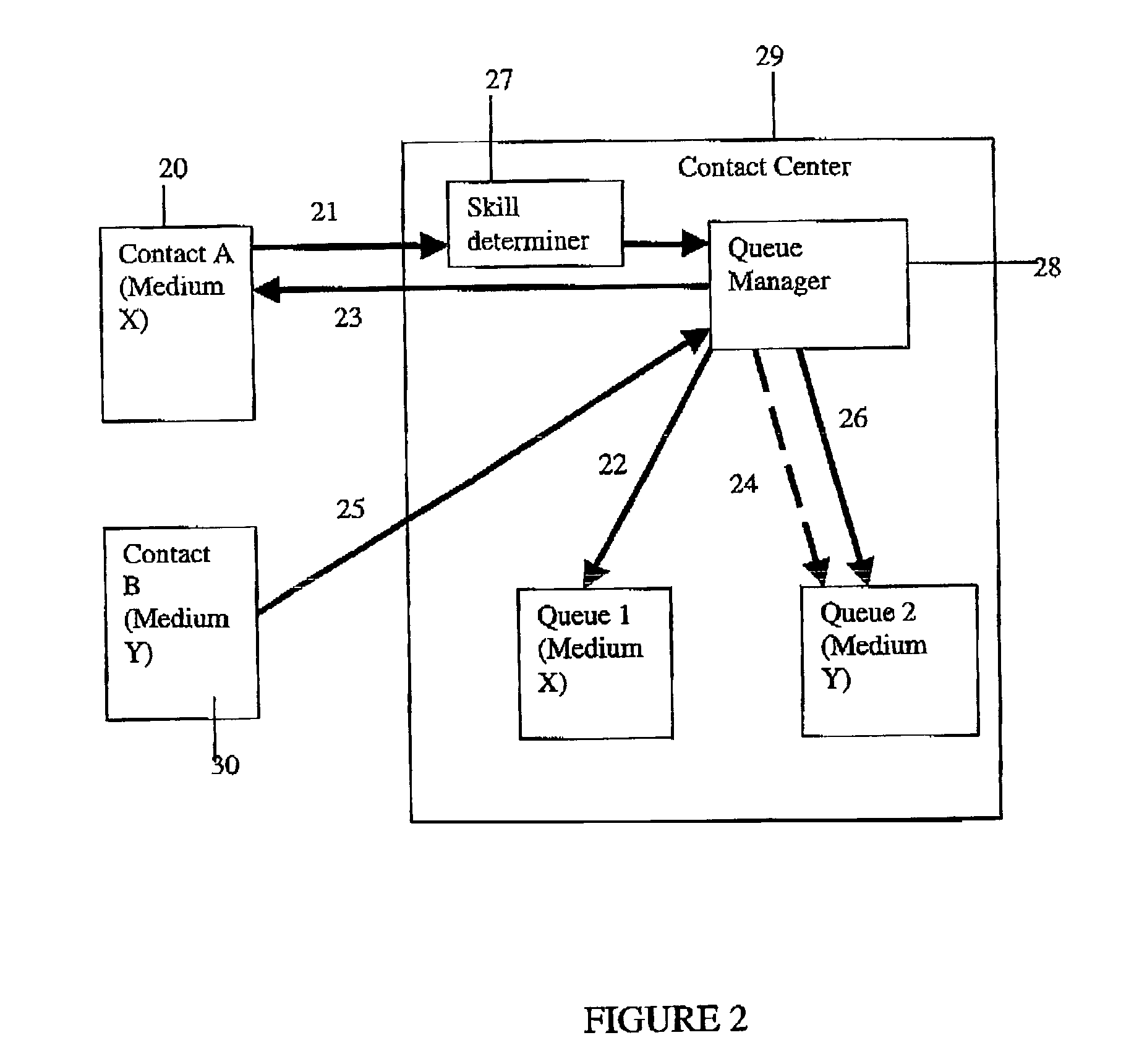
  • Figure 2
    Figure 2
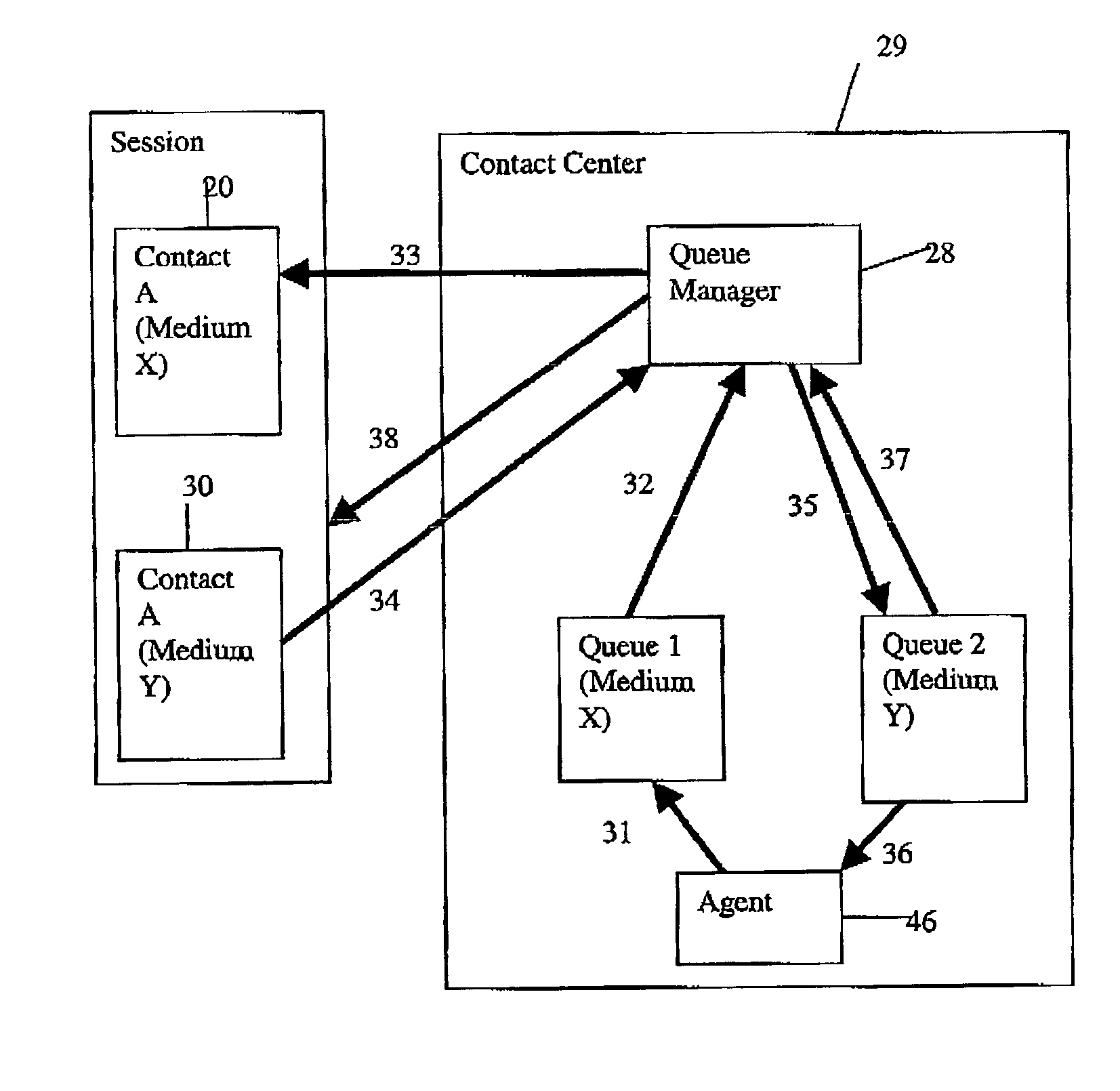
  • Figure 3
    Figure 3
Patent Text Reader

Abstract

Multi-media call centers are able to receive incoming contacts or calls in a plurality of different types of medium. For example, as email, fax, chat, web-based and other types of contact. Incoming contacts are routed to one of a plurality of agents. Each agent has one or more skills, for example, a particular agent has knowledge about sales for product X and about technical support for product Y. Associated with each skill is a queue into which incoming calls are placed until an agent with that skill becomes available. Typically further subdivision of these queues is made such that for a particular skill, there is one queue for each possible medium. Often the queues referred to above build up and end user's experience significant waiting times before reaching a call center agent. This leads to dropped calls and customer dissatisfaction. To avoid this customers are able to switch between queues of different media types (but the same skill type) in order to reduce waiting times.
Need to check novelty before this filing date? Find Prior Art

Description

FIELD OF THE INVENTION

[0001] The present invention relates to multi-media contact centers and a method and apparatus for reducing queue waiting times in such contact centers.BACKGROUND TO THE INVENTION

[0002] Call centers are known in which incoming calls are routed to one of a plurality of agents. For example, the call center might provide help desk facilities for a particular group of products and customers who are able to call in and be allocated to an agent who has the necessary skills to deal with his or her query. Each agent has one or more skills, for example, a particular agent has knowledge about sales for product X and about technical support for product Y. An incoming call is received and information from that call is used by the call center, together with information about the agents, in order to route the incoming call to an agent with the appropriate skill. For example, an interactive voice response system (IVR system) may be used to find out what type of agent skill is r...

Examples

first embodiment

[0043]In a first embodiment the customer is informed that there is a shorter waiting time in the queue of a particular medium. The customer is then able to issue a new contact in the particular medium such that the previous contact is deleted.

second embodiment

[0044]In a second embodiment the customer is informed that there is a shorter waiting time in the queue of a particular medium. The customer is then able to request that his or her original contact be automatically moved into the shorter queue.

[0045]It is not essential for the customer to be informed about the waiting times in the queues, Instead the call centre is able to “switch” a contact made by the customer from one queue to another in order to more efficiently manage contacts and without first obtaining approval from that customer for the particular “switch” For example, the contact centre comprises or has access to a registration system whereby customers register their details in advance of using the contact centre. At registration the customer specifies whether or not he or she agrees to contacts being switched between different media and also specifies which type of medium the customer is able to or prefers to receive communications in. In another example, this information ...