Variational inference and learning for segmental switching state space models of hidden speech dynamics

a technology of hidden speech dynamics and variable inference, applied in the field of variable inference and learning for hidden speech dynamics, can solve the problems of lack of powerful and efficient statistical learning algorithms, well studied and widely used, and achieve the effect of effective approximate algorithms and facilitate modeling speech dynamics

US7454336B2Inactive Publication Date: 2008-11-18MICROSOFT TECH LICENSING LLC
8 Cites 11 Cited by

Patent Information

Authority / Receiving Office
US · United States
Patent Type
Patents(United States)
Current Assignee / Owner
Publication Date
2008-11-18
Estimated Expiration
Not applicable · inactive patent

Smart Images

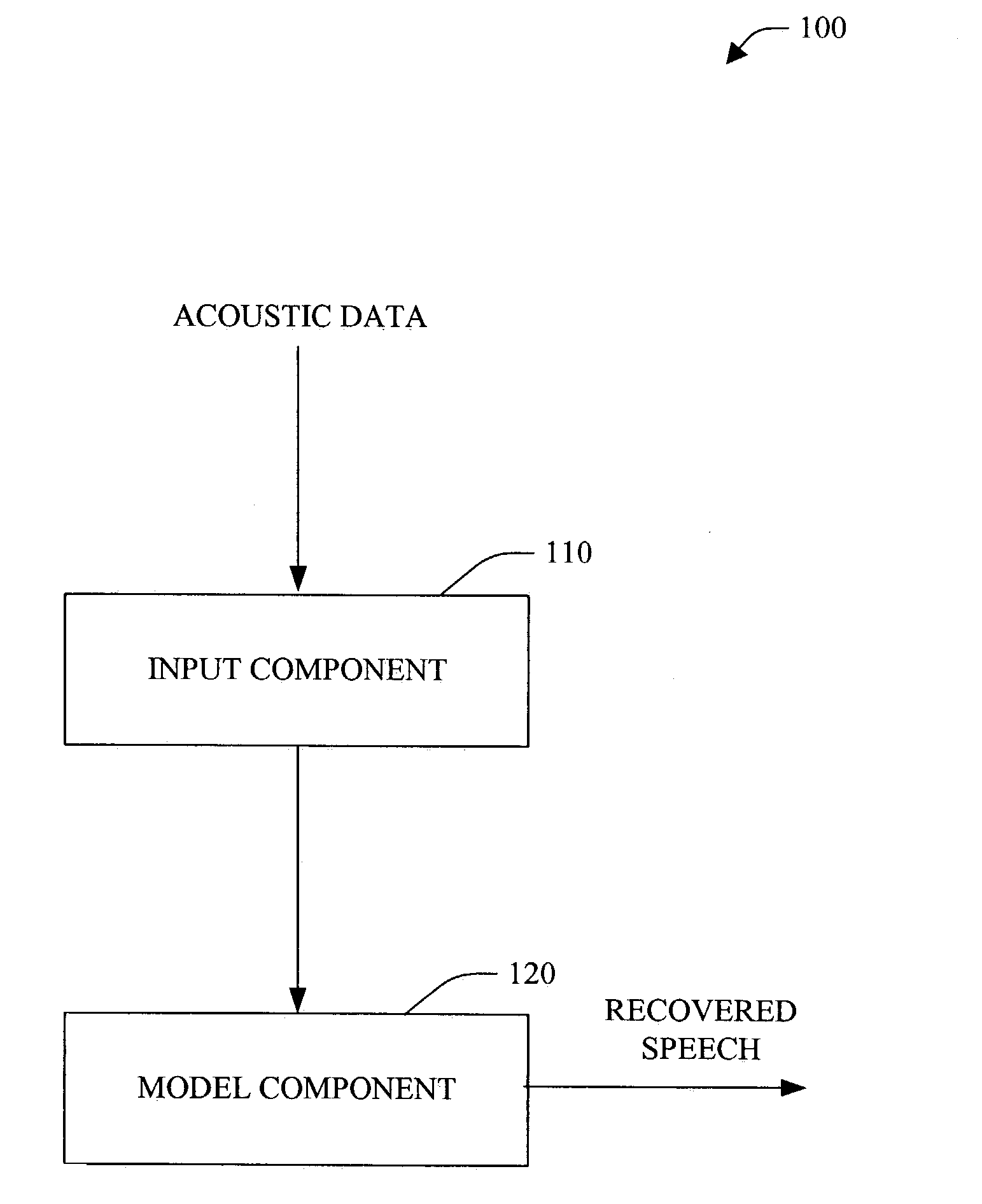
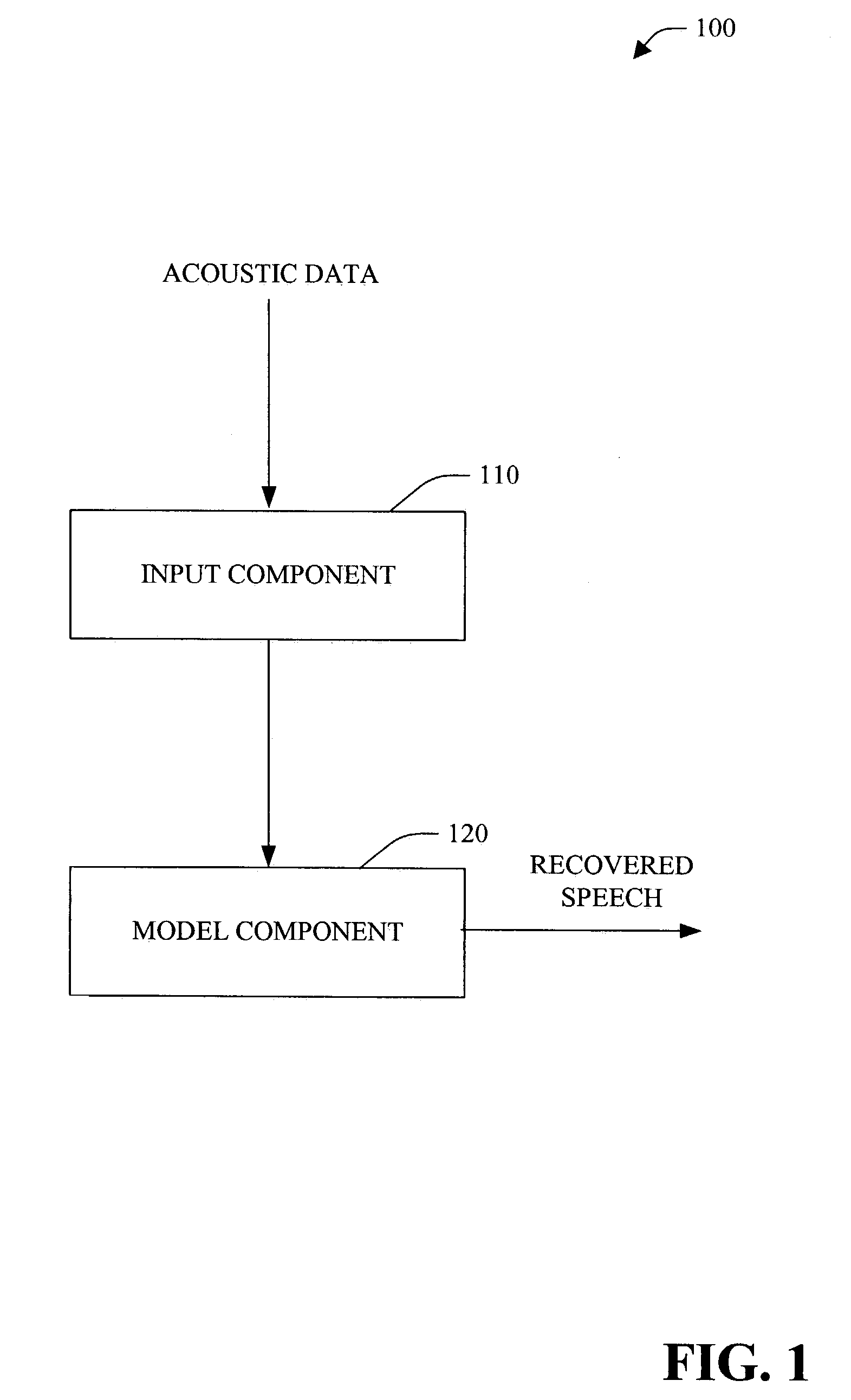
  • Figure 1
    Figure 1
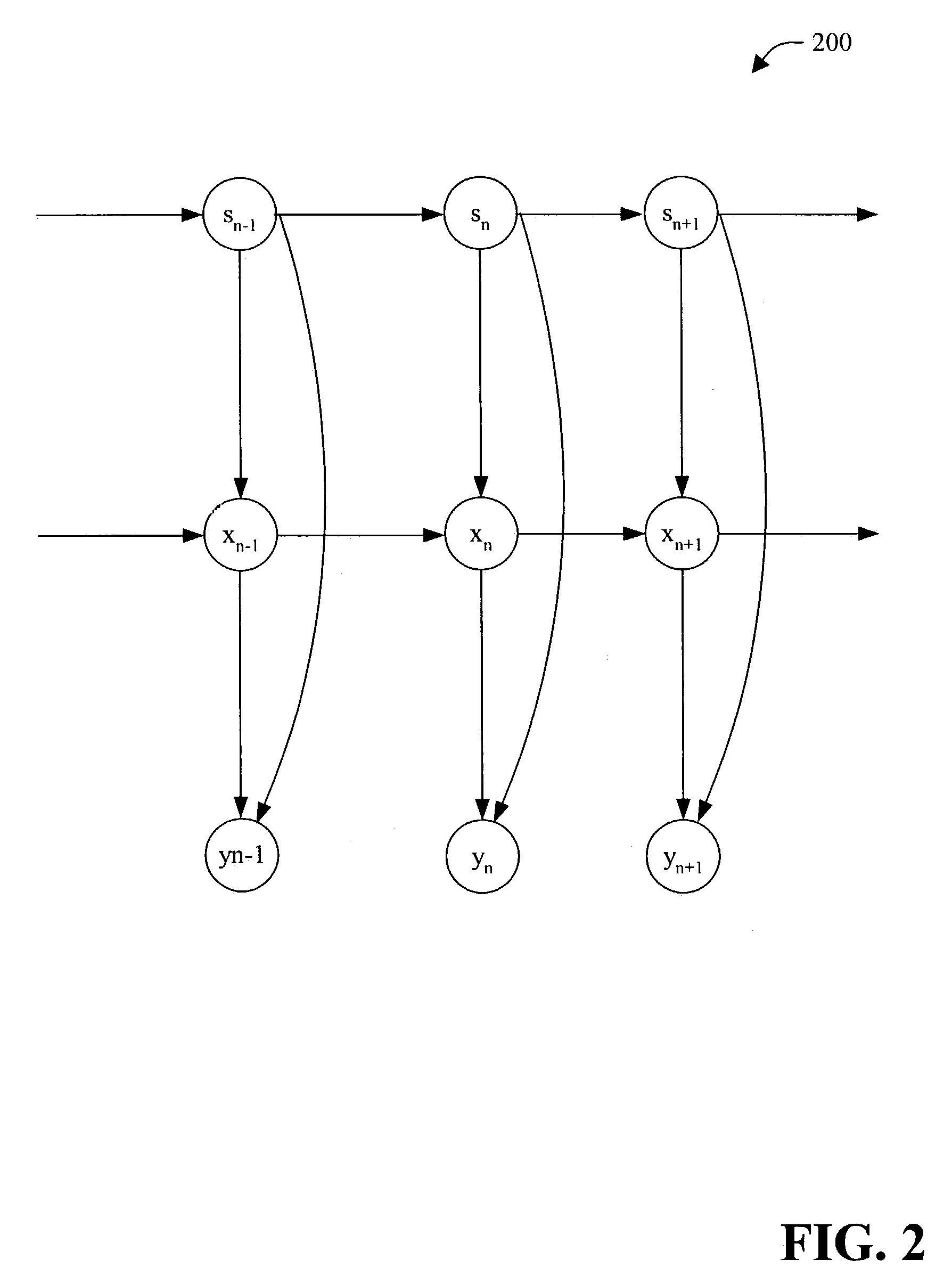
  • Figure 2
    Figure 2
  • Figure 3
    Figure 3
Patent Text Reader

Abstract

A system and method that facilitate modeling unobserved speech dynamics based upon a hidden dynamic speech model in the form of segmental switching state space model that employs model parameters including those describing the unobserved speech dynamics and those describing the relationship between the unobserved speech dynamic vector and the observed acoustic feature vector is provided. The model parameters are modified based, at least in part, upon, a variational learning technique. In accordance with an aspect of the present invention, novel and powerful variational expectation maximization (EM) algorithm(s) for the segmental switching state space models used in speech applications, which are capable of capturing key internal (or hidden) dynamics of natural speech production, are provided. For example, modification of model parameters can be based upon an approximate mixture of Gaussian (MOG) posterior and / or based upon an approximate hidden Markov model (HMM) posterior using a variational technique.
Need to check novelty before this filing date? Find Prior Art

Description

TECHNICAL FIELD

[0001] The present invention relates generally to systems and methods for recovering or recognizing the phone or word sequence from the acoustic data of speech, and, more particularly to variational inference and learning applied to segmental switching state space models of hidden speech dynamics that is used to do phone or word recognition.BACKGROUND OF THE INVENTION

[0002] The goal of human speech production is to convey discrete linguistic symbols corresponding to the intended message, while the actual speech signal is produced by the continuous and smooth movement of the articulators with lots of temporal structures. This seemingly contradictory dual nature (discrete vs. continuous) of speech can be amazingly utilized by human speech recognizers in a beneficial way to enhance the decoding of the underlying message from acoustic signals. However, so far this has been a serious challenge for acoustic modeling in both scientific research and practical applications.[0003...

Examples

Embodiment Construction

[0021]The present invention is now described with reference to the drawings, wherein like reference numerals are used to refer to like elements throughout. In the following description, for purposes of explanation, numerous specific details are set forth in order to provide a thorough understanding of the present invention. It may be evident, however, that the present invention may be practiced without these specific details. In other instances, well-known structures and devices are shown in block diagram form in order to facilitate describing the present invention.

[0022]As used in this application, the term “computer component” is intended to refer to a computer-related entity, either hardware, a combination of hardware and software, software, or software in execution. For example, a computer component may be, but is not limited to being, a process running on a processor, an object, an executable, a thread of execution, a program, and / or a computer. By way of illustration, both an ...