
Cylinder torque balancing for internal combustion engines
a technology of internal combustion engine and torque balance, which is applied in the direction of engine ignition, electric control, machines/engines, etc., can solve the problems of engine stall, individual cylinders do not produce an equal amount of drive torque, and torque imbalance across cylinders
- Summary
- Abstract
- Description
- Claims
- Application Information
AI Technical Summary
Benefits of technology
Problems solved by technology
Method used
Image

Examples
Embodiment Construction
[0020]The following description of the preferred embodiment is merely exemplary in nature and is in no way intended to limit the invention, its application, or uses. For purposes of clarity, the same reference numbers will be used in the drawings to identify similar elements. As used herein, the term module refers to an application specific integrated circuit (ASIC), an electronic circuit, a processor (shared, dedicated, or group) and memory that execute one or more software or firmware programs, a combinational logic circuit, and / or other suitable components that provide the described functionality.
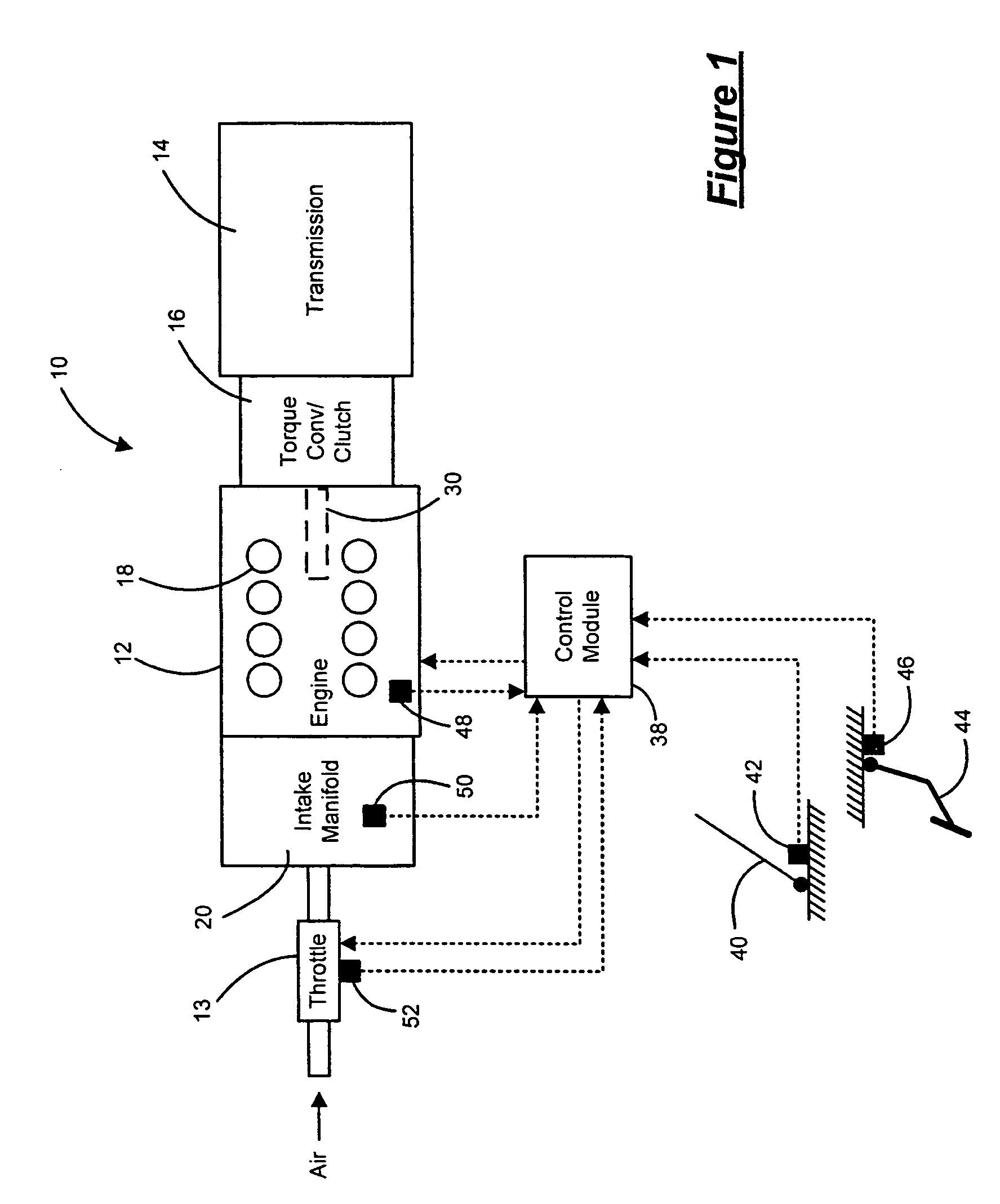
[0021]Referring now to FIG. 1, an exemplary vehicle 10 includes an engine 12 that drives a transmission 14. The transmission 14 is either an automatic or a manual transmission that is driven by the engine 12 through a corresponding torque converter or clutch 16. Air flows into the engine 12 through a throttle 13. The engine 12 includes N cylinders 18. Although FIG. 1 depicts eight cylind...
PUM
 Login to View More
 Abstract
Description
Claims
Application Information
 Login to View More