
System and method of torque converter lockup state adjustment using an electric energy conversion device
a technology of electric energy conversion and torque converter, which is applied in the field of hybrid powertrains, can solve the problems of deteriorating driving conditions, component degradation, and inability to lock the lockup clutch, and achieve the effects of reducing torque differential, reducing torque load, and reducing torque load
- Summary
- Abstract
- Description
- Claims
- Application Information
AI Technical Summary
Benefits of technology
Problems solved by technology
Method used
Image

Examples
Embodiment Construction
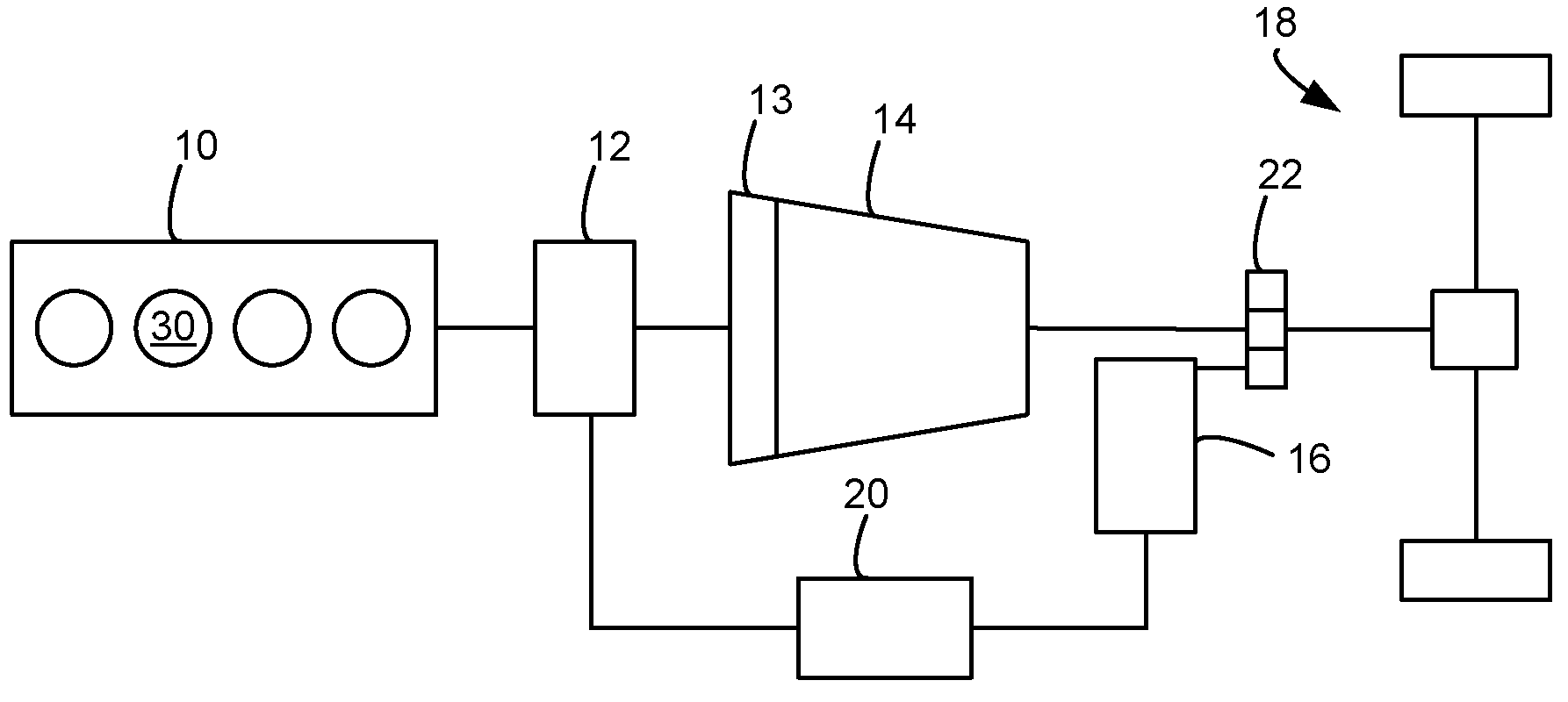
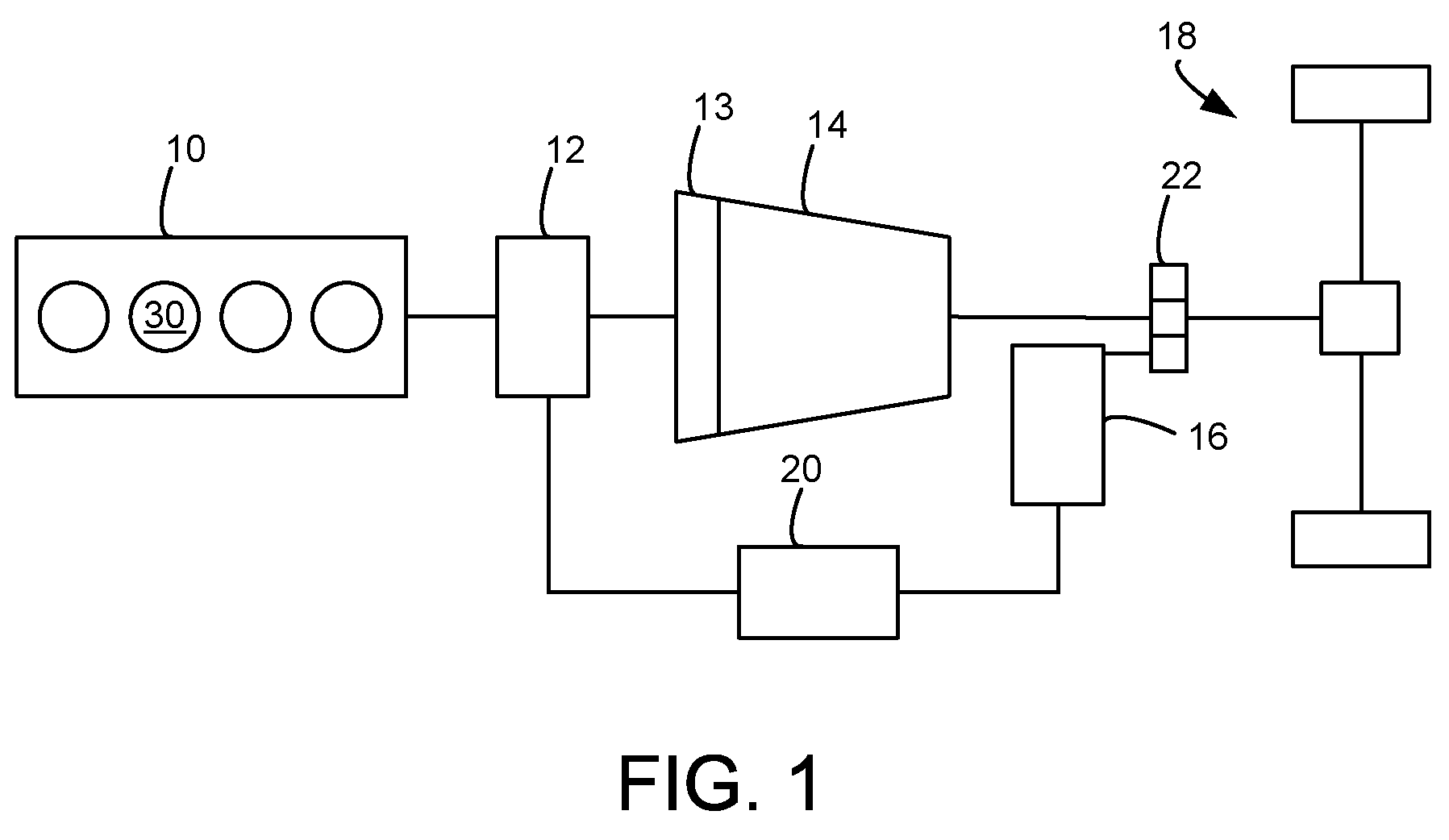
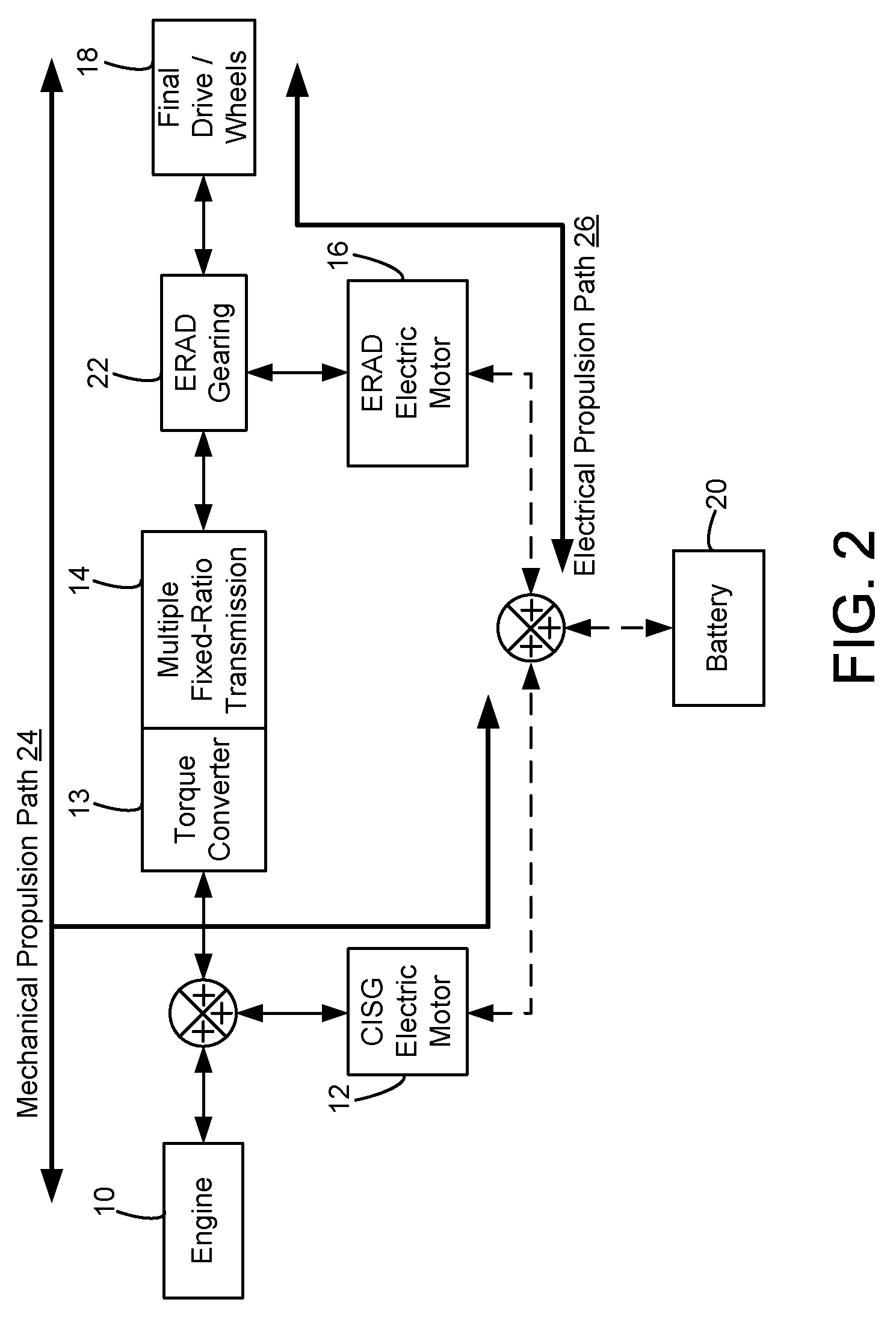
[0017]FIG. 1 illustrates an exemplary embodiment of a hybrid propulsion system for a vehicle. In particular, the exemplary powertrain configuration may be used with the disclosed powertrain control and shift scheduling approach. In this example, the hybrid propulsion system may include an Atkinson cycle internal combustion engine (ICE) 10 having one or more cylinders 30, a multiple fixed-ratio transmission 14, final drive / wheels 18 or other suitable device for delivering propulsive force to the ground surface, and two electric energy conversion devices 12 and 16. The first electric energy conversion device (CISG) 12 may be integrated at the output of engine 10 and further may be connected to the impeller of a torque converter 13 connected to transmission 14, thus providing starter / generator capabilities. The second electric energy conversion device (ERAD) 16 may be coupled to the output of transmission 14 through planetary gear set 22 which may be connected to a final / output drive, ...
PUM
 Login to View More
 Abstract
Description
Claims
Application Information
 Login to View More