
Stacking integrated circuits containing serializer and deserializer blocks using through silicon via
a technology of serializer and deserializer block, applied in the direction of printed circuit structure association, solid-state device, semiconductor/solid-state device details, etc., can solve the problems of high-speed ser/des packaging, specialized area, and difficult packaging ser/des, so as to reduce or eliminate inductance and capacitance, reduce the effect of tsv routing efficiency and simplify 3d chip design and manufacturing
- Summary
- Abstract
- Description
- Claims
- Application Information
AI Technical Summary
Benefits of technology
Problems solved by technology
Method used
Image

Examples
Embodiment Construction
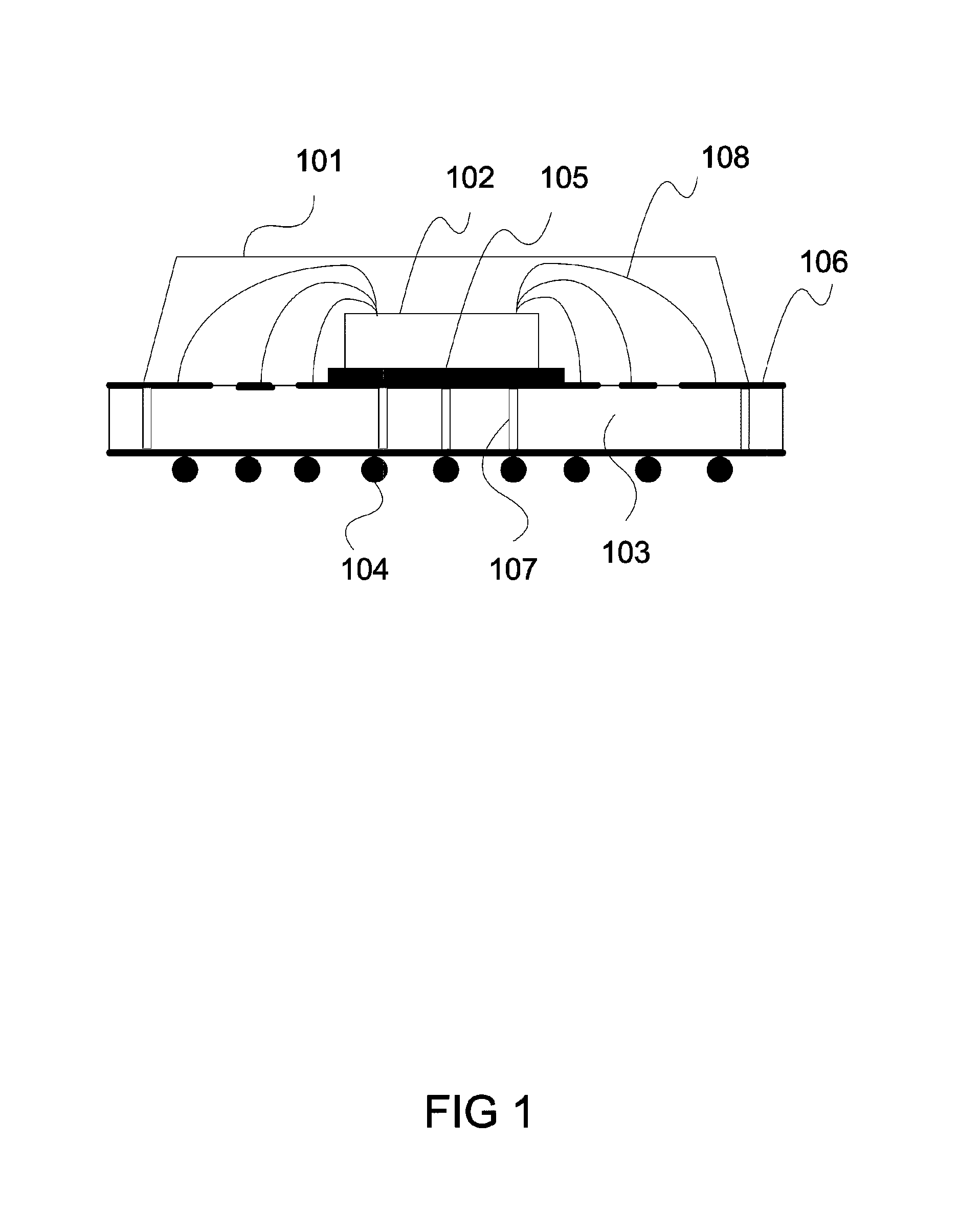
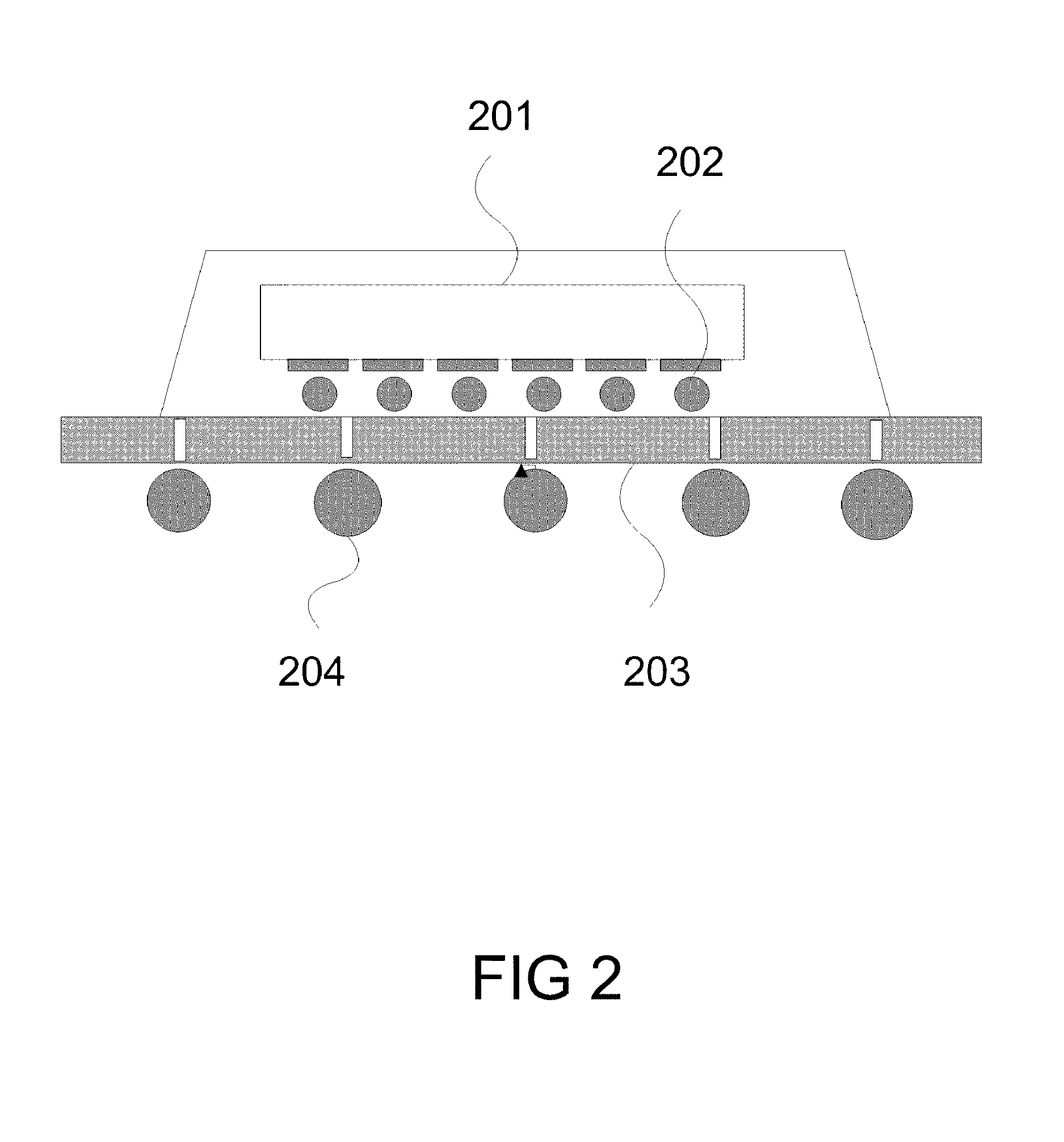
[0026]To create a more compact and space efficient integrated circuit, it is necessary to be able to stack multiple dice on top of each other. Two general methods are possible for interconnecting the stacked dice to each other and for connecting those dice to the pins or solder balls of the 3D chip package. One method is to use wirebond, meaning that to use wires to connect chips to each other or to the pins of the 3D package as shown in FIG. 3 and FIG. 4. The wirebond technique is not very useful for high speed SER / DES due to creation of inductance and capacitance.
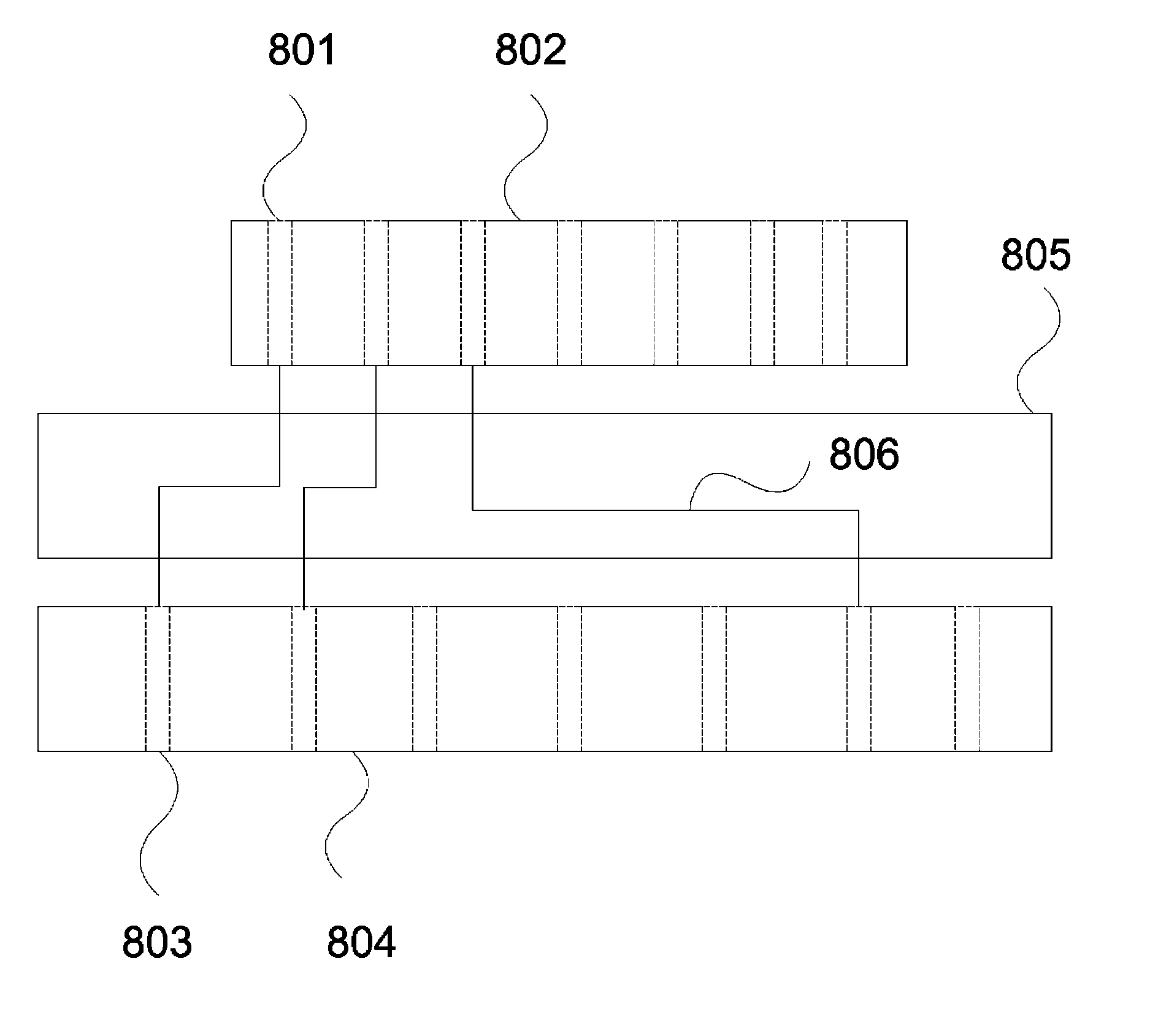
[0027]Another technique is to use Through Silicon Via (TSV) to connect multiple stacked dice to each other or to the external pins. FIG. 8 shows an example of TSVs (801, 803) of two dice (802, 804) connected to each other. While FIG. 9 shows the contact pads (901) of one die (902) is connected to the TSVs (903) of another die (904). TSVs has so far been only used for lower speed integrated circuits. This patent extends th...
PUM
| Property | Measurement | Unit |
|---|---|---|
| radio frequencies | aaaaa | aaaaa |
| speeds | aaaaa | aaaaa |
| inductance | aaaaa | aaaaa |
Abstract
Description
Claims
Application Information
 Login to View More