

Flame ionization detector
- Summary
- Abstract
- Description
- Claims
- Application Information
AI Technical Summary
Benefits of technology
Problems solved by technology
Method used
Image

Examples
Embodiment Construction
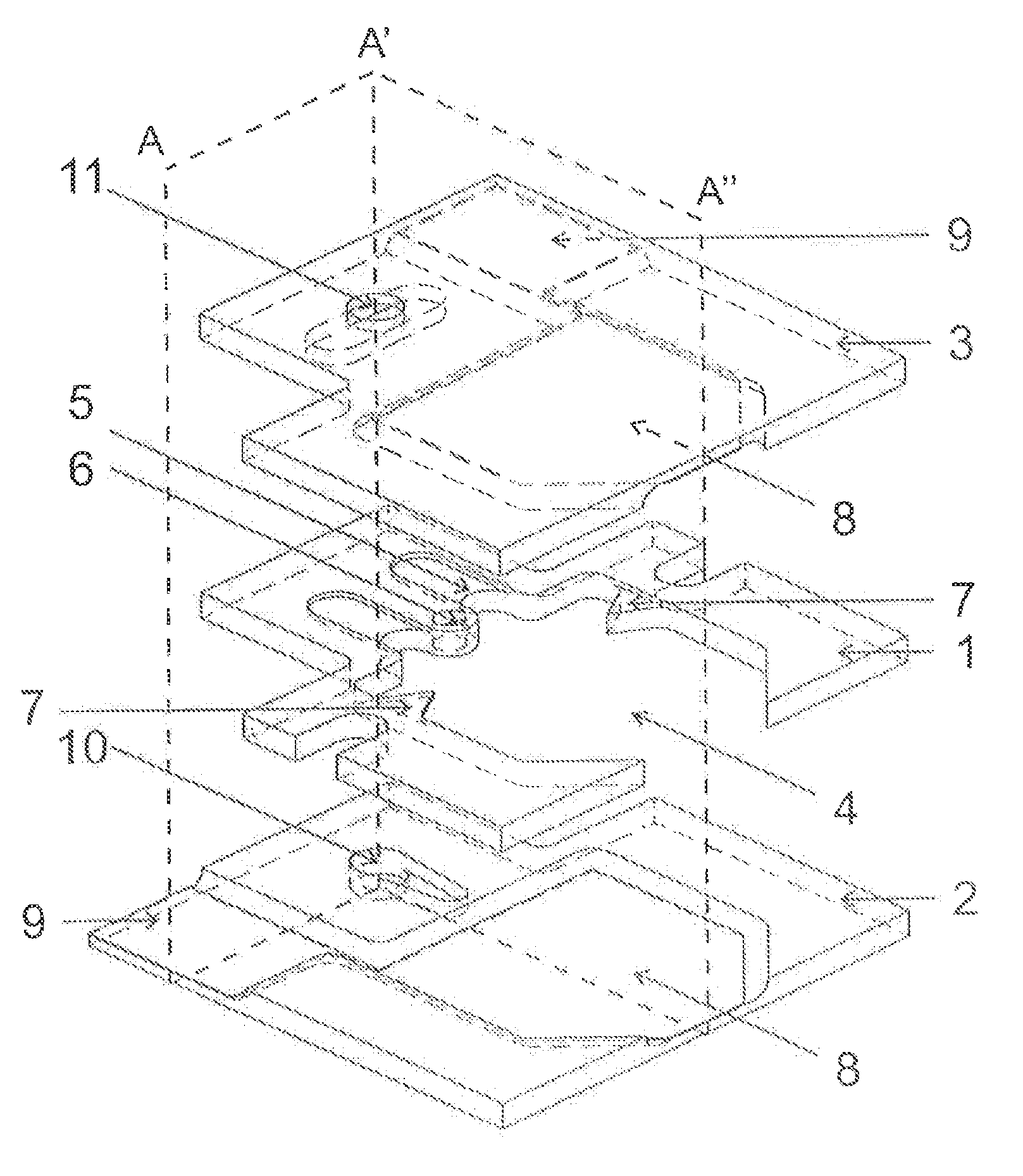
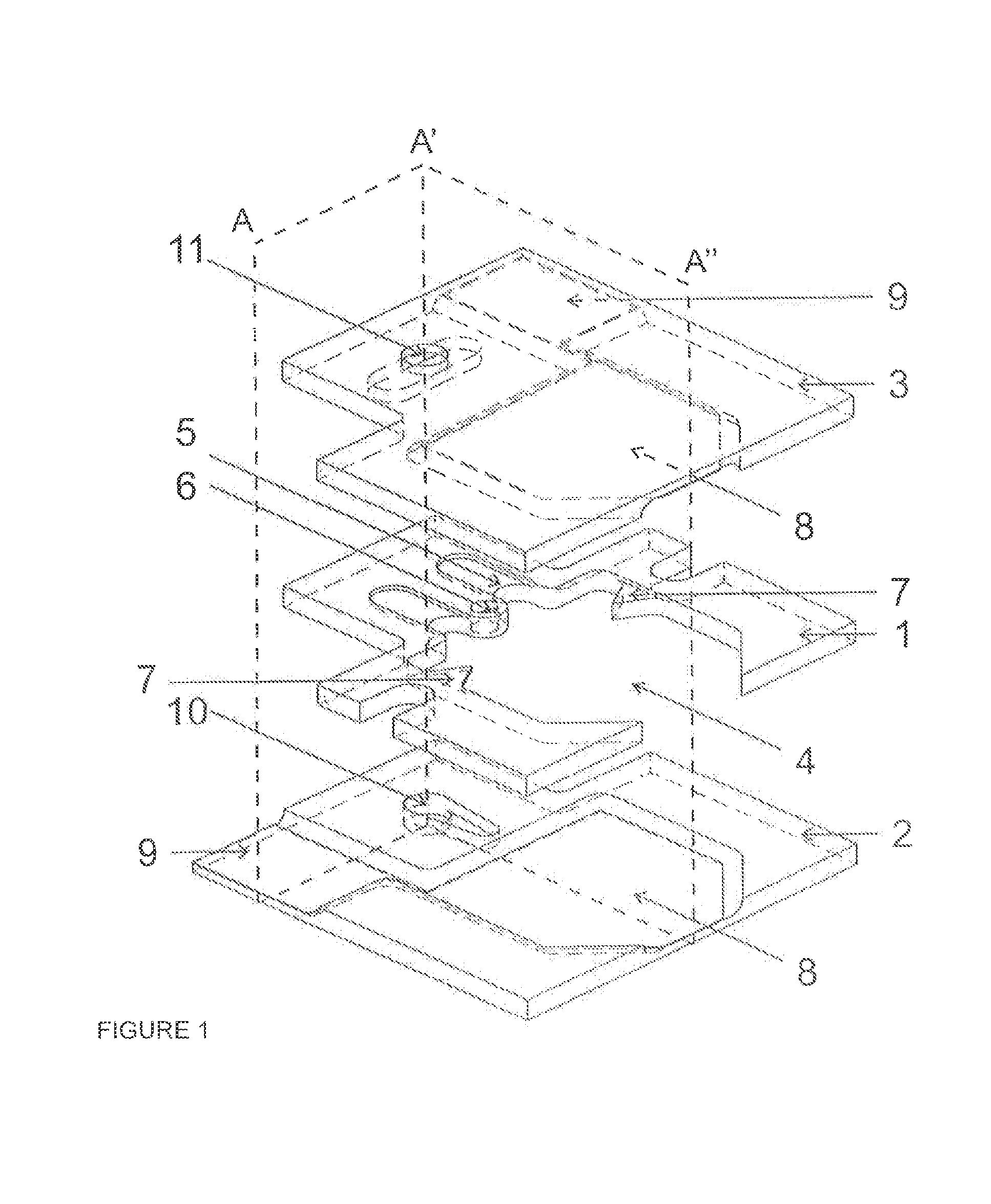
[0026]FIG. 1 shows an exploded view of an inventive embodiment of the flame ionization detector. It comprises three substrates: a central substrate 1 made of silicon, and a lower substrate 2 and an upper substrate 3 which are made of Pyrex glass. A part of the combustion chamber 4, the sample gas nozzle 5 and the combustible gas nozzle 6 are excavated in the central substrate 1 by known microsystem technology methods. Acute projections 7, which extend into the combustion chamber 4 in the vicinity of the nozzles 5, 6, can have a high-voltage pulse applied to them for ignition.
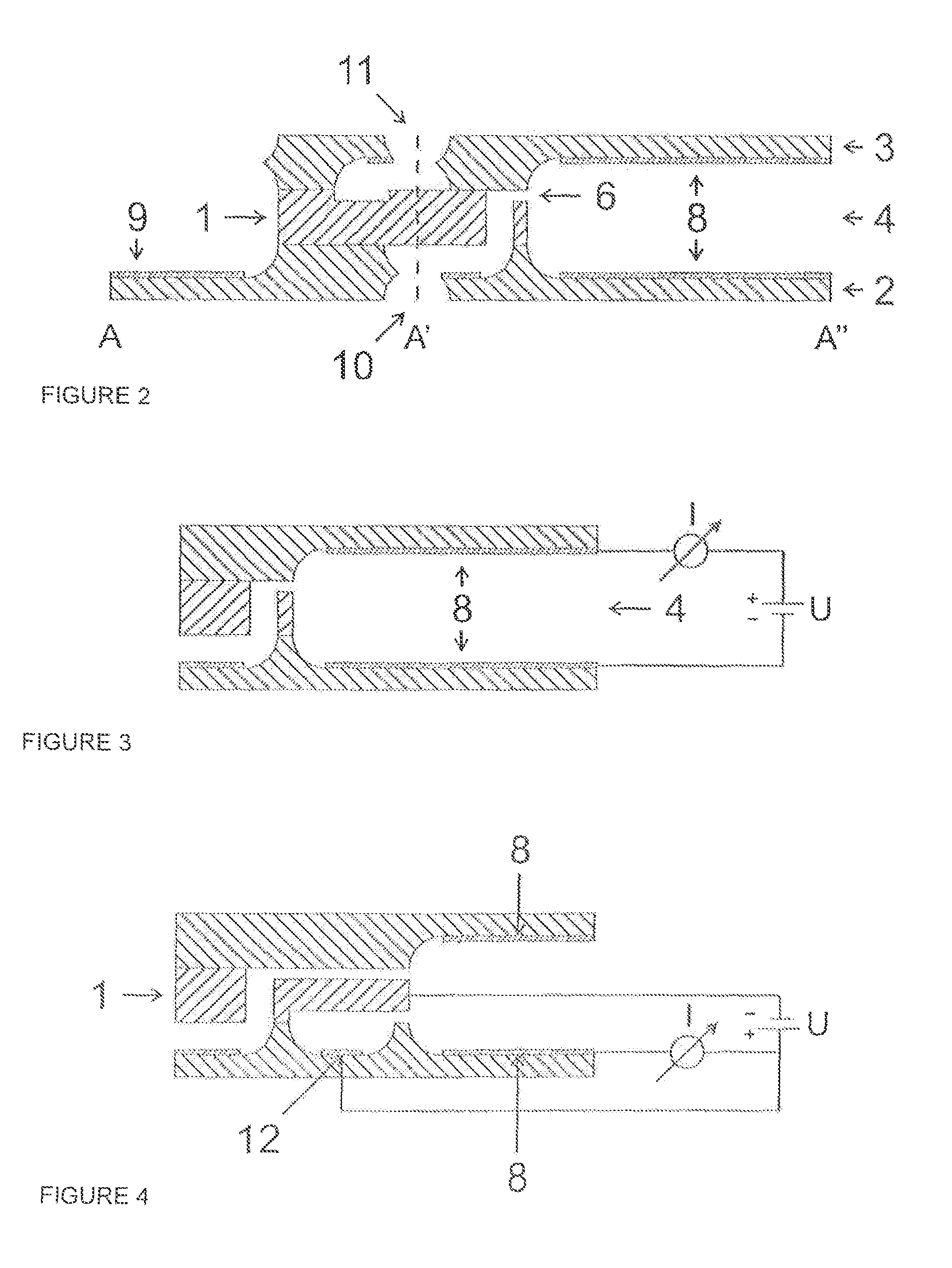
[0027]The lower substrate 2 and the upper substrate 3 are provided with trough-shaped recesses in the region of the combustion chamber 4, and these are provided with a reflective metallization 8. The metallization 8 is connected to bonding lands 9, through which the electrical connection can take place. The substrate 2 lying underneath in the figures also comprises a combustible gas inlet 10, while the upper sub...
PUM
 Login to View More
 Abstract
Description
Claims
Application Information
 Login to View More