

Method for building adaptive soft sensor
a soft sensor and sensor technology, applied in the field of adaptive soft sensor building, can solve the problems of coarse transitions from large number of models, loss of past experiences, and inability to cover the entire input domain of training data, so as to reduce the number of online computations and improve the accuracy of predicting outputs.
- Summary
- Abstract
- Description
- Claims
- Application Information
AI Technical Summary
Benefits of technology
Problems solved by technology
Method used
Image

Examples
Embodiment Construction
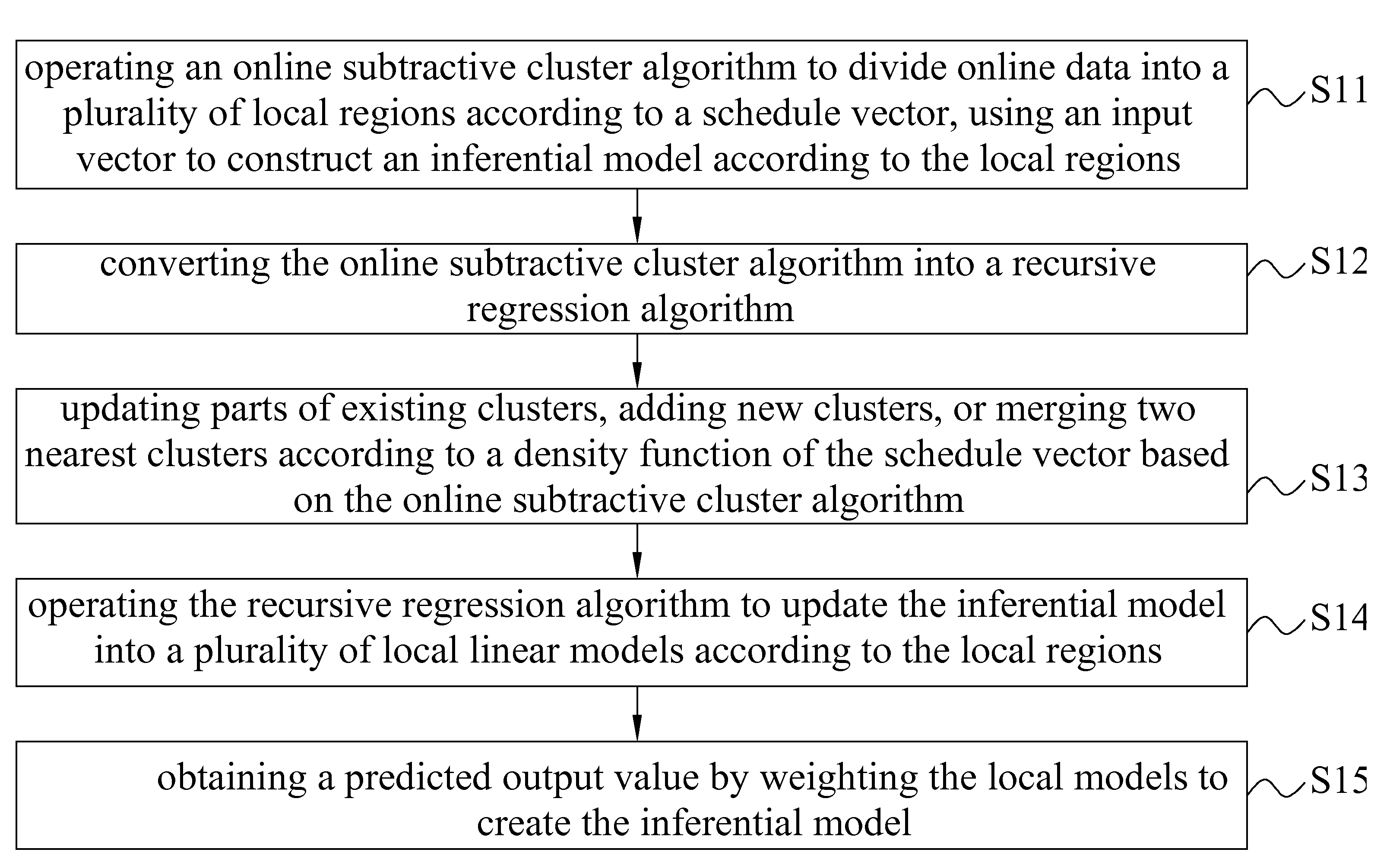
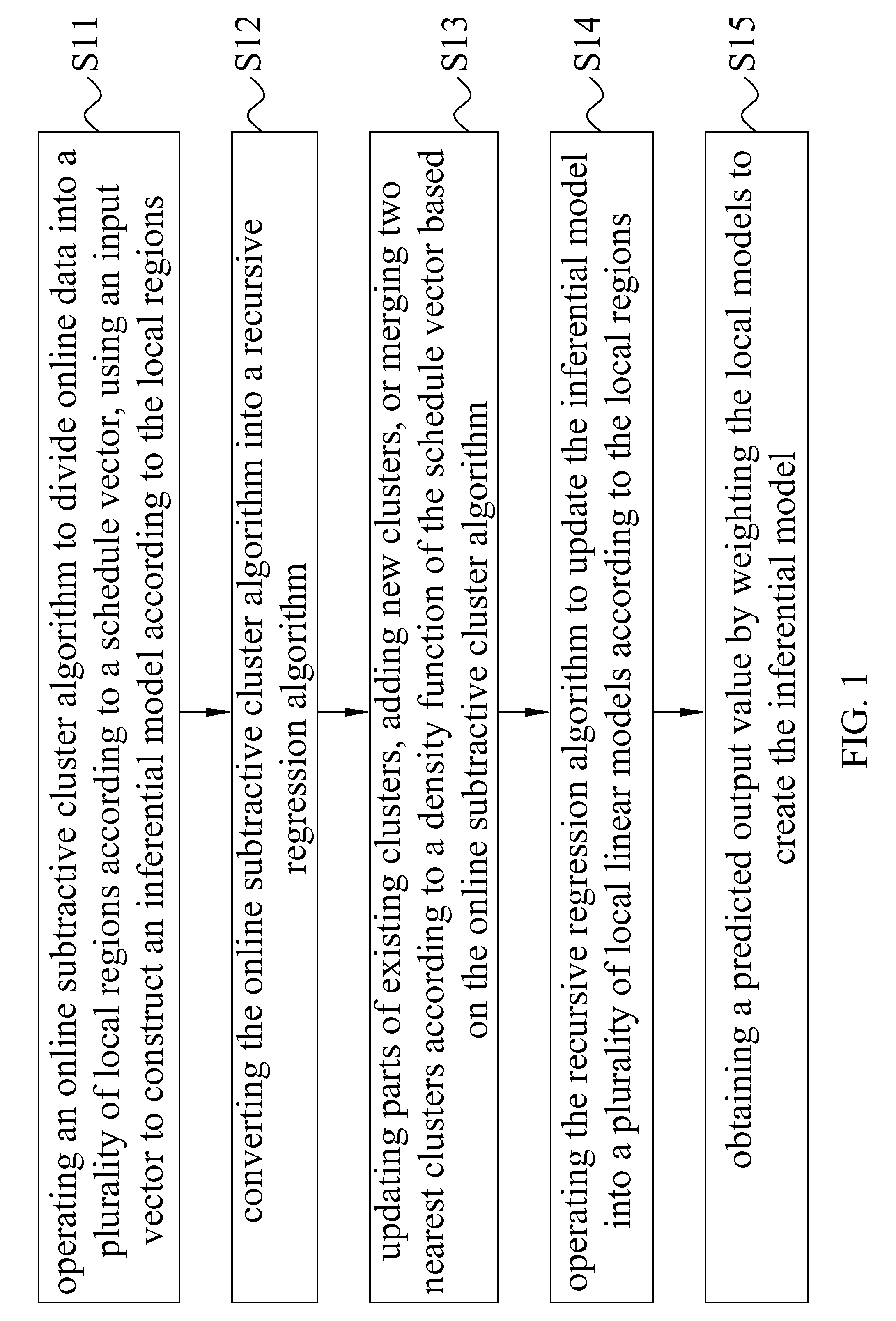
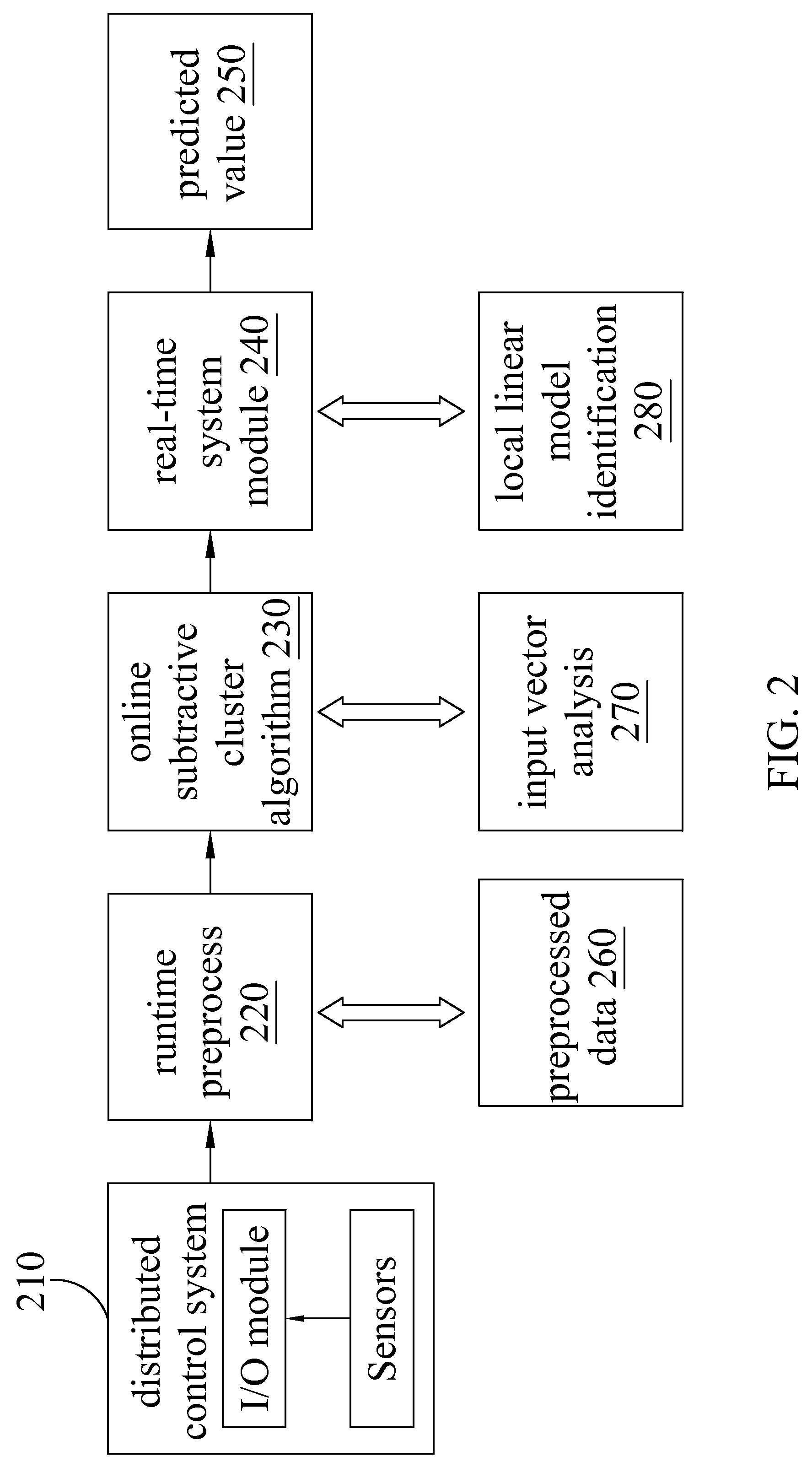
[0031]Referring to FIG. 1, there is illustrated a flow chart of a method for building an adaptive soft sensor according to the present invention. In FIG. 1, a method for building an adaptive soft sensor 1 comprises the following steps:[0032](S11) operating an online subtractive cluster algorithm to divide online data into a plurality of local regions according to a schedule vector, using an input vector to construct an inferential model according to the local regions;[0033](S12) converting the online subtractive cluster algorithm into a recursive regression algorithm;[0034](S13) updating parts of existing clusters, adding new clusters, or merging two nearest clusters according to a density function of the schedule vector based on the online subtractive cluster algorithm;[0035](S14) operating the recursive regression algorithm to update the inferential model into a plurality of local linear models according to the local regions; and[0036](S15) obtaining a predicted output value by we...
PUM
 Login to View More
 Abstract
Description
Claims
Application Information
 Login to View More