Superabsorbent surface-treated carboxyalkylated polysaccharides and process for producing same
What is AI technical title?
AI technical title is built by Patsnap AI team. It summarizes the technical point description of the patent document.
a technology of surface-treated carboxyalkyl polysaccharides and super-absorbent carboxyalkyl polysaccharides, which is applied in the preparation of sugar derivatives, sucrose extraction, medical preparations, etc., can solve the problem that the absorption characteristics of such materials are often insufficient to be useful in the hygiene industry
Active Publication Date: 2013-06-11
ARCHER DANIELS MIDLAND CO
View PDF32 Cites 170 Cited by
Summary
Abstract
Description
Claims
Application Information
AI Technical Summary
This helps you quickly interpret patents by identifying the three key elements:
Problems solved by technology
Method used
Benefits of technology
Benefits of technology
The present patent is about surface-treated carboxyalkyl polysaccharide particles that have superabsorbent properties. These particles can be made from carboxyalkylated starches or celluloses and are suitable for use in hygiene articles and absorbent members. The particles have a high level of internal cross-linking and a specific acidic surface that exhibits an ester band as determined by ATR-IR spectroscopy. The process for manufacturing these particles involves dispersing the starch or cellulose in an alkaline medium, reacting it with a carboxyalkylating reagent, surface-treating it with a non-cross-linking acid, and heating it. The surface-treated particles have a high level of internal cross-linking linkages and an ester band as determined by ATR-IR spectroscopy. The technical effect of this patent is the creation of highly effective superabsorbent particles with excellent absorbency properties.
Problems solved by technology
However, in addition to being costly, the absorption characteristics of such materials were often insufficient to be useful in the hygiene industry.
Method used
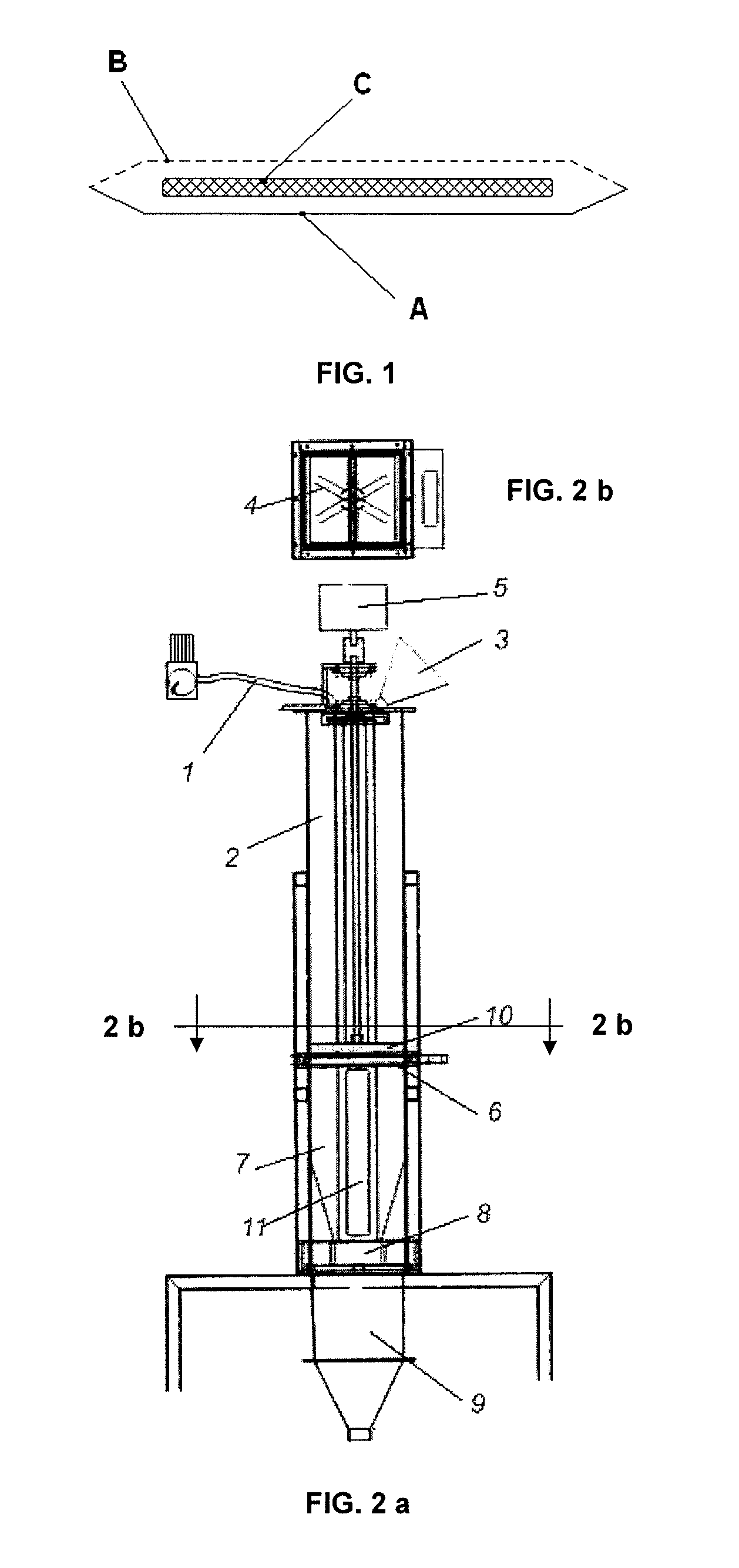
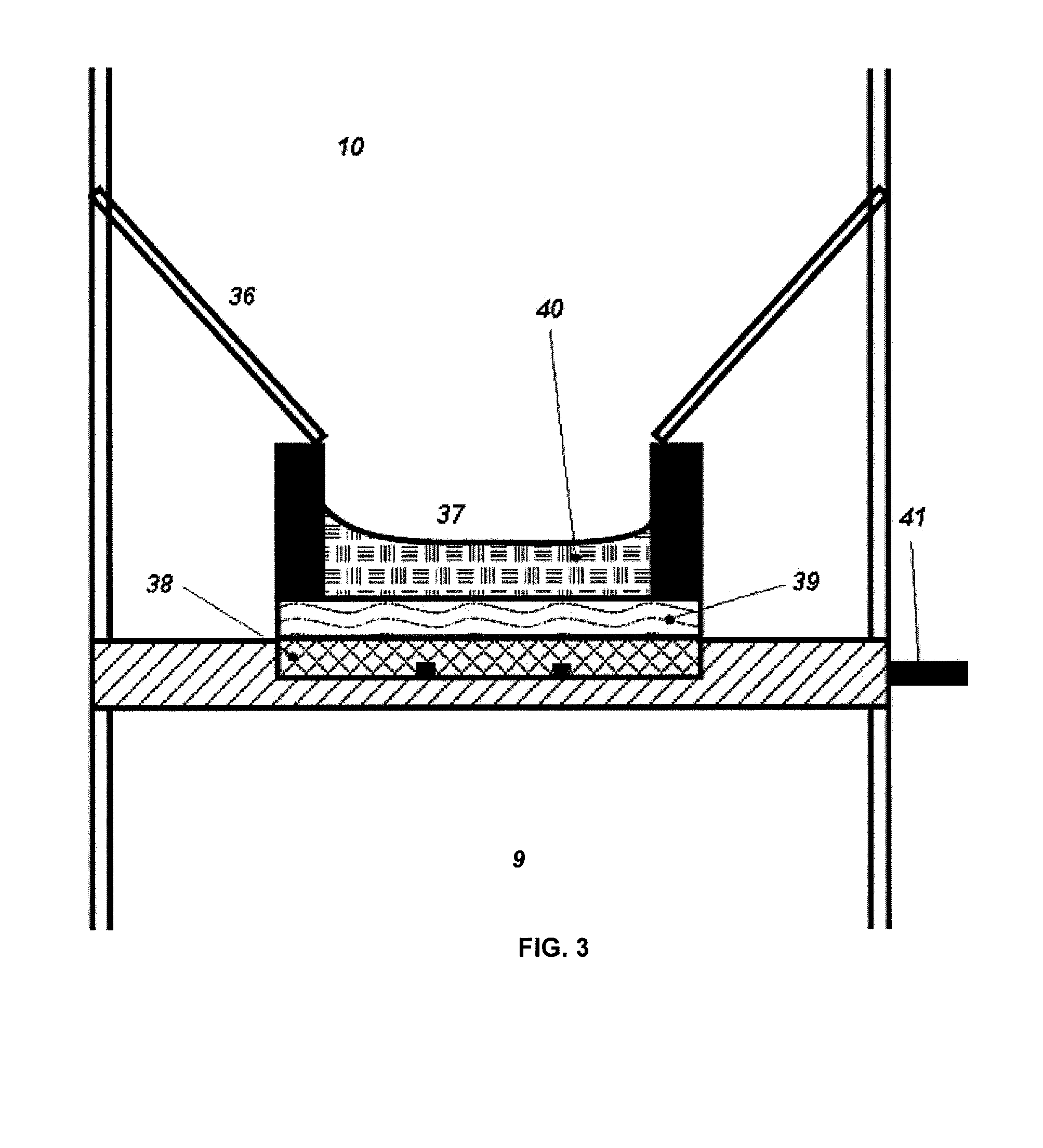
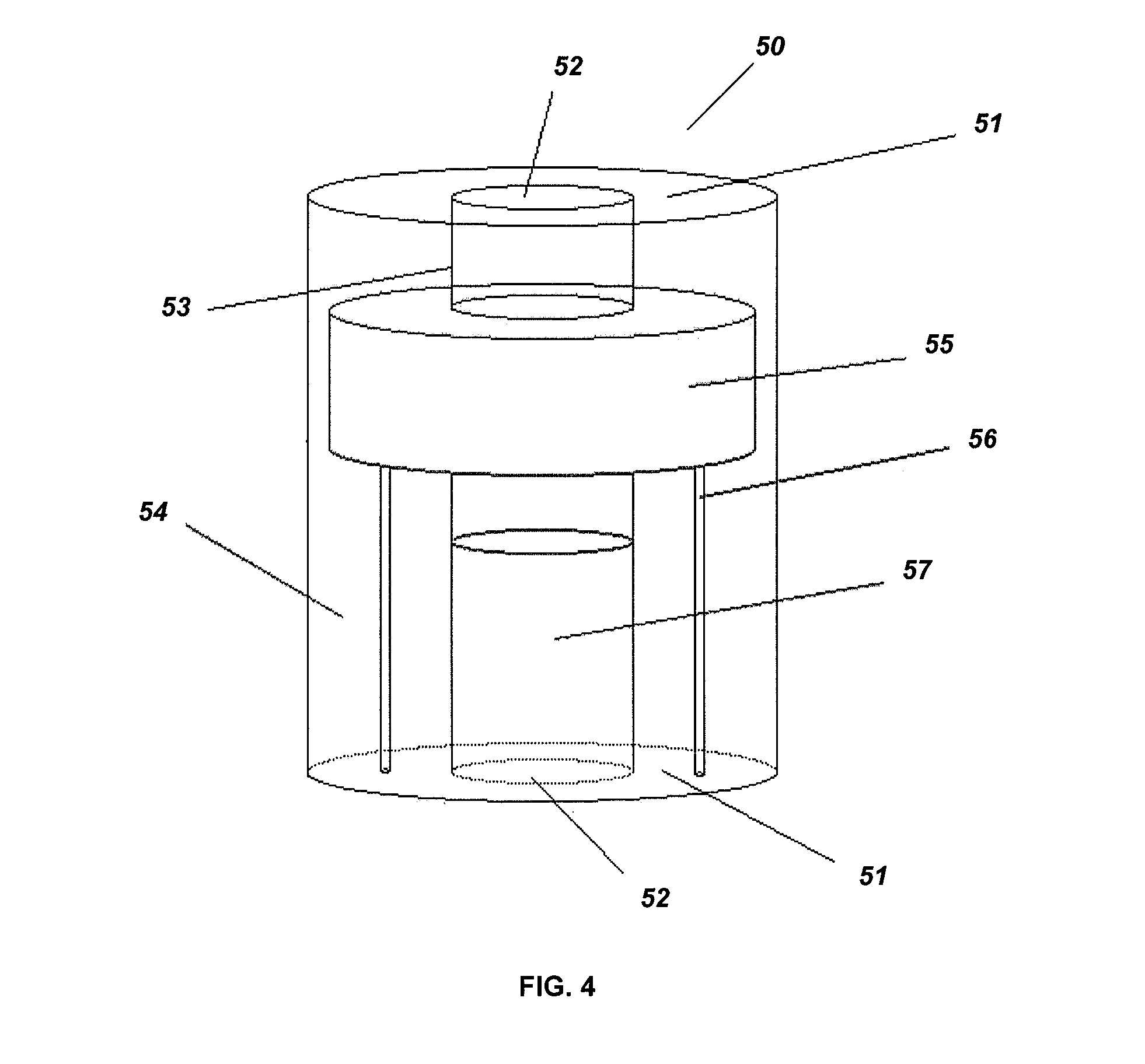
the structure of the environmentally friendly knitted fabric provided by the present invention; figure 2 Flow chart of the yarn wrapping machine for environmentally friendly knitted fabrics and storage devices; image 3 Is the parameter map of the yarn covering machine
View more
Image
Smart Image Click on the blue labels to locate them in the text.
Viewing Examples
Smart Image
Click on the blue label to locate the original text in one second.
Reading with bidirectional positioning of images and text.
[0170]Water (900 ml), potato starch (297 g; 14% moisture content) and sodiumhydroxide (5.6 g; 50% solution) were added to a two-literbeaker. The mixture was stirred over a period of 35 minutes at a temperature of 40° C. Epichlorohydrin (1.197 g) was subsequently added and the mixture allowed to react for an additional 35 minutes while stirring to produce a cross-linked starchslurry. Additional sodiumhydroxide (192 g; 50% solution) was added and the slurry stirred for 5 minutes producing a gelatinized starch. The gelatinized starch was heated at 60° C. and mixed with sodium monochloroacetate (252 g; added stepwise over a period of 15 minutes). The gel was left to react for a period of 1 hour, precipitated by the addition of methanol (˜7.0 liters) and filtered. The resulting precipitate was slurried in a methanol / water solution (2.0 liters; 9:1 V / V), the pH adjusted to 8.5-9.0 using hydrochloric acid and heated. The slurry was...
the structure of the environmentally friendly knitted fabric provided by the present invention; figure 2 Flow chart of the yarn wrapping machine for environmentally friendly knitted fabrics and storage devices; image 3 Is the parameter map of the yarn covering machine
Login to View More
PUM
Property
Measurement
Unit
size
aaaaa
aaaaa
size
aaaaa
aaaaa
water content
aaaaa
aaaaa
Login to View More
Abstract
Surface-treated carboxyalkylated polysaccharides comprising a biobased content of at least 82% are described herein. The surface-treated carboxyalkylated polysaccharides comprise a CRC of at least 18 g / g, a FSC of at least 26 g / g, and an AUL at 0.7 psi of at least 14 g / g. Processes for the manufacture of surface-treated carboxyalkylated polysaccharides are also described herein.
Description
CROSS REFERENCE TO RELATED APPLICATIONS[0001]The present application claims the benefit of U.S. Provisional Application No. 60 / 826,845 filed on Sep. 25, 2006 and U.S. Provisional Applications 60 / 912,471; 60 / 912,611 and 60 / 912,623 filed on Apr. 18, 2007 the entire contents of which are incorporated by reference.FIELD OF THE INVENTION[0002]The present disclosure relates to superabsorbent surface-treated carboxyalkyl polysaccharides. More specifically, but not exclusively, the present disclosure also relates to a process for the manufacture of surface-treated carboxyalkyl polysaccharides having absorbent properties. The present disclosure also relates to formulations and hygiene articles comprising surface-treated carboxyalkyl polysaccharides.BACKGROUND OF THE INVENTION[0003]Water absorbent materials, such as superabsorbent polymers, can be employed in various applications such as in disposable hygiene articles (e.g. diapers, incontinence articles, feminine hygiene products airlaids an...
Claims
the structure of the environmentally friendly knitted fabric provided by the present invention; figure 2 Flow chart of the yarn wrapping machine for environmentally friendly knitted fabrics and storage devices; image 3 Is the parameter map of the yarn covering machine
Login to View More
Application Information
Patent Timeline
Application Date:The date an application was filed.
Publication Date:The date a patent or application was officially published.
First Publication Date:The earliest publication date of a patent with the same application number.
Issue Date:Publication date of the patent grant document.
PCT Entry Date:The Entry date of PCT National Phase.
Estimated Expiry Date:The statutory expiry date of a patent right according to the Patent Law, and it is the longest term of protection that the patent right can achieve without the termination of the patent right due to other reasons(Term extension factor has been taken into account ).
Invalid Date:Actual expiry date is based on effective date or publication date of legal transaction data of invalid patent.



 Login to View More