
Rootkit monitoring agent built into an operating system kernel
a monitoring agent and operating system technology, applied in the field of malicious software detection, can solve the problems of detecting rootkits, preventing rootkits from degrading system performance, code added or replaced by kernel-level rootkits, etc., and preventing subsequent negative effects of unauthorized changes
- Summary
- Abstract
- Description
- Claims
- Application Information
AI Technical Summary
Benefits of technology
Problems solved by technology
Method used
Image

Examples
Embodiment Construction
Overview
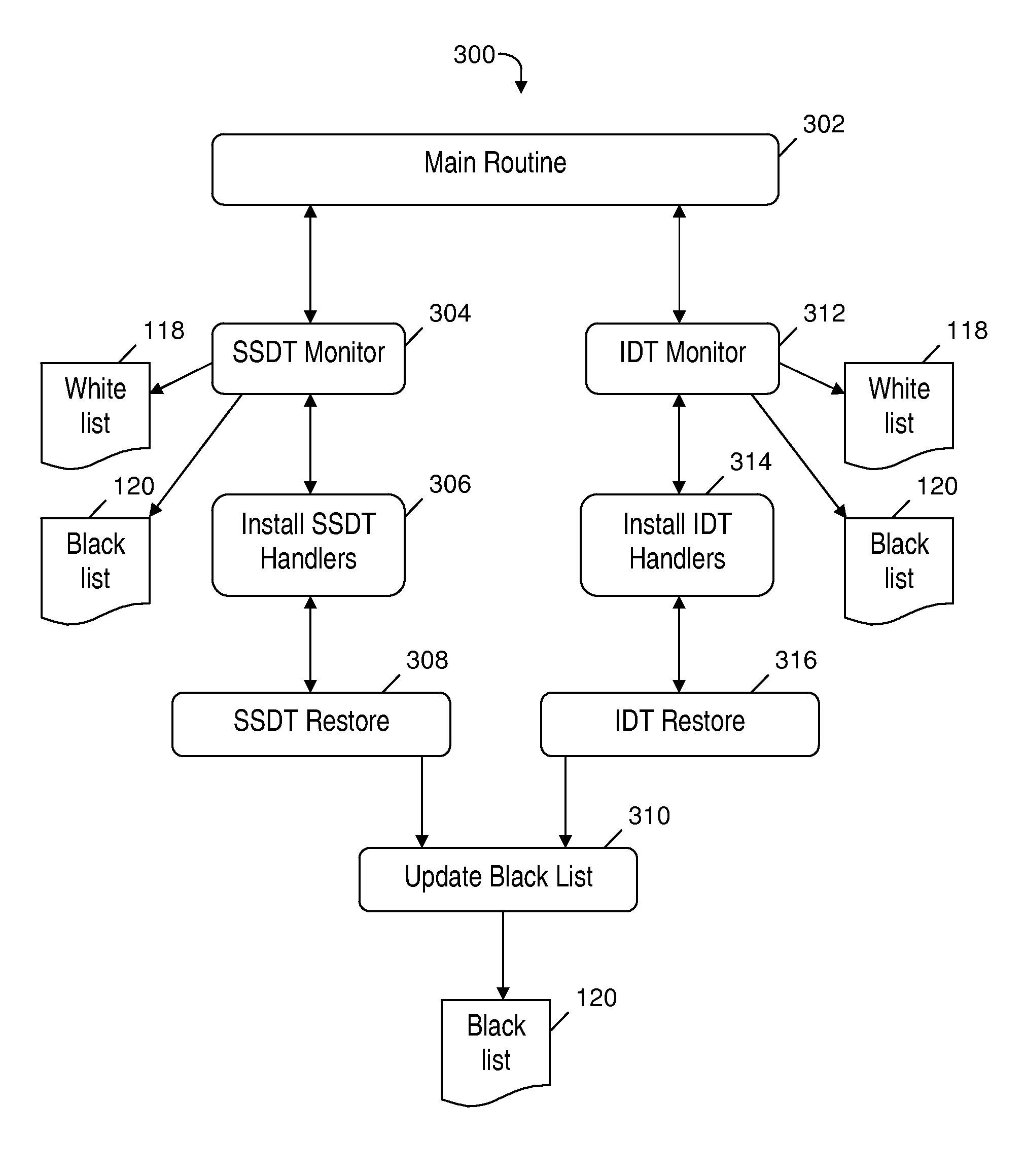
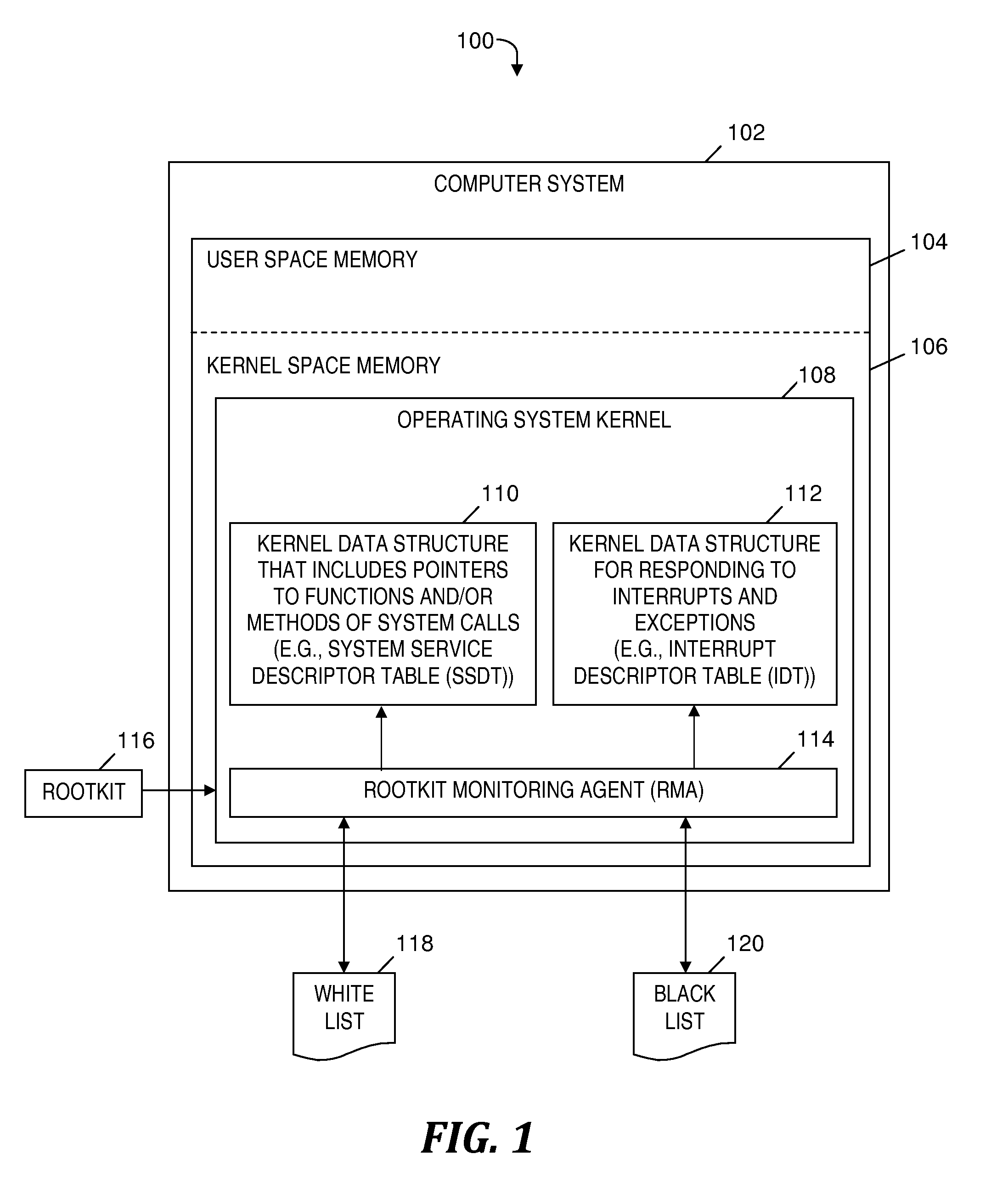
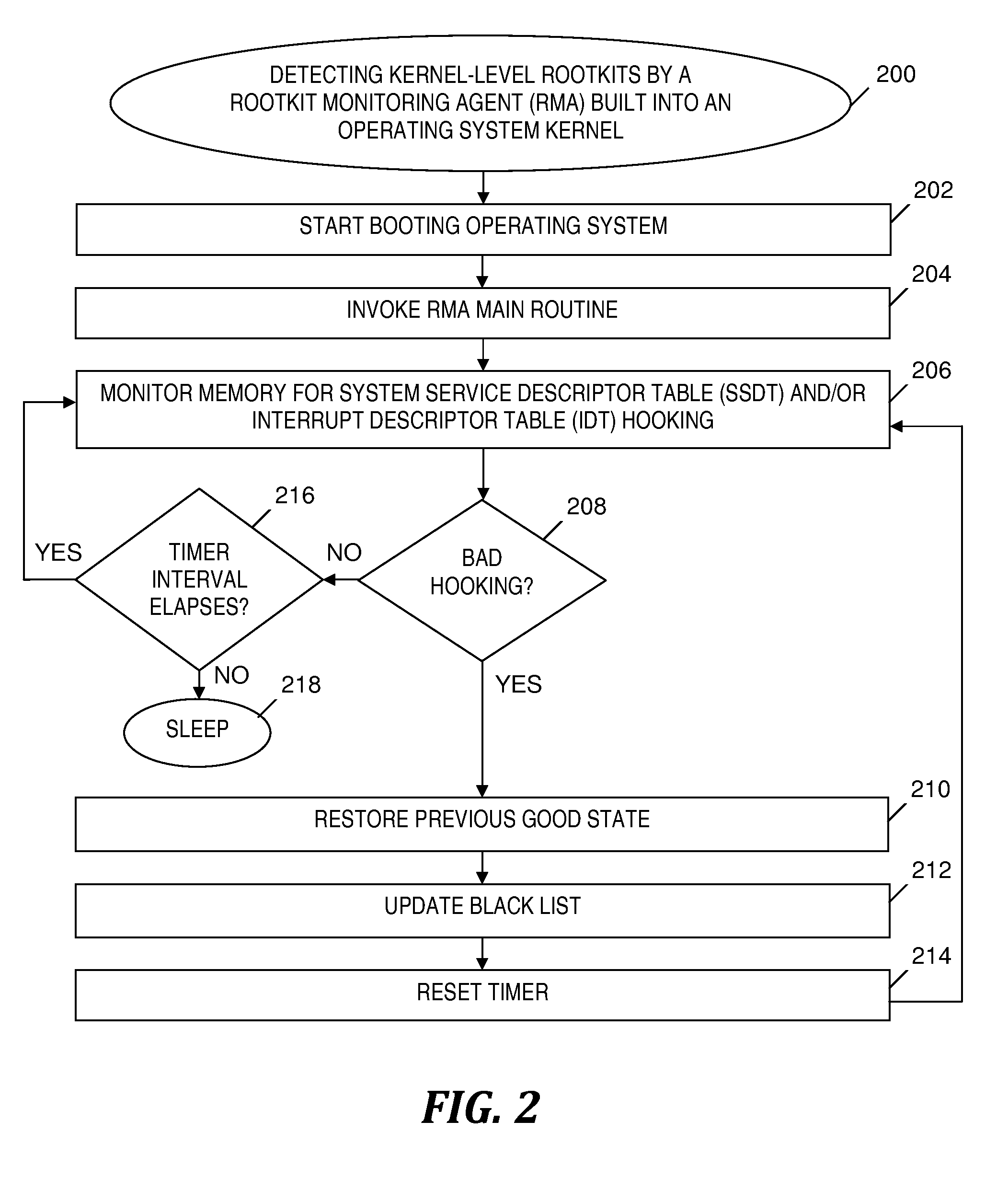
[0016]Embodiments of the present invention provide a software agent (hereinafter referred to as the Rootkit Monitoring Agent or RMA) embedded in a kernel of any operating system. The RMA detects and prevents effects (e.g., attacks) of kernel-level rootkits (i.e., rootkits that execute in an operating system kernel; a.k.a. kernel-based rootkits) by monitoring changes to entries in kernel data structures such as the System Service Descriptor Table (SSDT) and the Interrupt Descriptor Table (IDT). The RMA may become active in response to the operating system kernel being loaded into the main memory by the boot-loader program that resides in the boot-sector of the disk. After detecting an unauthorized change to a kernel data structure entry, the RMA restores the changed entry to a previously stored state that is known to be a state unaffected by a kernel-level rootkit. The RMA also stores the changed entry to a black list that may be used to subsequently block further action by t...
PUM
 Login to View More
 Abstract
Description
Claims
Application Information
 Login to View More