
Methods and systems for fuel ethanol content determination via an oxygen sensor
a technology of fuel ethanol and oxygen sensor, which is applied in the direction of electrical control, instruments, material electrochemical variables, etc., can solve the problems of engine dilution and substantial errors in the measurement of fuel alcohol content, and achieve the reduction of irregularities in fuel ethanol estimation, the effect of improving the reliability of the sensor output and saving costs and components
- Summary
- Abstract
- Description
- Claims
- Application Information
AI Technical Summary
Benefits of technology
Problems solved by technology
Method used
Image

Examples
Embodiment Construction
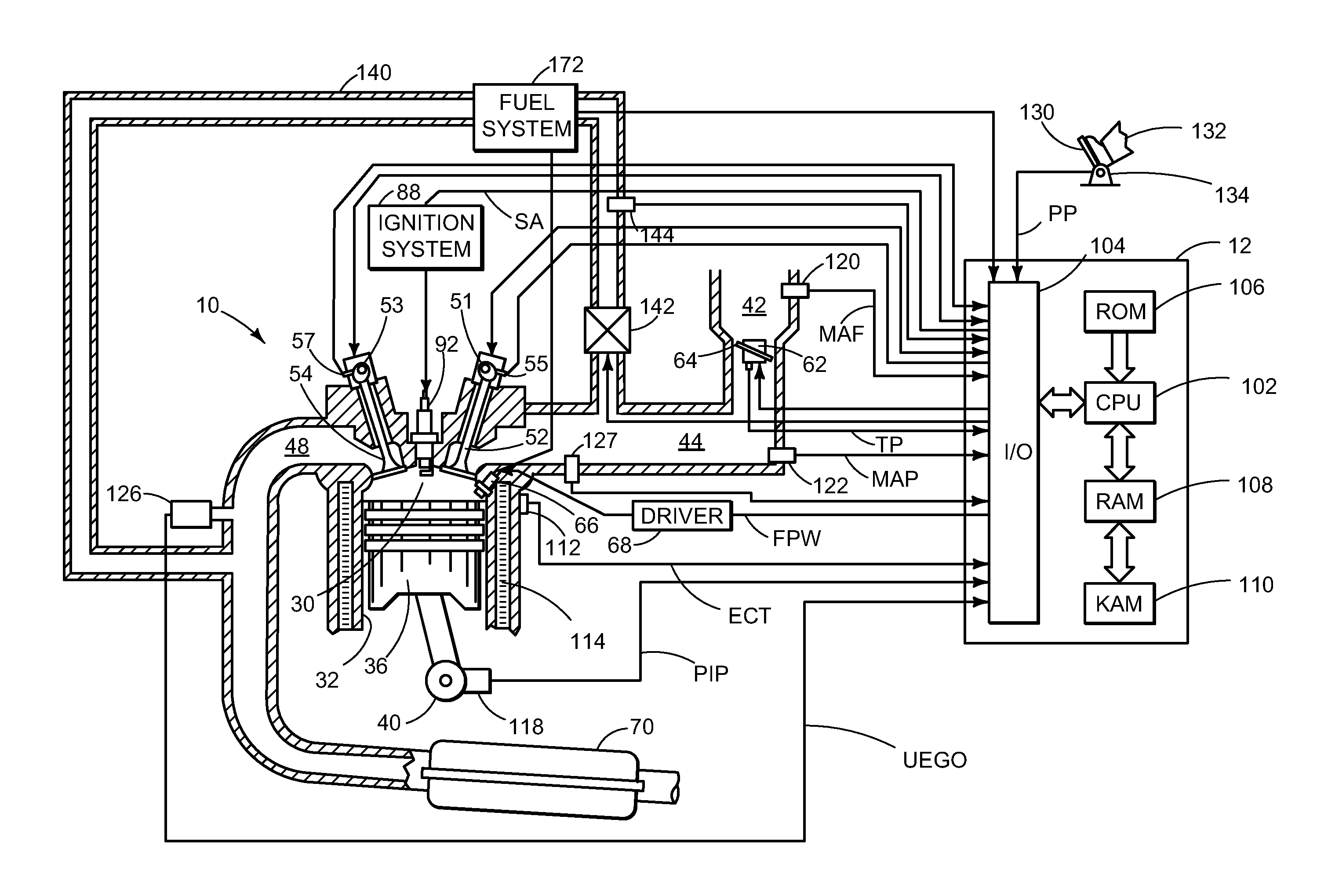
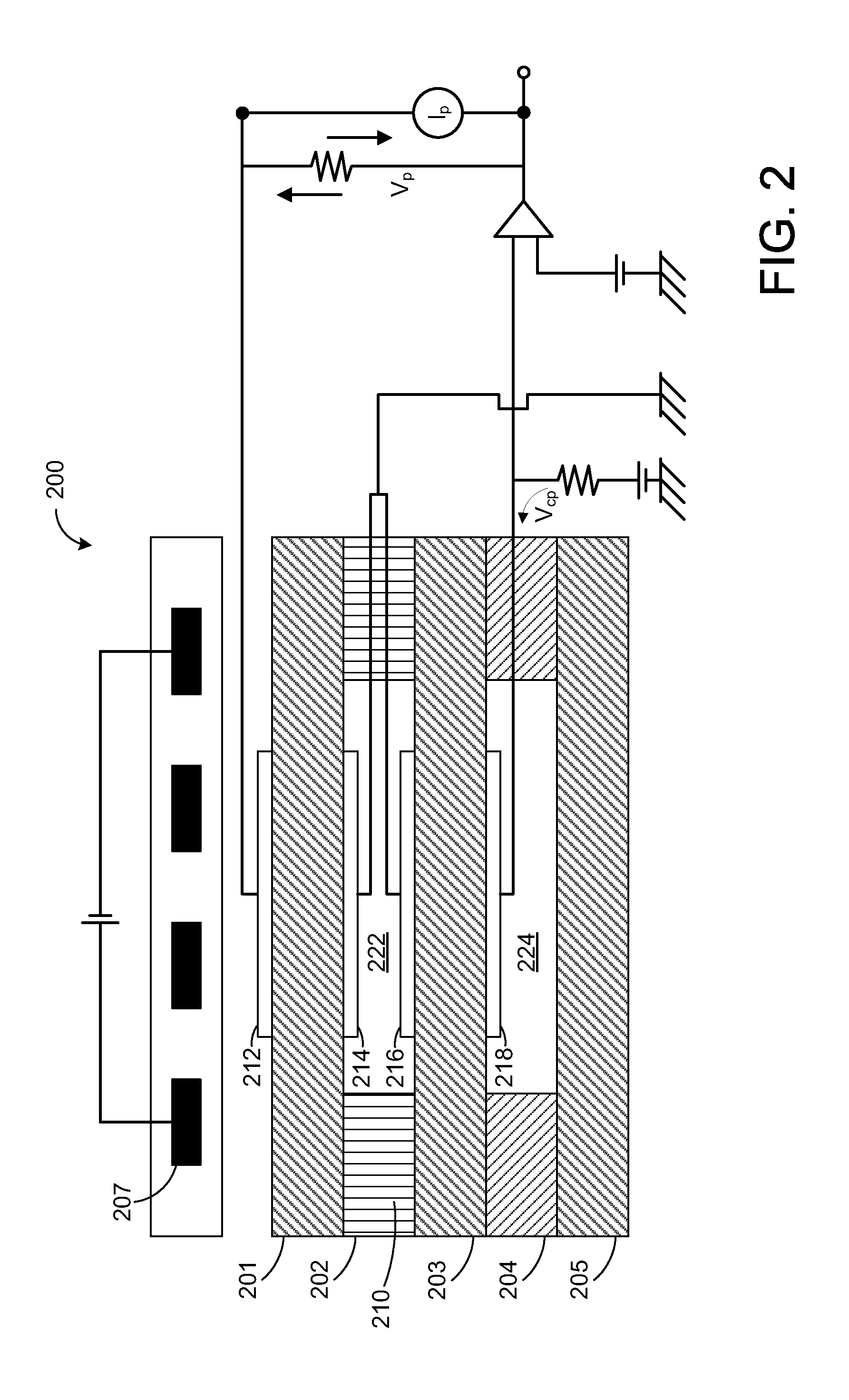
[0014]The following description relates to a method for determining an amount of alcohol in a fuel mixture (e.g., ethanol and gasoline) based on outputs from an intake air or exhaust gas sensor, such as an oxygen sensor. For example, the sensor may be operated a first, lower voltage to obtain a first output which indicates a humid air oxygen reading. The sensor may then be operated at a second, higher voltage to obtain a second output which indicates a dry air oxygen reading. An alcohol transfer function may be corrected based on the dry air oxygen reading and the first output may then be corrected based on the corrected alcohol transfer function to infer amount of alcohol in fuel injected to the engine. In this manner, part-to-part variability of different oxygen sensors may be reduced such that a more accurate indication of fuel alcohol content may be determined. In one example, engine operating parameters such as spark timing and / or fuel injection amount may be adjusted based on ...
PUM
| Property | Measurement | Unit |
|---|---|---|
| voltage | aaaaa | aaaaa |
| humidity | aaaaa | aaaaa |
| reference voltage | aaaaa | aaaaa |
Abstract
Description
Claims
Application Information
 Login to View More