Supercharge Your Innovation With Domain-Expert AI Agents!

Method and apparatus for delivering a fluid to a patient

a technology for delivering fluids and patients, applied in the field of improved apparatus and methods for delivering fluids to human or animal subjects, can solve problems such as significant problems, hypoxia and death, and the issue of “dead space”

Active Publication Date: 2016-09-20
DUNLOP COLIN
View PDF31 Cites 0 Cited by
  • Summary
  • Abstract
  • Description
  • Claims
  • Application Information

AI Technical Summary

Benefits of technology

This approach enables precise and efficient anaesthetic delivery with reduced anaesthetic usage, minimizing environmental impact and improving anaesthetic depth and safety for multiple subjects simultaneously.

Problems solved by technology

Too little oxygen reaching the lungs, or too much re-breathed CO2 reaching the lungs, can lead to significant problems, including hypoxia and death.
An important issue with anaesthetic circuits is the issue of “dead space”.
For small animals and small humans, however, the amount of machine dead space can become critical.
Any additional machine dead space may cause significant issues for anaesthesia.
For example, an extra 10 mls of dead space can cause the animal to hyperventilate, become hypoxic and die.
Even if patients do not become hypoxic, the delivery of anaesthetic is much less efficient and it is more difficult to achieve anaesthesia.
For small animals and infants, however, this is not always a satisfactory solution.
With smaller airways, the diameter of the tube lumen becomes so small that the patient may not be able to draw enough gas into their lungs (the small diameter tubing provides significant resistance to inspiration).
Nevertheless, even small masks still add dead space which can be significant.
In fact, dead space issues for small animals such as lab animals (e.g. rats, mice and other lab animals) are so significant that apparatus and methods other than traditional delivery of anaesthetic gas mixture via masks or tubes must be contemplated.
Such traditional anaesthetics, however, are environmentally unsound and have generally fallen out of use.
This is very expensive.
Also, a significant amount of anaesthetic may leak into the surrounding environment from the open system, causing a potential health hazard.
The active provision and removal of anaesthetic / gas mixture is therefore very wasteful and expensive.
With these systems, it is also very difficult to ensure that a subject is anesthetized with any precision.
It is difficult to tell with any accuracy the concentrations of anaesthetic gas mixture at the patient's respiratory orifice.
It can therefore be very difficult to anesthetize subjects with this system and maintain anaesthetic depth.
Again, however, a lot of anaesthetic is used to fill the induction chamber sufficiently to anesthetize the animals, and little or no precision in the amount of anaesthetic administered is possible.
This can lead to accidents, not maintaining anaesthesia, or even death of the subjects.
This is complex, difficult to set up, and difficult to ensure that the animals are placed appropriately by each respective mask and maintained there while anaesthetic takes effect.
The number of lines and flow meters required for the anaesthetic machine is also complex and expensive.

Method used

the structure of the environmentally friendly knitted fabric provided by the present invention; figure 2 Flow chart of the yarn wrapping machine for environmentally friendly knitted fabrics and storage devices; image 3 Is the parameter map of the yarn covering machine
View more

Image

Smart Image Click on the blue labels to locate them in the text.
Viewing Examples
Smart Image
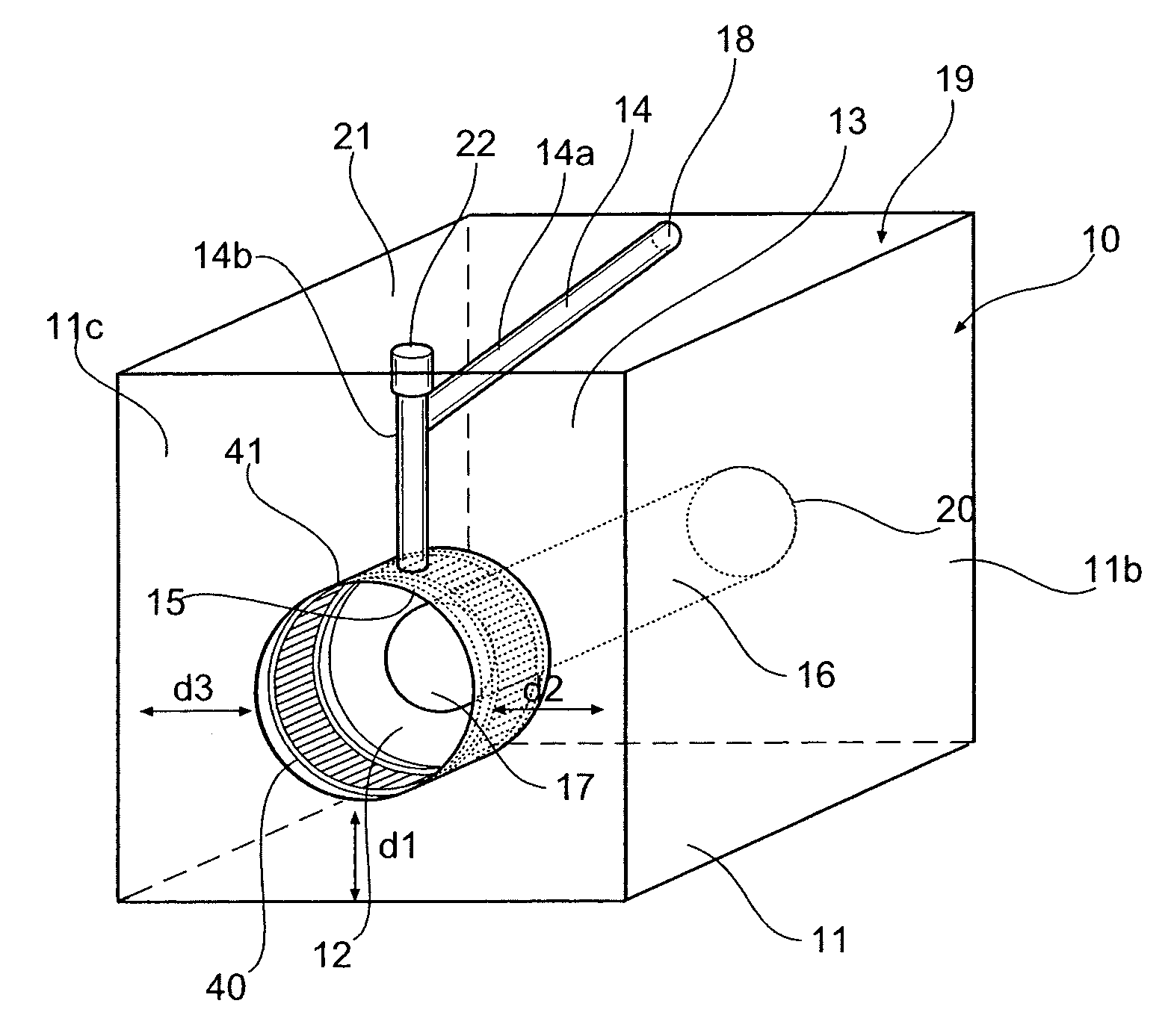
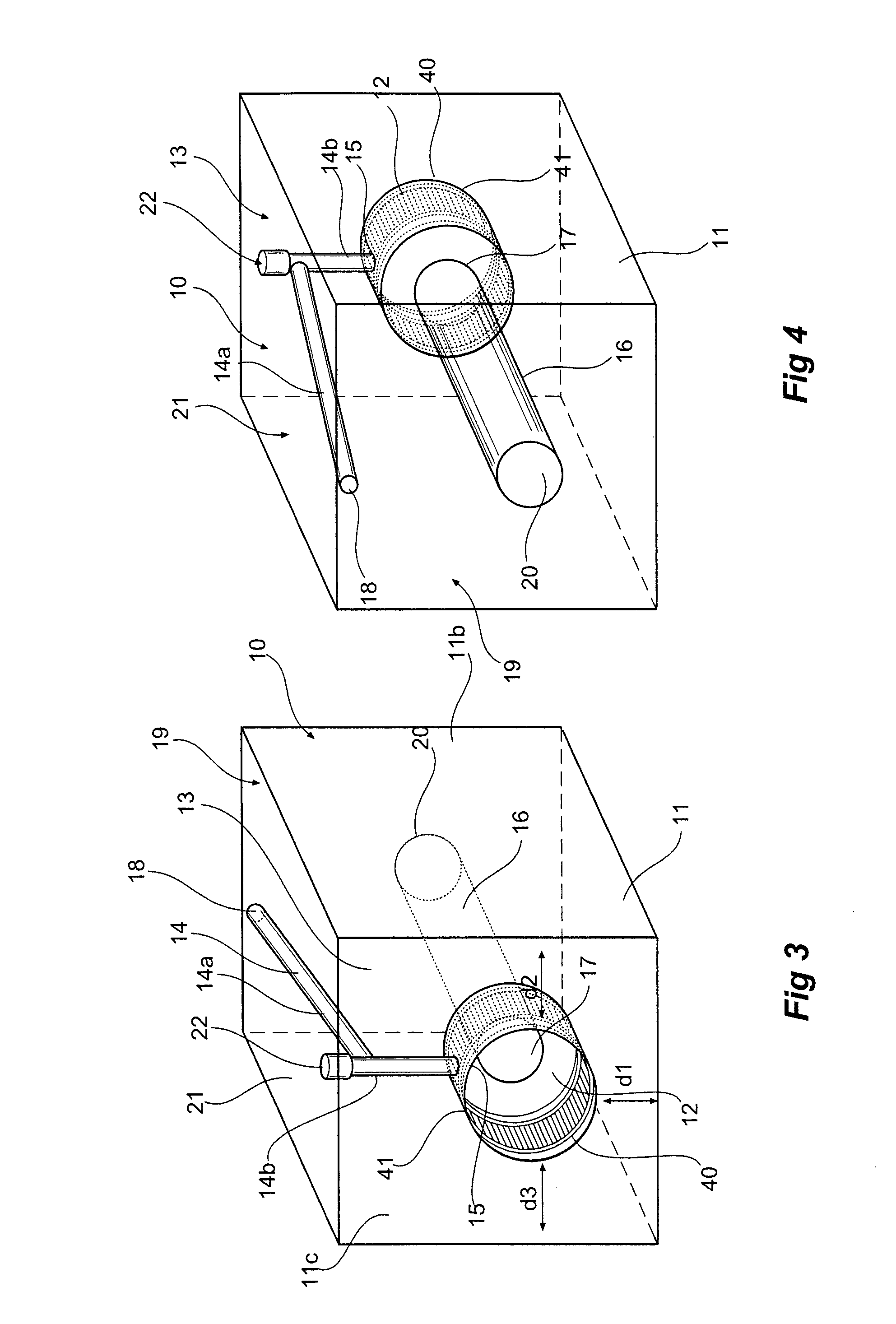
  • Method and apparatus for delivering a fluid to a patient
  • Method and apparatus for delivering a fluid to a patient
  • Method and apparatus for delivering a fluid to a patient

Examples

Experimental program
Comparison scheme
Effect test

Embodiment Construction

[0066]As discussed in the preamble of this specification, delivery of anaesthetic to small animals and VSAs is difficult, particularly with modern anaesthetics like methyoxyflurane. Small animals and VSAs in particular have small respiratory volumes, and therefore the amount of dead space that is in any anaesthetic delivery system is critical. Typical volume of a mouse breath, for example, is less than 1 mm3. In order to combat dead space issues, it is known to use “high flow” systems to anesthetize subjects.

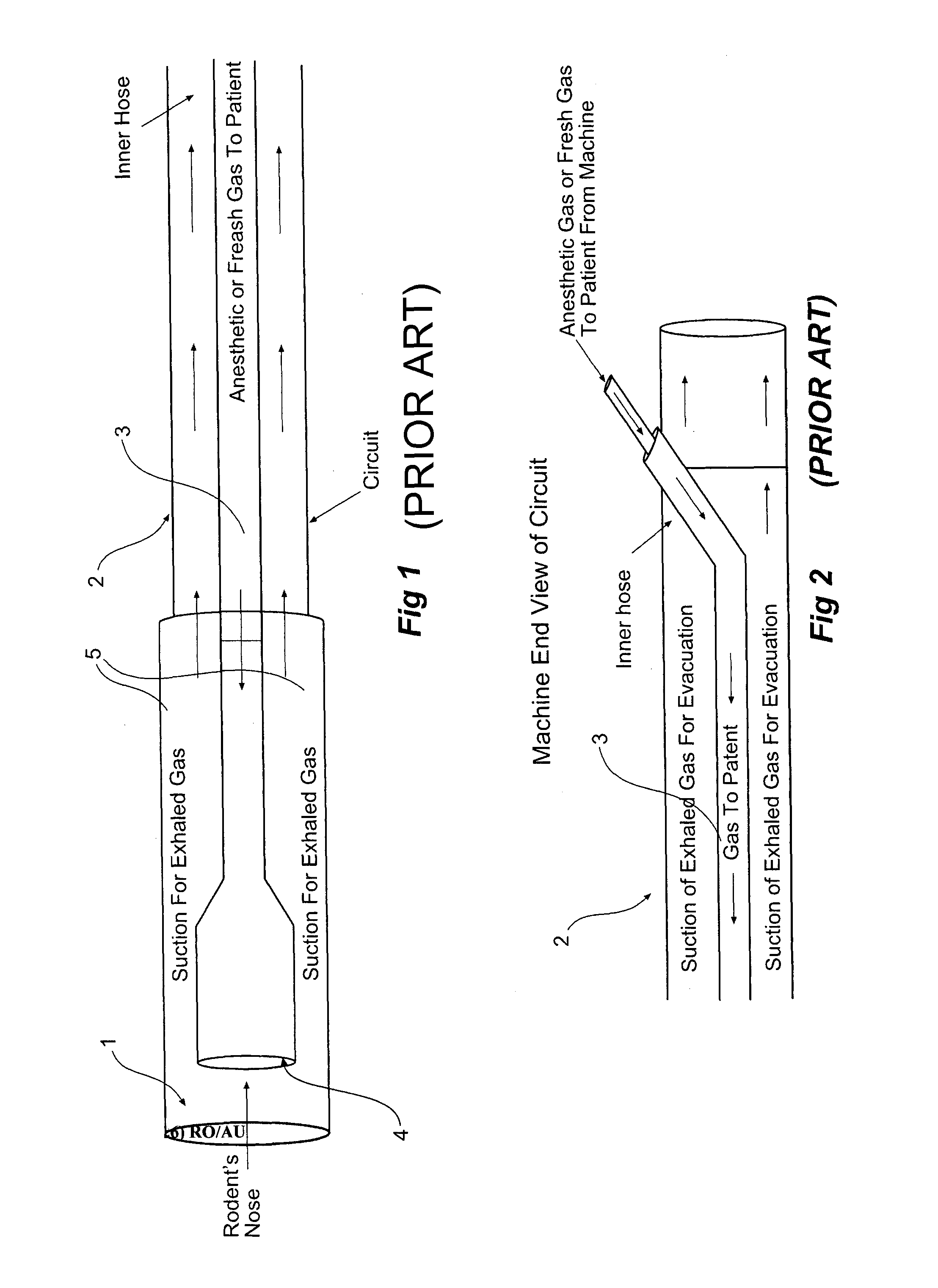
[0067]Referring to FIGS. 1 and 2, a diagram of a typical high flow system is shown.

[0068]The system comprises a “mask”1 attached to the end of an anaesthetic circuit (generally designated by reference numeral 2). The mask 1 is not really a mask in the sense that it seals to the face of the subject. Rather, the subject is placed next to the mask or with the respiratory orifice projecting into the mask (e.g. nose and mouth of a rodent). Anaesthetic is then pumped along a central l...

the structure of the environmentally friendly knitted fabric provided by the present invention; figure 2 Flow chart of the yarn wrapping machine for environmentally friendly knitted fabrics and storage devices; image 3 Is the parameter map of the yarn covering machine
Login to View More

PUM

No PUM Login to View More

Abstract

An apparatus for facilitating delivery of a fluid, such as an anaesthetic fluid, to the respiratory tract of a subject. It includes a fluid line substrate, in the form of a block having conduits formed therein for delivery and removal of an anaesthetic. A subject port is formed to receive the anatomy of the patient. A mask apparatus is arranged for mating with the subject port, and having an opening to receive the nose and mouth of the subject.

Description

CROSS REFERENCE TO RELATED APPLICATIONS[0001]The present application is a National Phase Application of International Application No. PCT / AU2010 / 000975, filed Aug. 3, 2010, which claims priority to Australian Patent Applications No. 2009903614, filed Aug. 3, 2009, which applications are incorporated herein fully by this reference.FIELD OF THE INVENTION[0002]The present invention relates to an improved apparatus and method for delivering a fluid to a human or animal subject, and particularly, but not exclusively, to an improved apparatus and method for delivering a fluid to a small animal subject.BACKGROUND OF THE INVENTION[0003]In anaesthesia, anaesthetic gases are delivered to subjects, such as patients, usually utilizing one of a number of types of anaesthetic circuit. The anaesthetic circuit is arranged to deliver a regulated dose of anaesthetic to the subject along with oxygen or a gas mixture including oxygen or atmospheric air. It is important that the subject be supplied with...

Claims

the structure of the environmentally friendly knitted fabric provided by the present invention; figure 2 Flow chart of the yarn wrapping machine for environmentally friendly knitted fabrics and storage devices; image 3 Is the parameter map of the yarn covering machine
Login to View More

Application Information

Patent Timeline
no application Login to View More
Patent Type & Authority Patents(United States)
IPC IPC(8): A61M16/01A61D7/04A61M16/18A61M16/06A61M16/00A61M16/08A61M16/10
CPCA61M16/01A61D7/04A61M16/0009A61M16/186A61M16/009A61M16/06A61M16/0816A61M16/0875A61M16/104A61M2205/3368A61M2205/3653A61M2205/84A61M2230/435
Inventor DUNLOP, COLIN
Owner DUNLOP COLIN
Features
  • R&D
  • Intellectual Property
  • Life Sciences
  • Materials
  • Tech Scout
Why Patsnap Eureka
  • Unparalleled Data Quality
  • Higher Quality Content
  • 60% Fewer Hallucinations
Social media
Patsnap Eureka Blog
Learn More