
Frequency dependent combination of X-ray images of different modalities
a frequency-dependent combination and x-ray technology, applied in the field of x-ray imaging technology, can solve the problems of only being not being familiar to observers, and may only be displayed with unsatisfactory detail, so as to speed up the evaluation of acquired images, improve resolution, and reduce noise
- Summary
- Abstract
- Description
- Claims
- Application Information
AI Technical Summary
Benefits of technology
Problems solved by technology
Method used
Image

Examples
Embodiment Construction
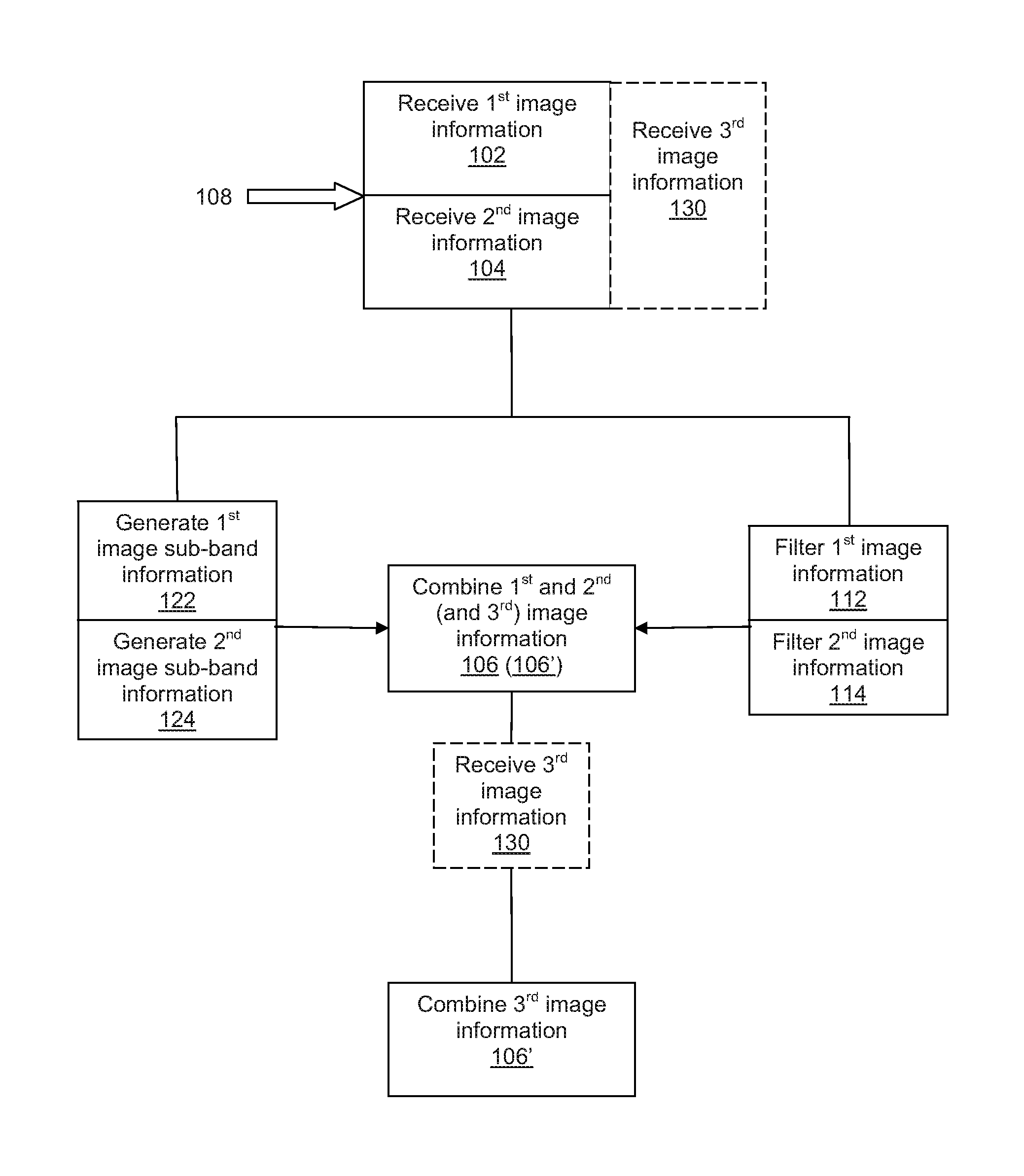
[0029]One possibility to obtain combined image information is based on the concept of splitting image information of a first and a second image information type in the spatial frequency domain into a plurality of distinct sub-bands, i.e. each sub-band corresponding to a defined spatial frequency range. Such a splitting may e.g. be performed by employing a Laplacian pyramid process.
[0030]The respective frequency sub-bands of image information may be analyzed, e.g. with regard to their contrast-to-noise ratio, may be weighed, in particular depending upon the determined signal-to-noise ratio, and may subsequently be added or re-combined, at least depending on the weighting factor of the respective sub-band, to ultimately obtain a single combined image, combining relevant information in a signal-to-noise ratio optimized manner of two or more different image information types.
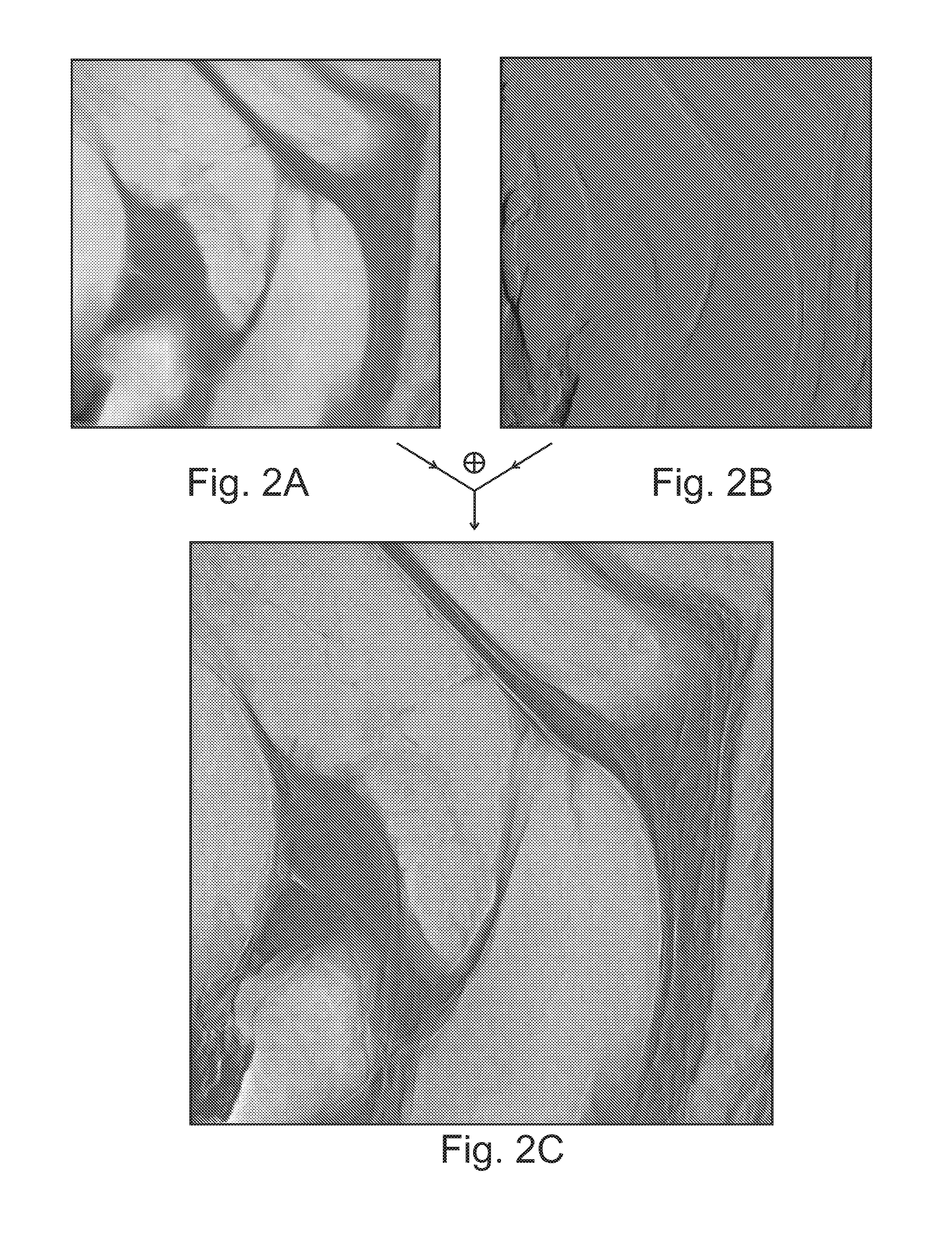
[0031]FIG. 2A shows an absorption contrast image while FIG. 2B shows a corresponding differential phase-contrast ...
PUM
 Login to View More
 Abstract
Description
Claims
Application Information
 Login to View More