
Method of forming a perforated composite panel
a composite panel and perforated technology, applied in the direction of manufacturing tools, controlling lamination, transportation and packaging, etc., can solve the problems of inability to heat the chemical composition of the applied layer, damage to the applied layer, and inability to drill through the hole by conventional methods
- Summary
- Abstract
- Description
- Claims
- Application Information
AI Technical Summary
Benefits of technology
Problems solved by technology
Method used
Image

Examples
Embodiment Construction
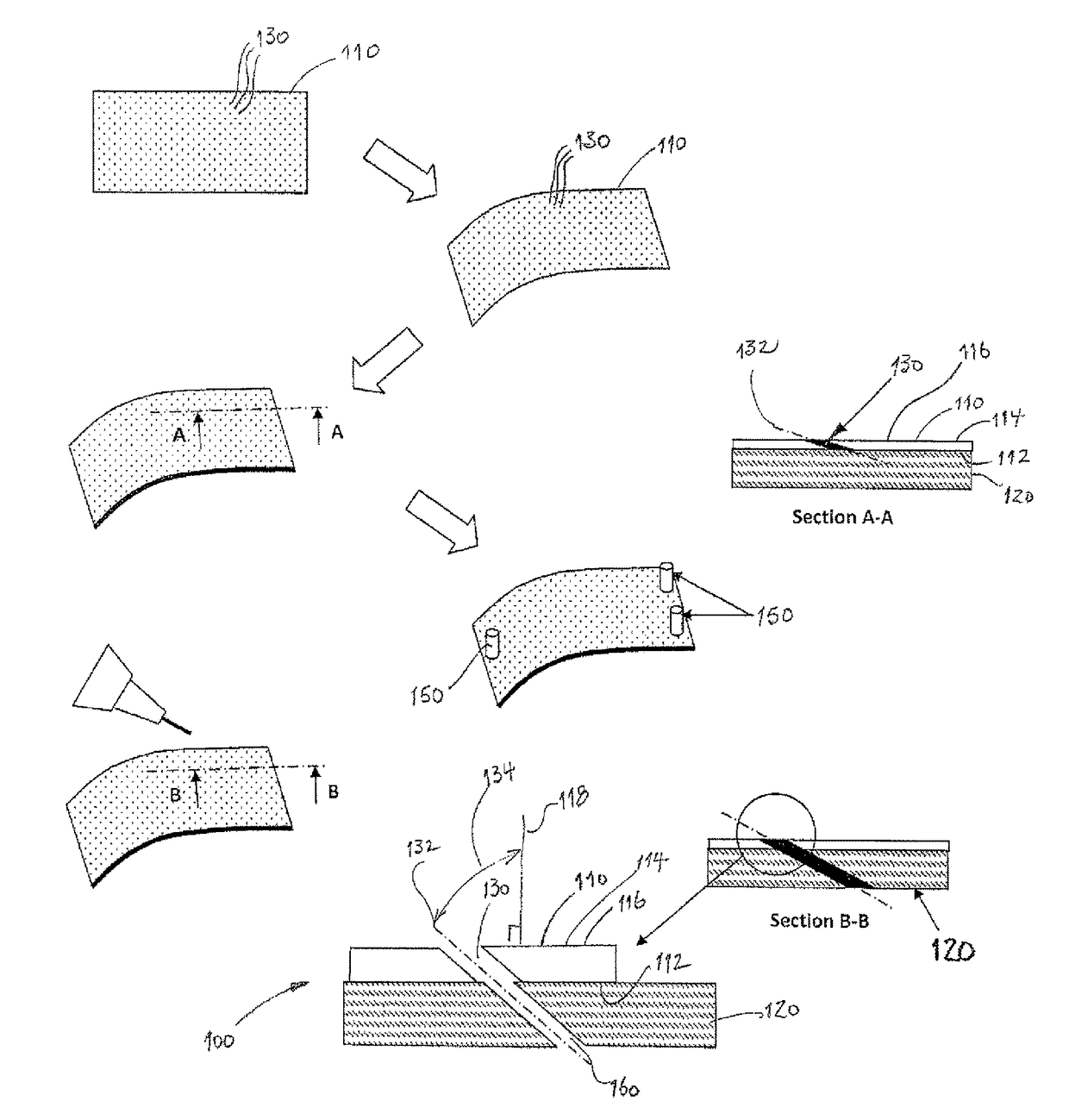
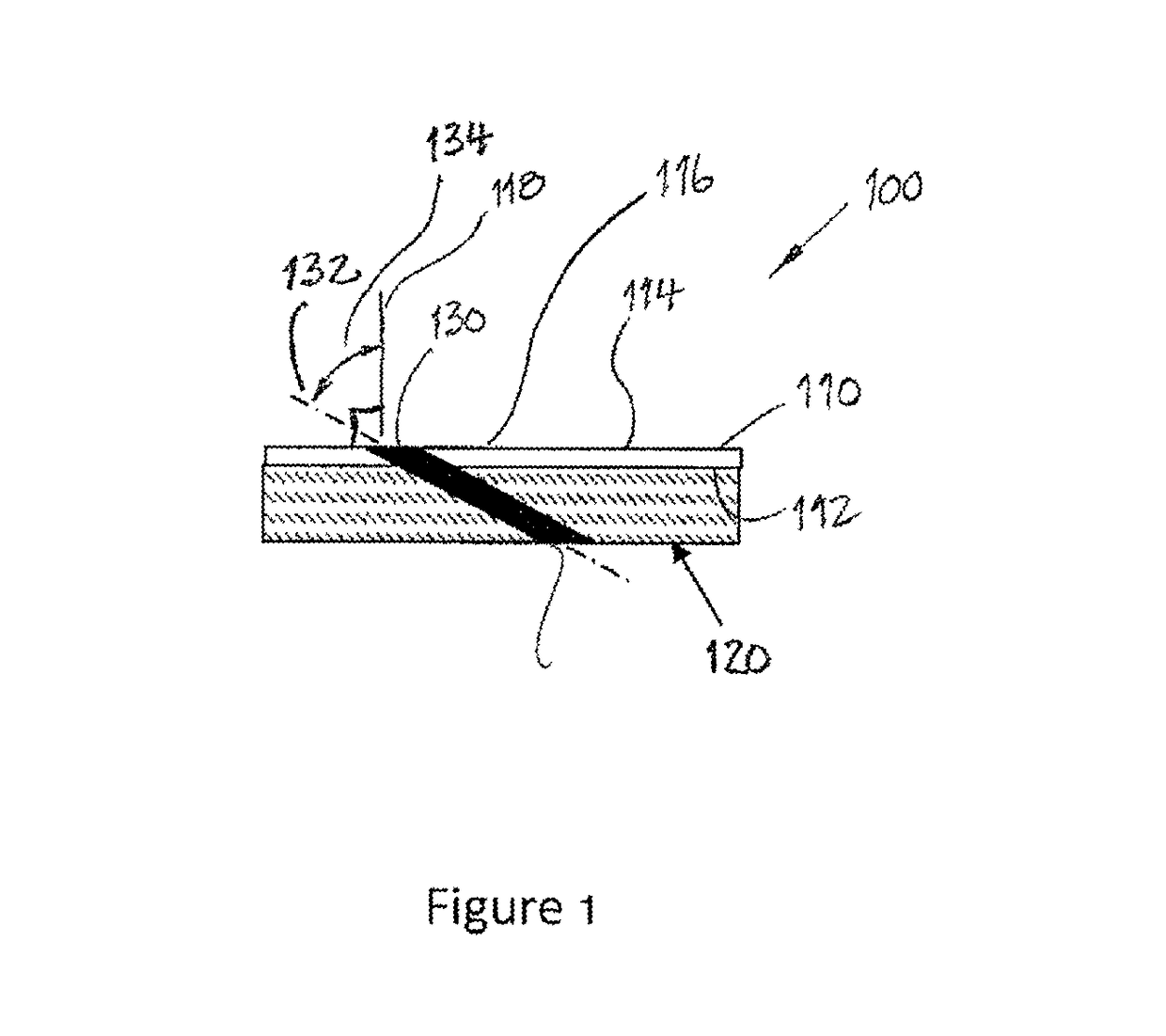
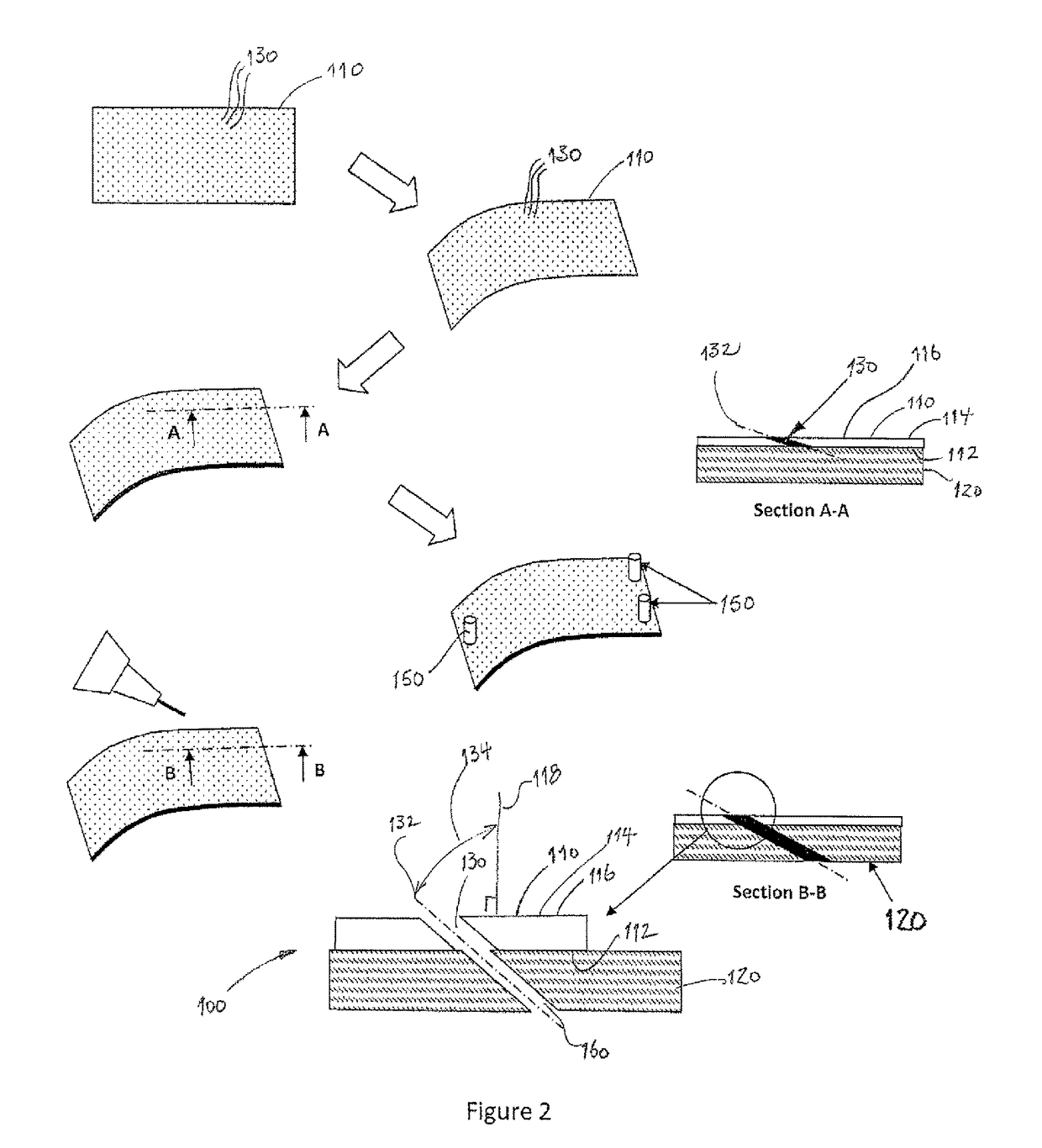
[0043]Referring to FIG. 1, a perforated composite panel formed by an embodiment of the invention is designated generally by the reference numeral 100.
[0044]The perforated composite panel 100 comprises a substrate 110 and an applied layer 120. The substrate 110 has a first surface 112 and an opposite second surface 114. The applied layer 120 extends over and covers the first surface 112 of the substrate 110.
[0045]The perforated composite panel 100 forms a liner panel 100 for the exhaust system (not shown) of a gas turbine engine (also not shown). The gas turbine engine is installed in an aircraft (also not shown) but may equally be installed in another form of transport (also not shown) or even in a stationary installation (also not shown) such as, for example, an electrical power generating installation (also not shown).
[0046]In the embodiment shown the substrate 110 is formed as a titanium alloy sheet. Alternatively the substrate 110 may be formed from another metal or metal alloy ...
PUM
| Property | Measurement | Unit |
|---|---|---|
| angle | aaaaa | aaaaa |
| angle | aaaaa | aaaaa |
| diameters | aaaaa | aaaaa |
Abstract
Description
Claims
Application Information
 Login to View More