
Jacket type glass piston preparation process
A preparation process, jacketed technology, applied in the field of the preparation process of jacketed glass piston, can solve the problems of affecting measurement accuracy, increasing operating costs, and difficult to meet the requirements of temperature control accuracy, and achieve the goal of improving constant temperature accuracy and eliminating stress Effect
- Summary
- Abstract
- Description
- Claims
- Application Information
AI Technical Summary
Problems solved by technology
Method used
Image

Examples
Embodiment Construction
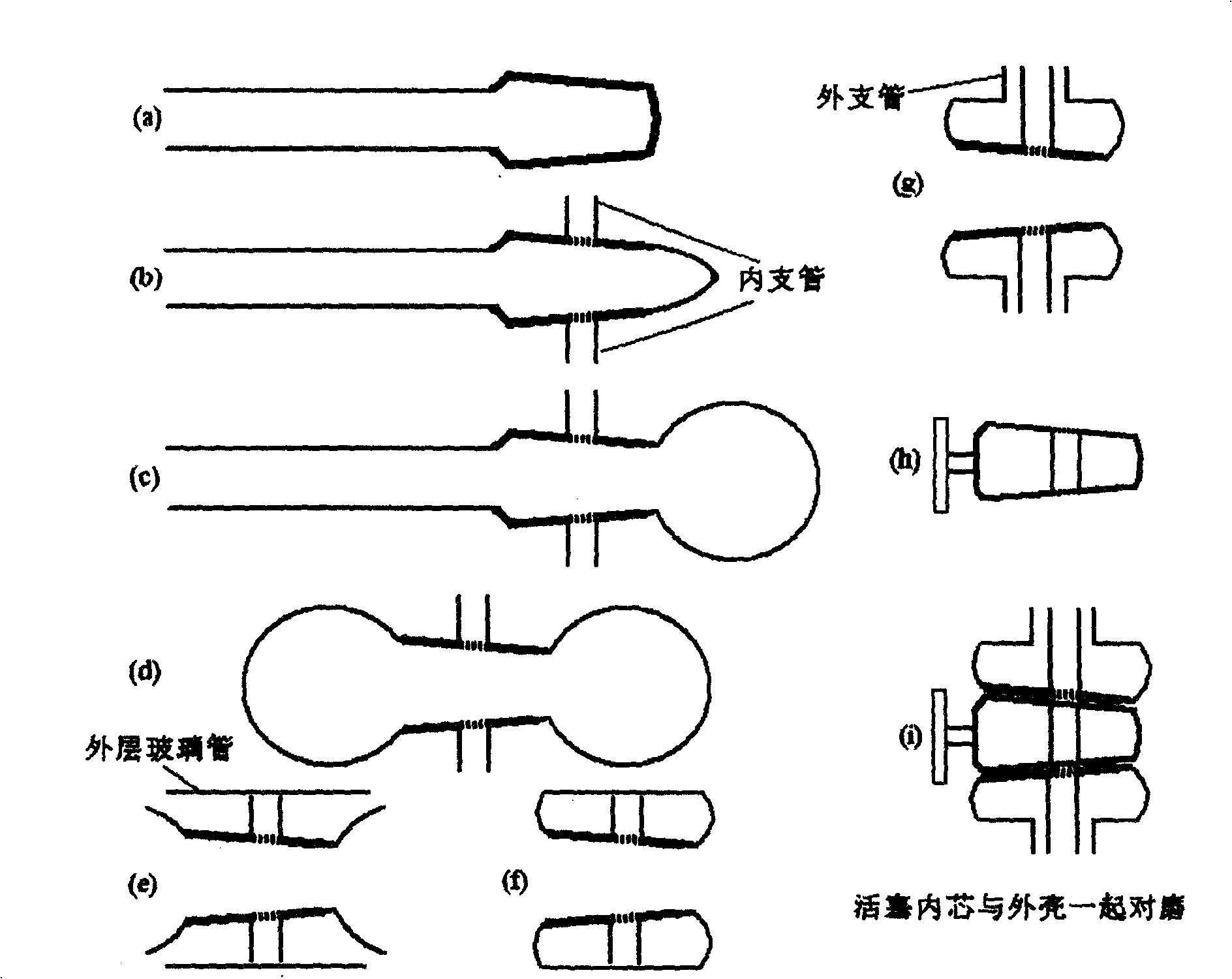
[0026] like figure 1 Shown, the steps of its preparation process are as follows:
[0027] First, blow the piston shell with a nipper as the inner layer of the jacket, as shown in (a);
[0028] Second, after the small head is blown out, a glass tube is externally connected and melted, as shown in (b);
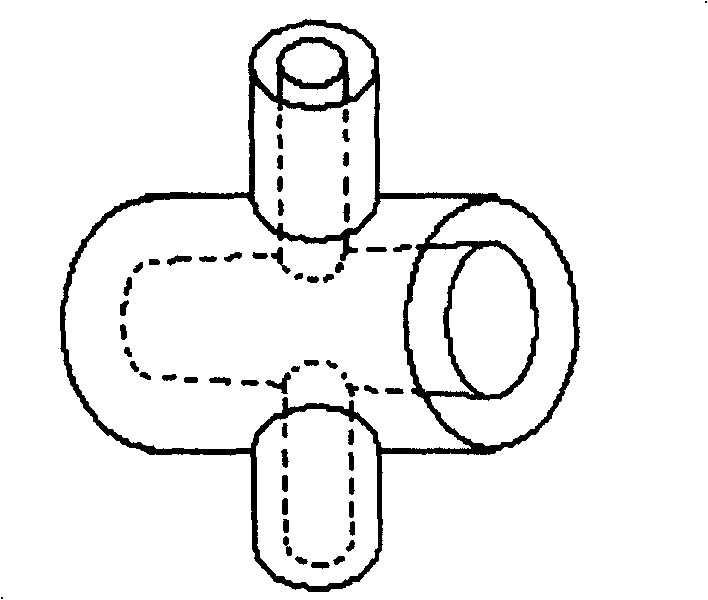
[0029] Third, open an opening on both sides of the shell, and then connect two glass tubes of equal length vertically as the inner branch pipes. The distance between the ports of the two inner branch pipes should be slightly smaller than the inner diameter of the outer glass tube of the piston jacket. Plug the two pipes tightly, as shown in (b);
[0030] Its four, one end of the glass tube that melts and seals is blown into a glass ball, as shown in (c);
[0031] Fifth, the big head is also blown into a glass ball, as shown in (d);
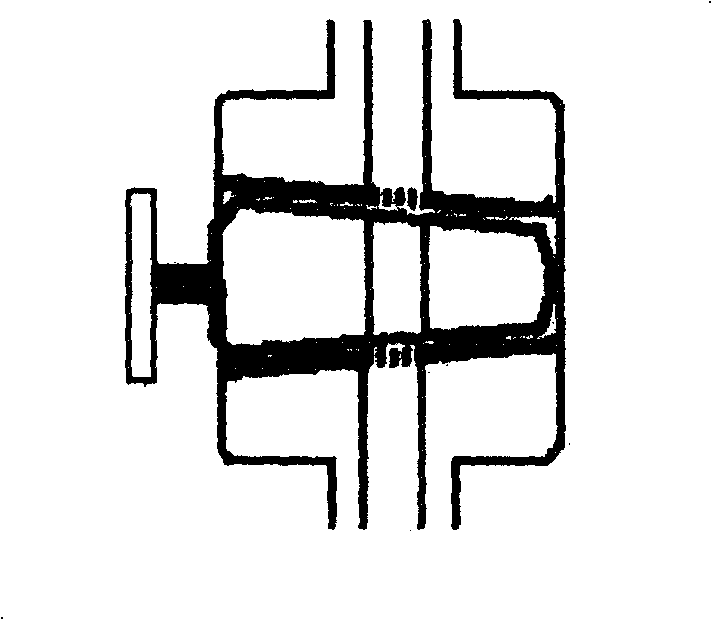
[0032] Sixth, cut off a part of the glass balls at both ends on the flame, and put on a glass tube of moderate length as the outer layer of the...
PUM
 Login to View More
 Abstract
Description
Claims
Application Information
 Login to View More