
Axial-flow windwheel
An axial-flow wind and hub technology, which is applied to the components of pumping devices for elastic fluids, non-variable-capacity pumps, machines/engines, etc. It takes away the heat of the outdoor unit and does not consider reducing the separation of the boundary layer, so as to achieve the effects of low rotor weight and rotor production cost, reduced wake strength, low noise and motor load
- Summary
- Abstract
- Description
- Claims
- Application Information
AI Technical Summary
Problems solved by technology
Method used
Image

Examples
Embodiment Construction
[0025] The present invention will be further described below with reference to the drawings and embodiments.
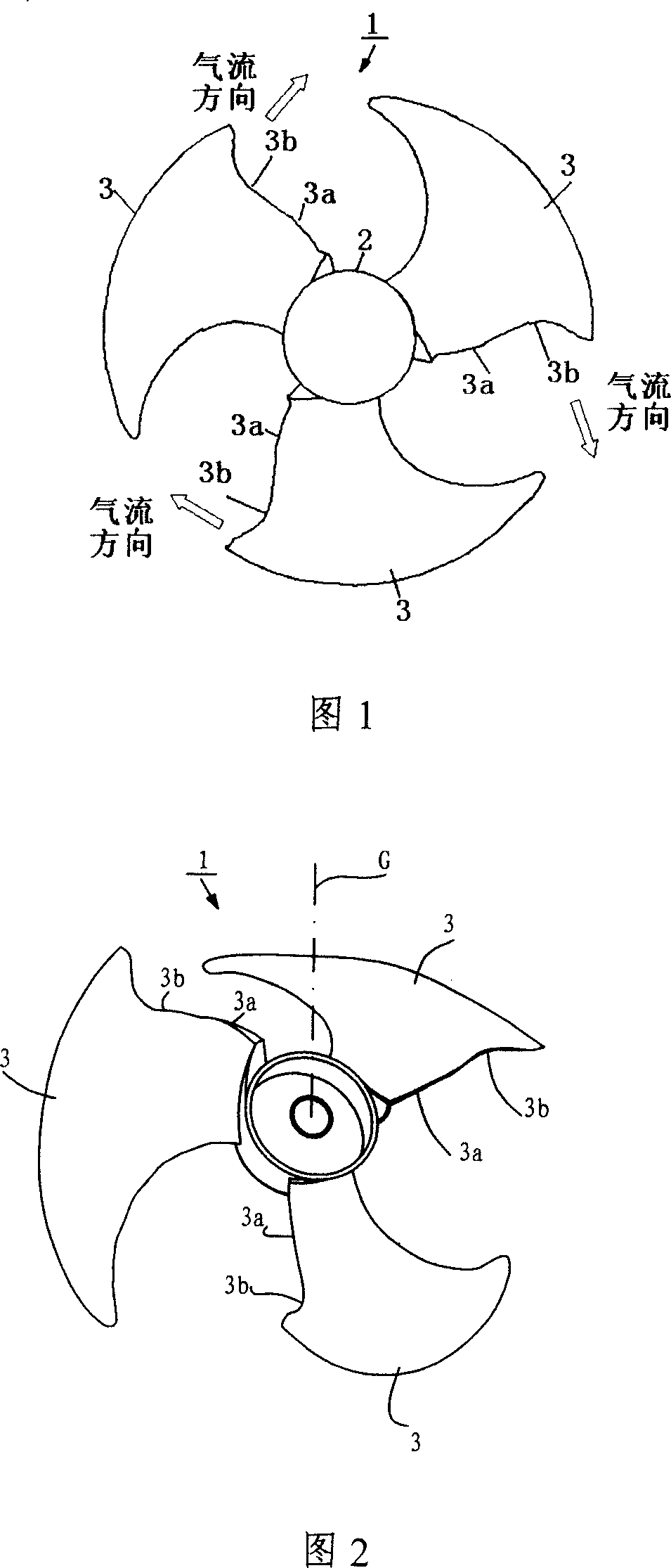
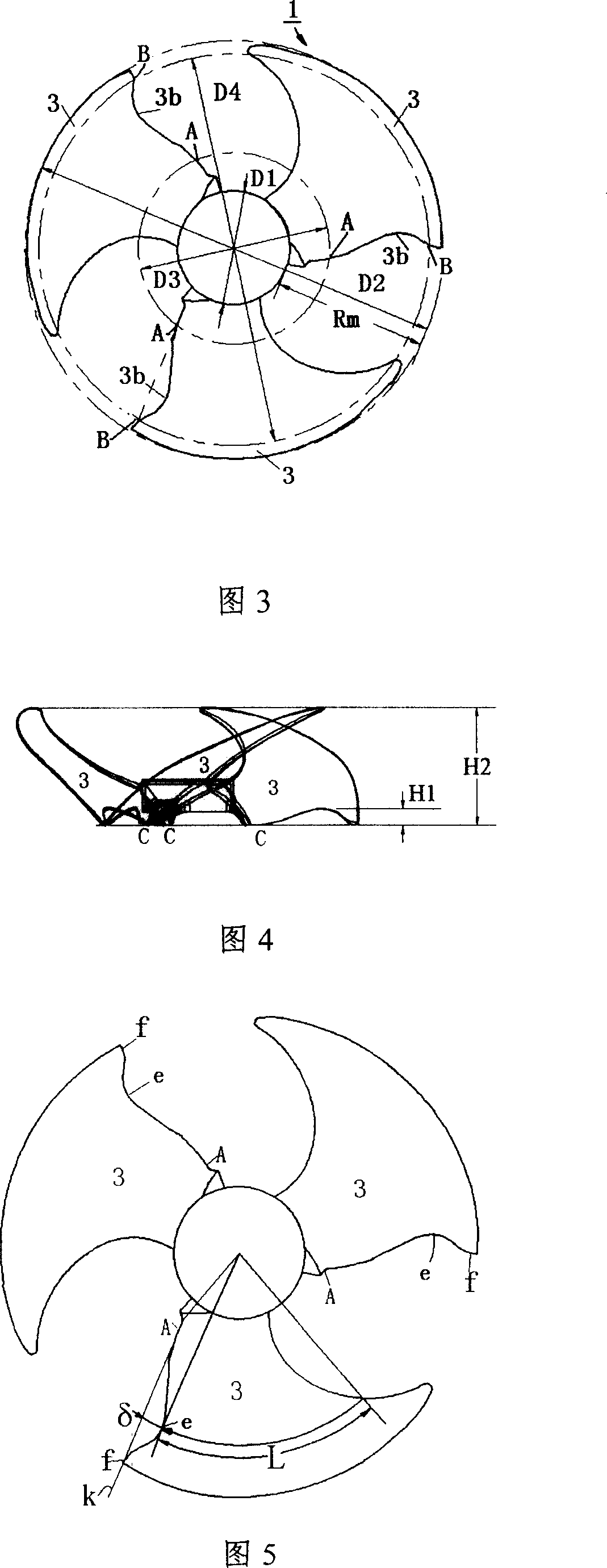
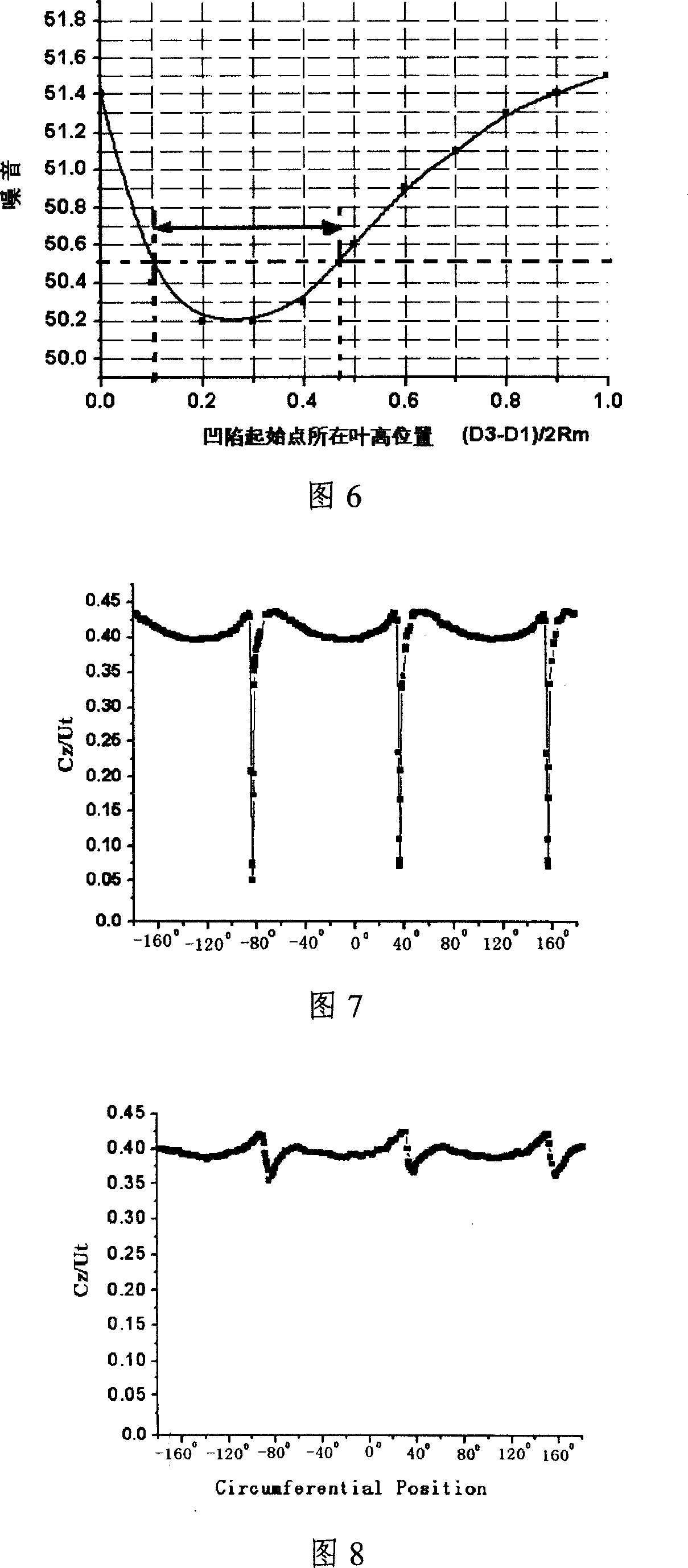
[0026] In the figure, 1 is the axial flow wheel, 2 is the hub, 3 is the blade, 3a is the downstream edge of the airflow, 3b is the recessed part, D1 is the diameter of the hub, D2 is the outer diameter of the axial flow wheel, and D3 is the blade The diameter of the circumference of the starting position A of the trailing edge of the blade, D4 is the diameter of the circumference of the position B where the trailing edge of the blade ends, Rm is the height of the blade, H1 is the maximum height of the recessed part from the lowest position C of the trailing edge of the blade 3, H2 Is the height of the wind turbine blade calculated from the lowest position C of the trailing edge of the blade 3, δ is the depth of the depression, L is the length of the chord line of the blade, f is the tip trailing edge point, k is the connection line, 11 is the outdoor air-conditioning un...
PUM
 Login to View More
 Abstract
Description
Claims
Application Information
 Login to View More