Sub-wavelength fused silica transmission polarization light-splitting grating at 1064 nano wave band
A technology of fused silica and polarization beam splitting, applied in the direction of diffraction grating, optics, optical elements, etc.
- Summary
- Abstract
- Description
- Claims
- Application Information
AI Technical Summary
Problems solved by technology
Method used
Image

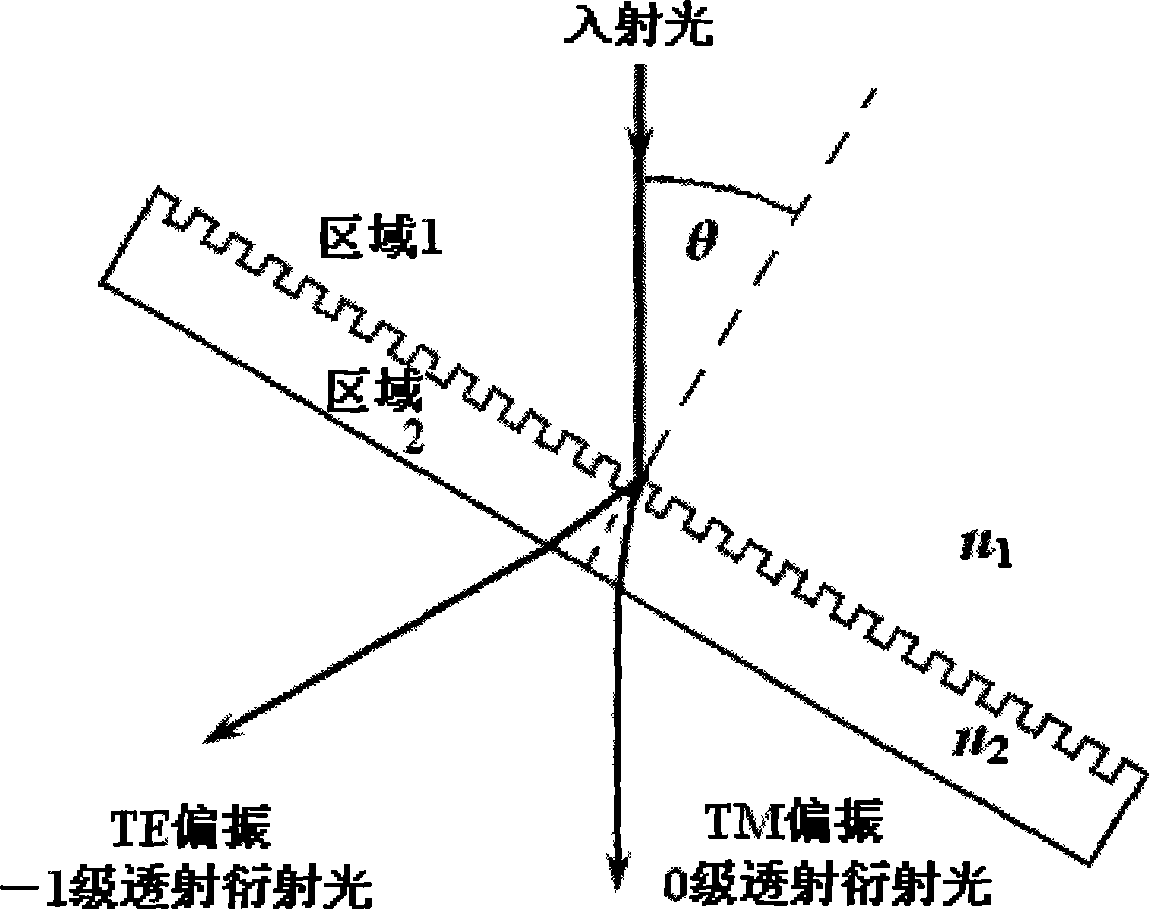

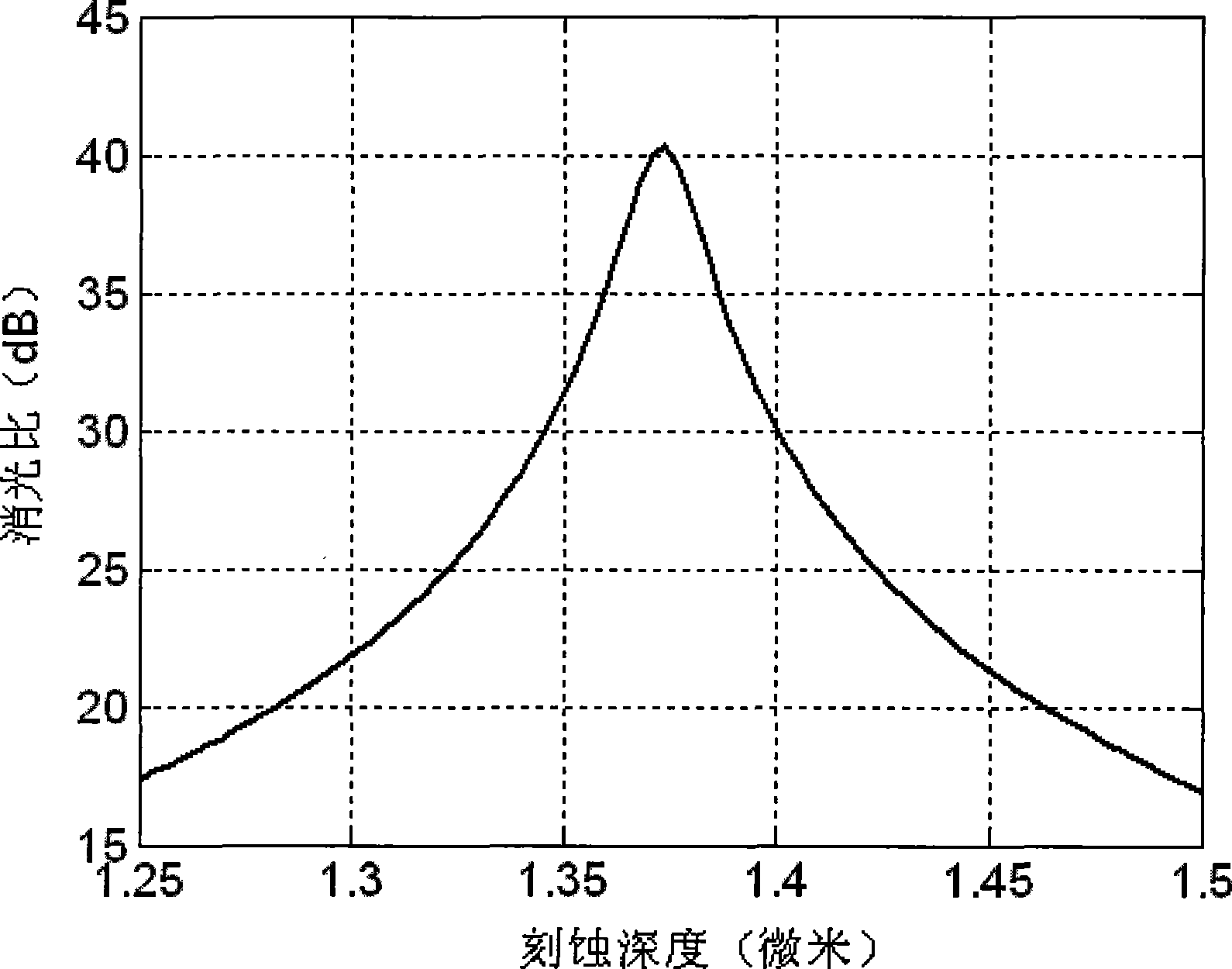
Examples
Embodiment Construction
[0019] Subwavelength fused silica transmission polarization beam-splitting gratings are fabricated by microfabrication. The production process includes: chrome-plating of quartz substrate → coating of photoresist → exposure → development → etching → removal of residual chromium film and other steps. Firstly, a layer of uniform chromium film is basically deposited on clean and dry fused silica, and a layer of positive photoresist is uniformly coated on the chromium film. The grating is then recorded using holographic exposure, as Figure 6 As shown, the He-Cd laser, with a wavelength of 441 nanometers, emits two beams of plane waves to form an interference field on the quartz substrate at an angle of 2θ, and the angle is passed by the formula θ=sin -1 [λ / (2×Λ)] is determined, where λ is the wavelength of the recording light, and Λ is the grating period to be processed. After the exposure is completed, develop, and transfer the photoresist pattern from the photoresist to the c...
PUM
 Login to View More
 Abstract
Description
Claims
Application Information
 Login to View More