
Electric brake system, especially electromechanical brake system
A brake system and electric technology, applied in the direction of brake safety system, brake transmission device, brake action activation device, etc., can solve the problems of control unit failure and entry, and achieve the effect of avoiding failure
- Summary
- Abstract
- Description
- Claims
- Application Information
AI Technical Summary
Problems solved by technology
Method used
Image

Examples
Embodiment Construction
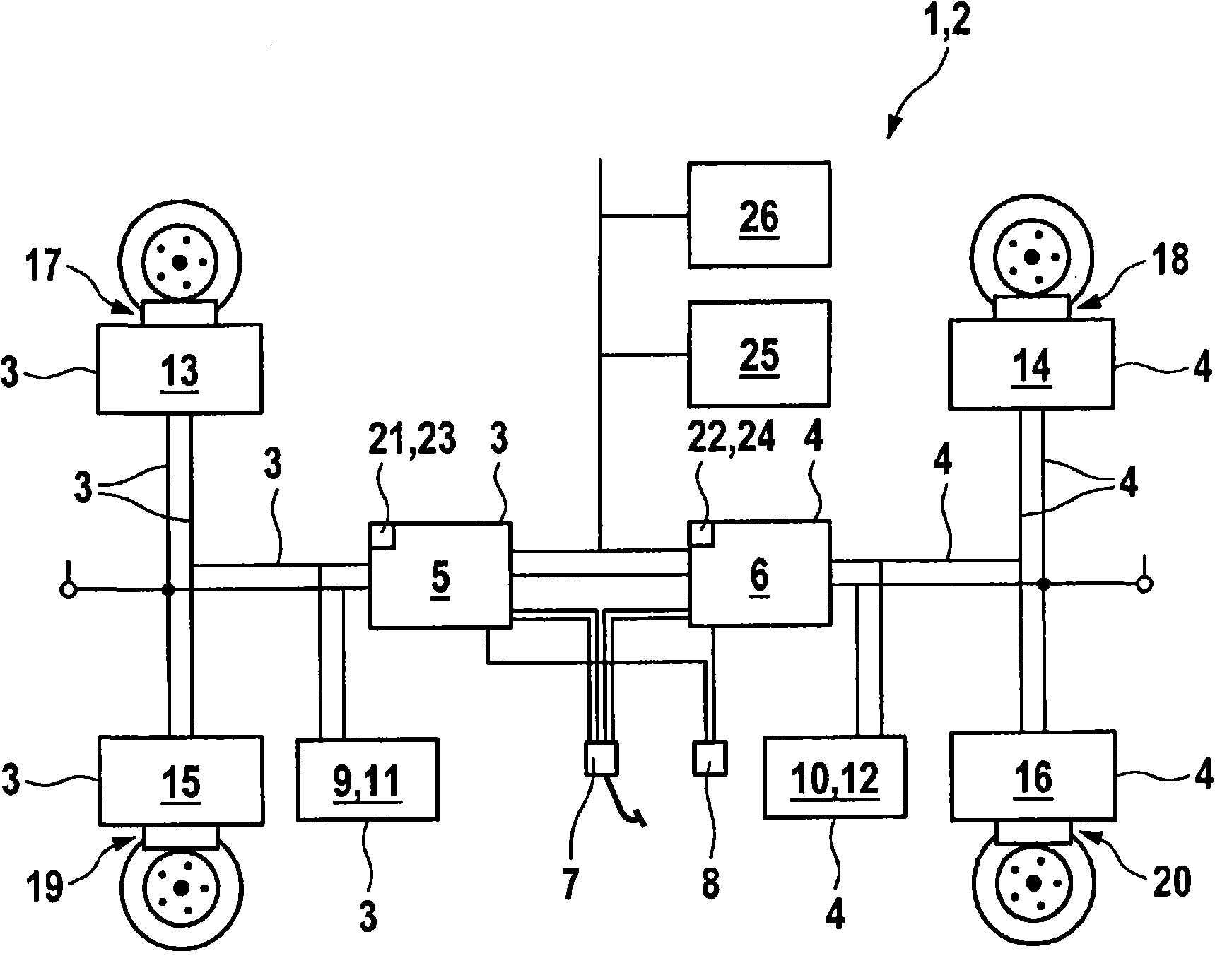
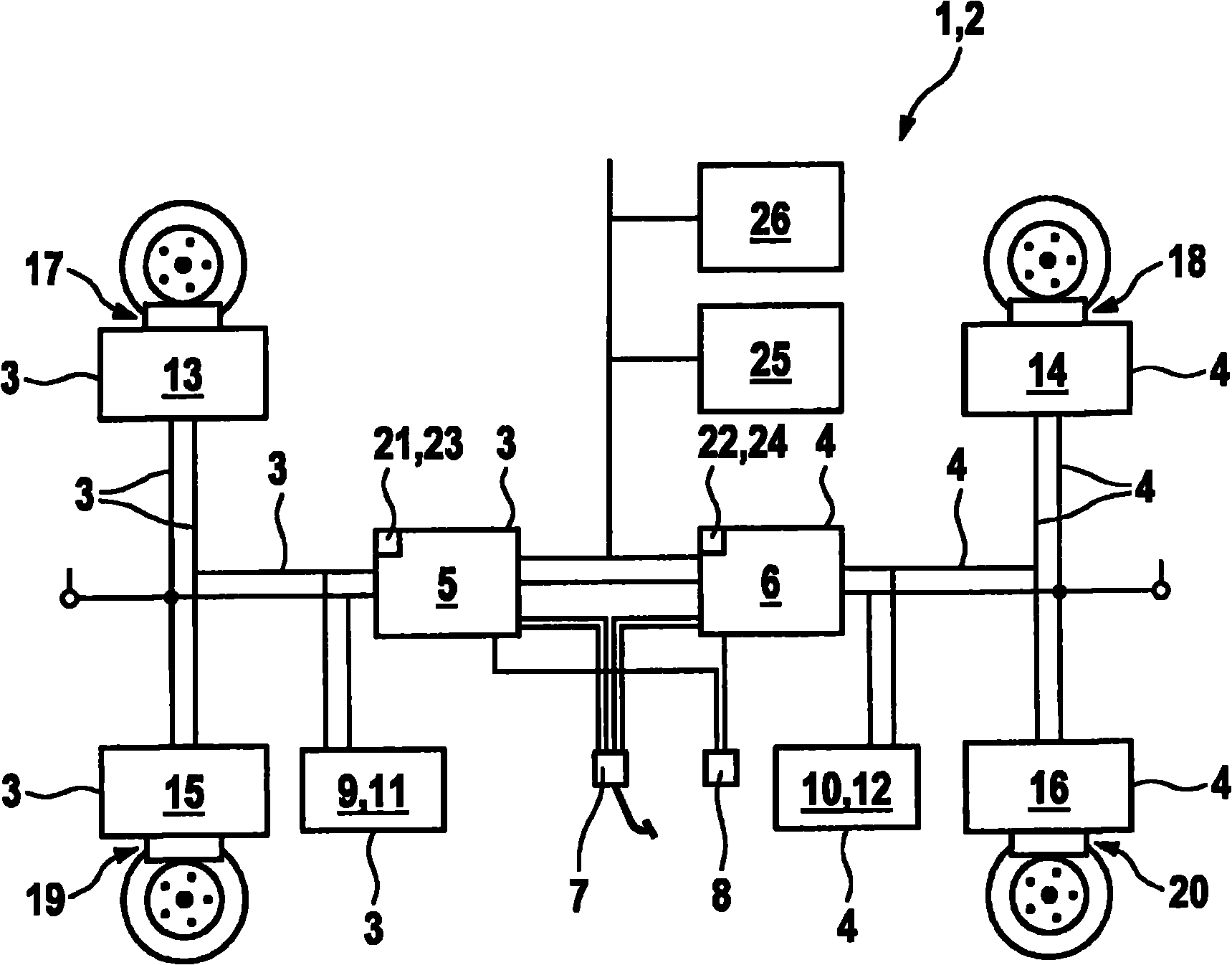
[0016] The drawing shows a schematic illustration of an electric braking system 1 , which is designed as an electromechanical braking system 2 . The electric brake system 1 has two mutually independent brake circuits, the components of which are denoted here by the reference numerals 3 and 4 in the continuation. Each brake circuit 3, 4 has a first control unit 5 or 6, which detects a braking request of the driver of the vehicle having the braking system 1. To this end, the control units 5 and 6 each receive input signals from the sensor systems of the brake pedal 7 and the parking brake 8 . The control units 5 , 6 preferably determine the braking force distribution and / or the braking torque regulation or tensioning force regulation as a function of the braking requirements. Furthermore, each brake circuit 3 and 4 has an electrical energy supply 9 , 10 in the form of an energy store 11 , 12 . The control units 5 and 6 form a redundant mechanism for detecting the driver's wish...
PUM
 Login to View More
 Abstract
Description
Claims
Application Information
 Login to View More