
Sulfuration method of catalyst for hydrocracking technology
A hydrocracking and catalyst technology, applied in hydrotreating process, catalyst activation/preparation, physical/chemical process catalyst, etc., can solve the problem of not considering the joint operation of multiple sets of hydrogenation units, and achieve considerable economic benefits and social benefits Benefit, reduce vulcanization investment, simple process effect
- Summary
- Abstract
- Description
- Claims
- Application Information
AI Technical Summary
Problems solved by technology
Method used
Image

Examples
Embodiment 1
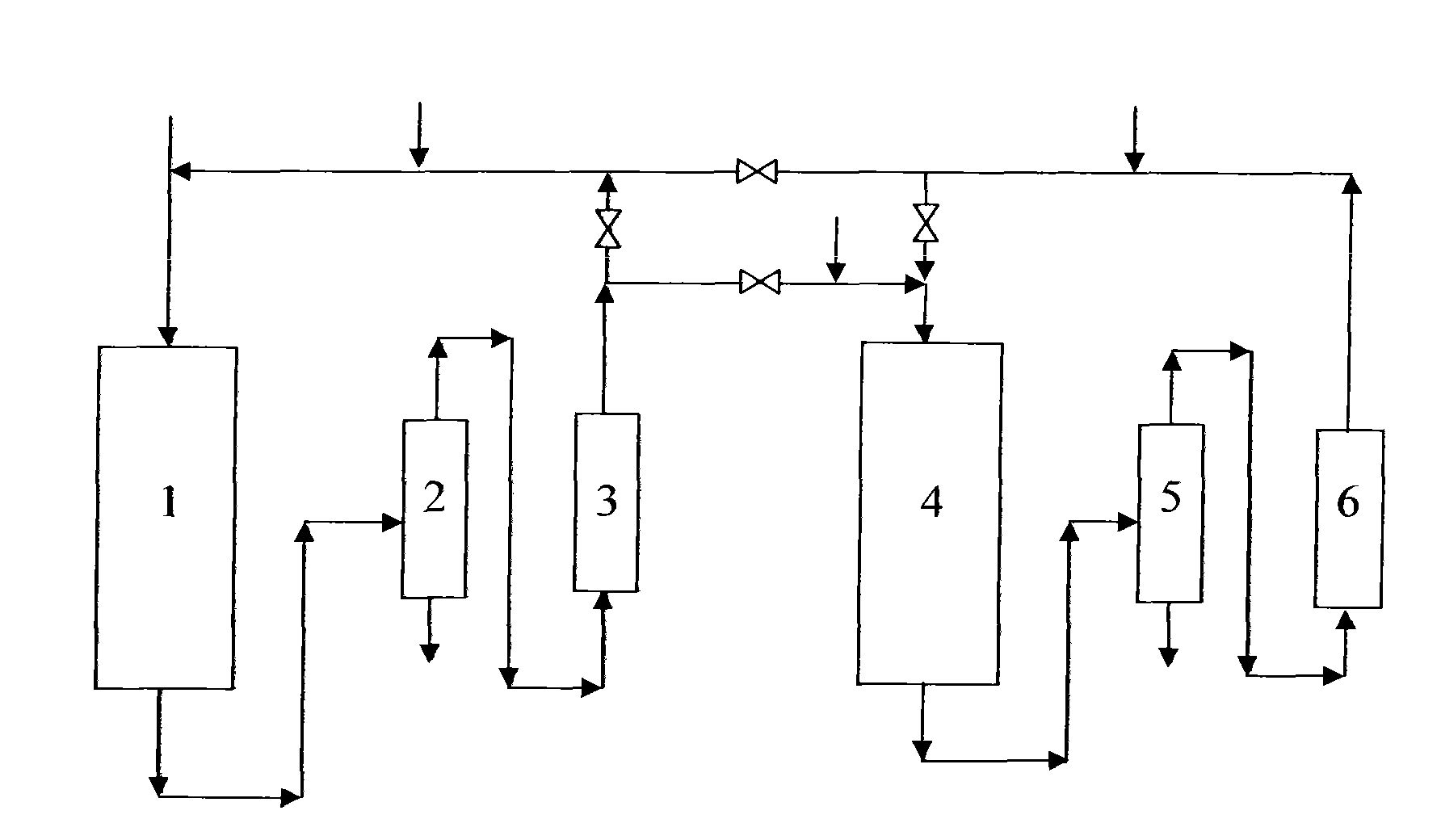
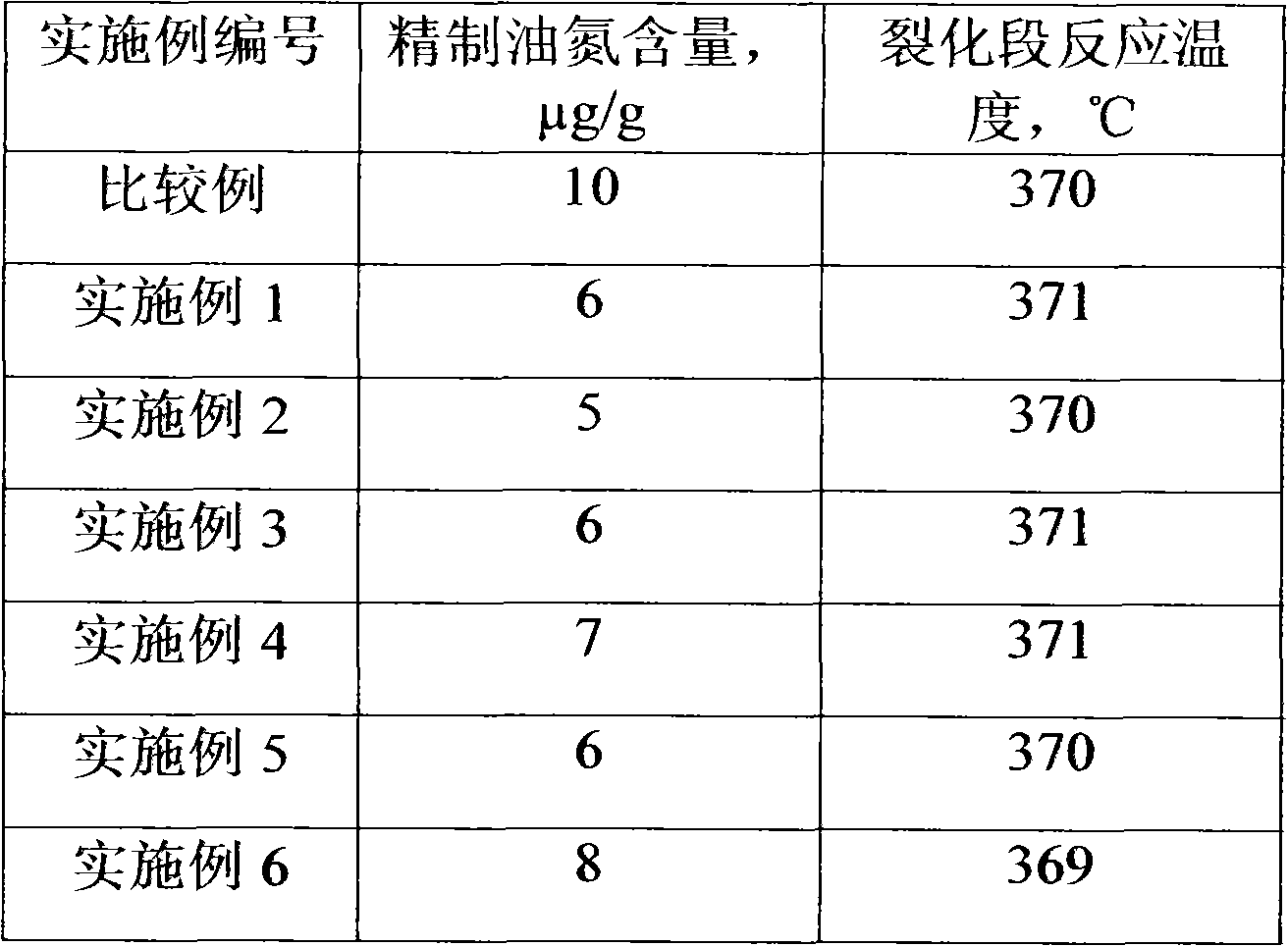
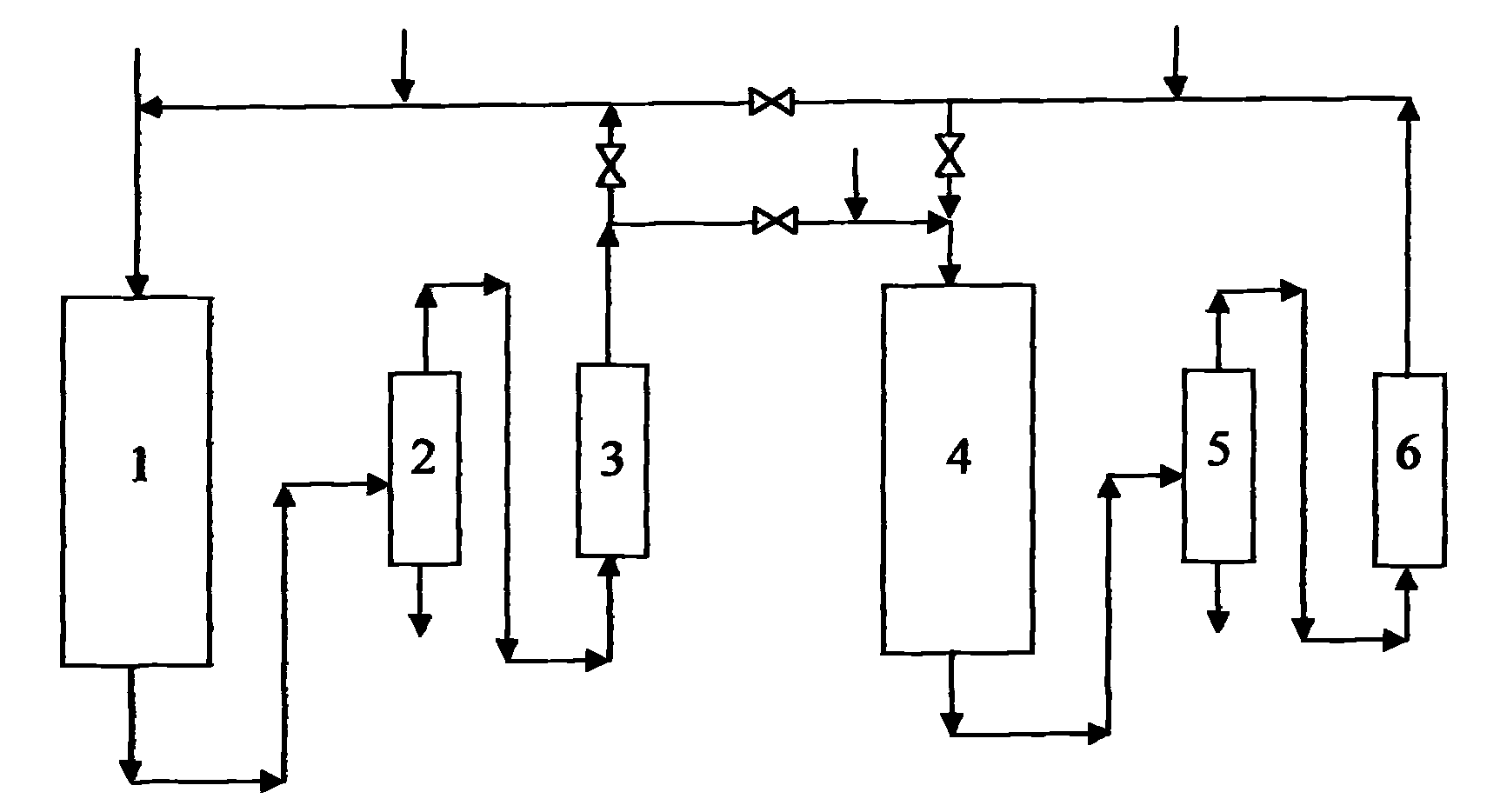
[0046] Stable operation of the residual oil treatment unit. After the circulating hydrogen is mixed with the residual oil raw material, it passes through the residual oil hydroprocessing unit 1 and enters the reaction product gas-liquid separator 2 of the residual oil hydroprocessing unit to separate the gas from the generated oil. The oil hydrotreating unit circulates hydrogen to the hydrogen desulfurization unit 3 and returns to the residual oil hydrotreating unit 1 . At the same time, FF-36 and FC-32 were put into their respective reactors, dried and airtight. After the airtightness is qualified, the hydrogen partial pressure is adjusted to 14.0MPa, and the temperature is adjusted to 160°C. At this time, adjust the circulating hydrogen dehydrogenation unit 3 of the residual oil hydrotreating unit, and the circulating hydrogen containing hydrogen sulfide is introduced into the hydrocracking unit 4 for sulfidation, and then passes through the reaction product gas-liquid separ...
Embodiment 2
[0048] Stable operation of the residual oil treatment unit. After the circulating hydrogen is mixed with the residual oil raw material, it passes through the residual oil hydroprocessing unit 1 and enters the reaction product gas-liquid separator 2 of the residual oil hydroprocessing unit to separate the gas from the generated oil. The oil hydrotreating unit circulates hydrogen to the hydrogen desulfurization unit 3 and returns to the residual oil hydrotreating unit 1 . At the same time, FF-36 and FC-32 were put into their respective reactors, dried and airtight. After the airtightness is qualified, the hydrogen partial pressure is adjusted to 14.0MPa, and the temperature is adjusted to 180°C. At this time, adjust the circulating hydrogen dehydrogenation unit 3 of the residual oil hydrotreating unit, and the circulating hydrogen containing hydrogen sulfide is introduced into the hydrocracking unit 4 for sulfidation, and then passes through the reaction product gas-liquid separ...
Embodiment 3
[0050] Stable operation of the residual oil treatment unit. After the circulating hydrogen is mixed with the residual oil raw material, it passes through the residual oil hydroprocessing unit 1 and enters the reaction product gas-liquid separator 2 of the residual oil hydroprocessing unit to separate the gas from the generated oil. The oil hydrotreating unit circulates hydrogen to the hydrogen desulfurization unit 3 and returns to the residual oil hydrotreating unit 1 . At the same time, FF-36 and FC-32 were put into their respective reactors, dried and airtight. After the airtightness is qualified, the hydrogen partial pressure is adjusted to 14.0MPa, and the temperature is adjusted to 180°C. At this time, adjust the circulating hydrogen dehydrogenation unit 3 of the residual oil hydrotreating unit, and the circulating hydrogen containing hydrogen sulfide is introduced into the hydrocracking unit 4 for sulfidation, and then passes through the reaction product gas-liquid separ...
PUM
 Login to View More
 Abstract
Description
Claims
Application Information
 Login to View More