
Preparation method for CT (computed tomography) contrast media based on second-generation polyamide-amine dendrimer/gold nanoparticles
A technology of amine dendrimer and gold nanoparticles, which is applied in the biomedical application field of nanoparticles, can solve the problems of CT contrast performance research without CT contrast agent, and achieve prolonging the residence time in the body, expanding the scale production, and being easy to operate. Effect
- Summary
- Abstract
- Description
- Claims
- Application Information
AI Technical Summary
Problems solved by technology
Method used
Image

Examples
Embodiment 1
[0049] Take HAuCl 4 50mg, dissolved in distilled water, magnetic shock to fully dissolve it evenly, and prepare a solution with a concentration of 30mg / mL. Take the second generation polyamide-amine dendrimers (G2.NH 2 ) 162.97mg, dissolved in 16mL distilled water, and magnetically oscillated to fully dissolve and evenly. The solution was preheated in a 60 °C water bath for 20 min. Take HAuCl 4 Add 2.061mL of the solution into the preheated dendrimer solution. The temperature was maintained at 60° C., and the reaction was stirred by magnetic force for 3.0 h. After the reaction, the resulting solution was dialyzed against distilled water (6 times, 2 L / time). Then freeze-dry to obtain dendrimers / gold nanoparticles before acetylation, and store at -20°C.
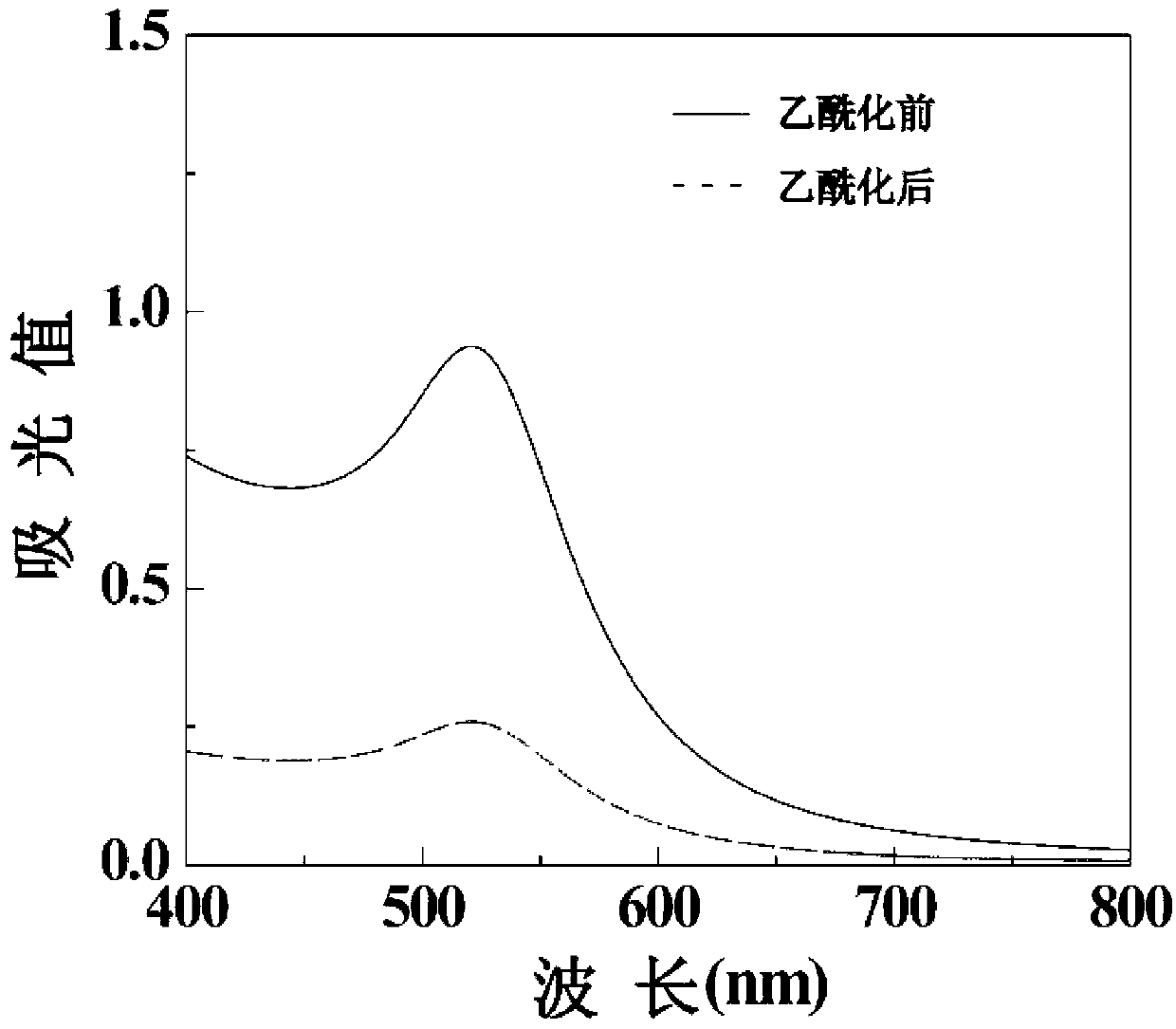
[0050] The UV-Vis test results show that the absorption peak in the spectrum is located at 521nm (attached figure 2 ). This indicates that gold nanoparticles were successfully prepared in the system. TEM test results ...
Embodiment 2
[0052] Get the dendrimer / gold nanoparticle solution (G2.NH 2 , 74.48mg), cooled at room temperature for 1h. Add 308.7μL of triethylamine and stir for 0.5h. After that, 174.7 μL of acetic anhydride was added, and the reaction was stirred for 24 h. After the reaction, the reaction mixture was dialyzed with PBS buffer (3 times, 2L / time) and distilled water (3 times, 2L / time), and then freeze-dried to obtain the acetylated dendrimer / gold Nanoparticles, stored at -20°C.
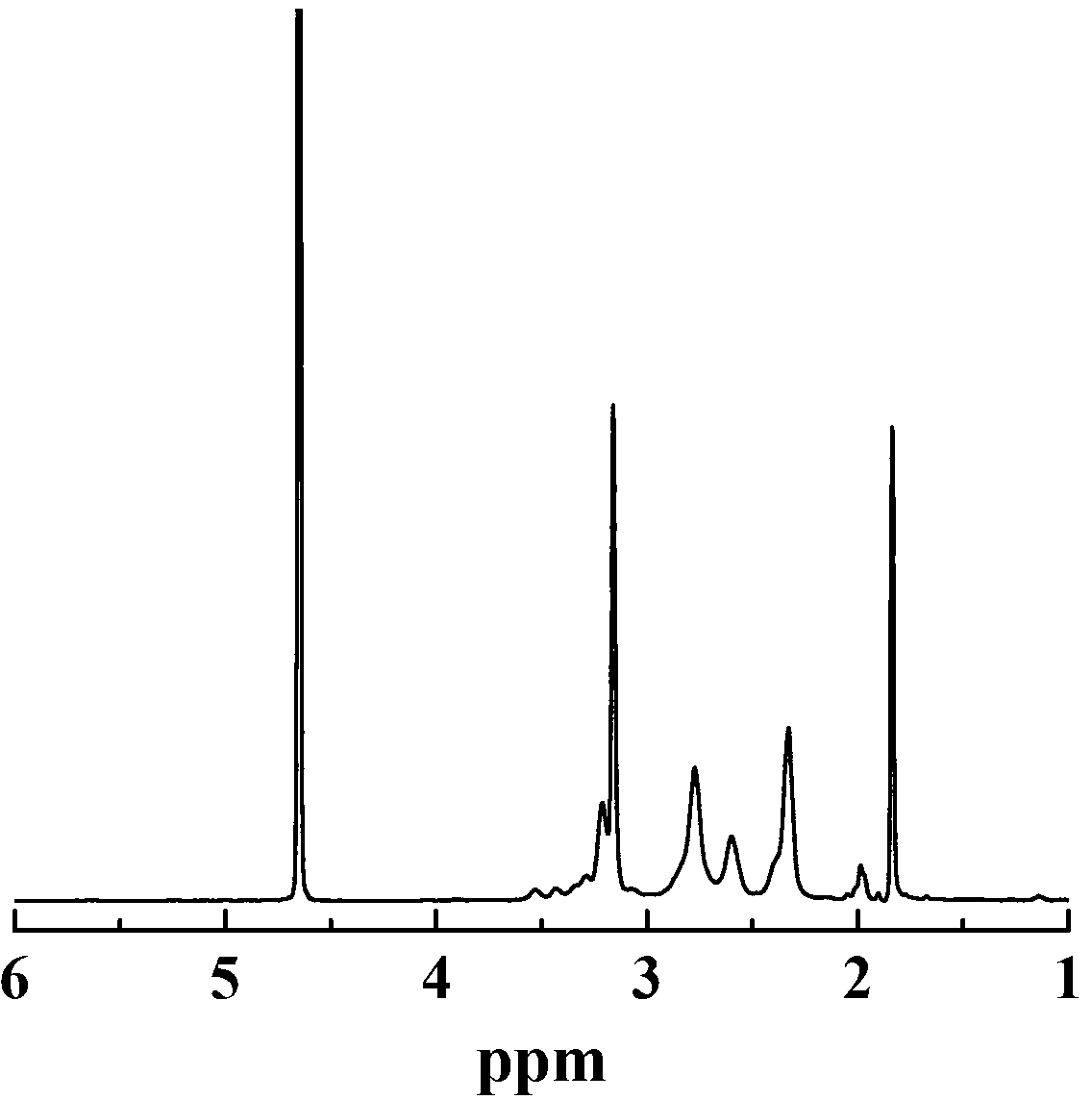
[0053] 1 The results of the H NMR spectrum showed that the peak of acetylmethyl group (1.87ppm) appeared after the acetylation reaction, indicating that the acetylation reaction was successfully carried out (attached figure 1 ). The UV-Vis test results show that the absorption peak in the spectrum is located at 521nm (attached figure 2 ). This indicates that after acetylation, the size of gold nanoparticles does not change significantly. TEM test results show that: the size distribution of the prepared go...
Embodiment 3
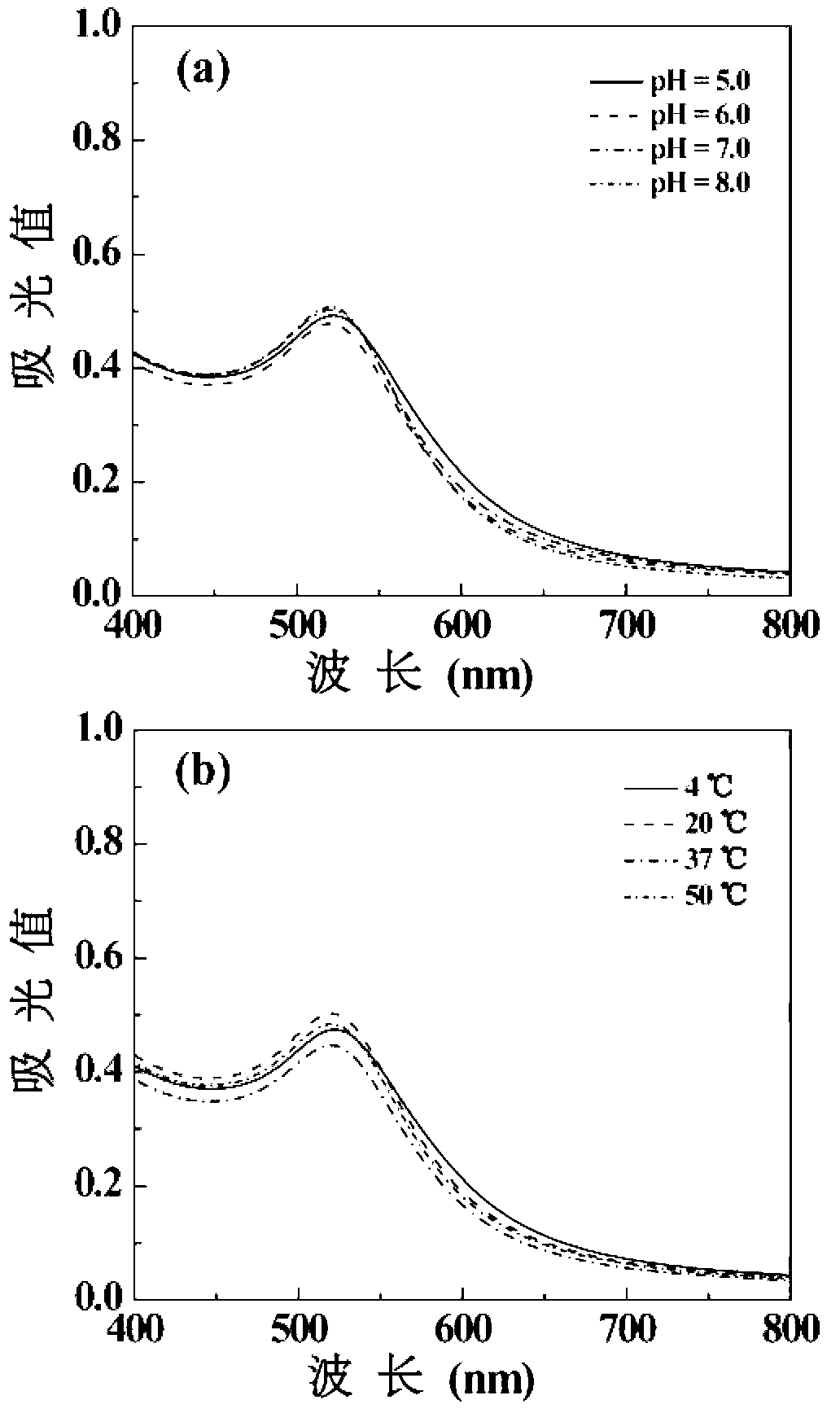
[0055] The prepared acetylated dendrimers / gold nanoparticles were taken and prepared as a 0.2 mg / mL aqueous solution. Afterwards, adjust its pH (5.0, 6.0, 7.0, 8.0) with 0.1M hydrochloric acid or sodium hydroxide. After standing at room temperature for 20 minutes, carry out the ultraviolet test.
[0056] The prepared acetylated dendrimers / gold nanoparticles were taken and prepared as a 0.2 mg / mL aqueous solution. After that, it was placed under different temperature conditions (4, room temperature 20, 37, 50°C). After half an hour of stabilization, a UV test was performed.
[0057] There is no obvious shift and change in the UV spectrum of the product under different pH (5-8) and temperature (4-50°C) conditions, indicating that it has good stability (attached image 3 ).
PUM
 Login to View More
 Abstract
Description
Claims
Application Information
 Login to View More