Lithium-ion battery electrolyte and its additives
An electrolyte additive and lithium-ion battery technology, applied in secondary batteries, circuits, electrical components, etc., can solve problems such as abnormal use of products, increased electrolyte viscosity, and poor high-temperature performance, so as to improve low discharge capacity , Improve wettability, improve the effect of low temperature electrochemical performance
- Summary
- Abstract
- Description
- Claims
- Application Information
AI Technical Summary
Problems solved by technology
Method used
Image

Examples
Embodiment 1
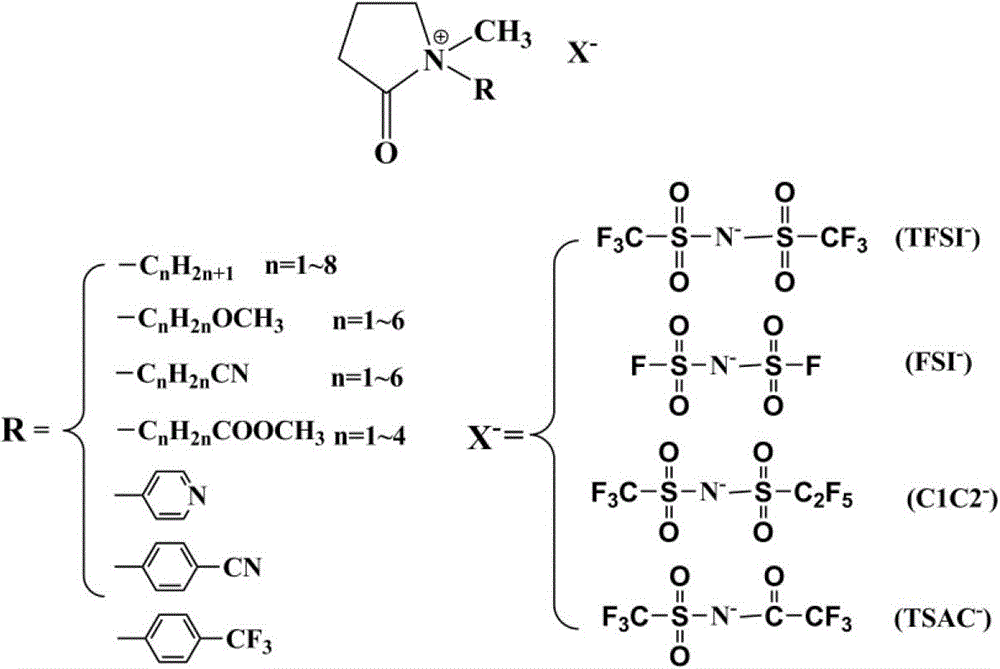
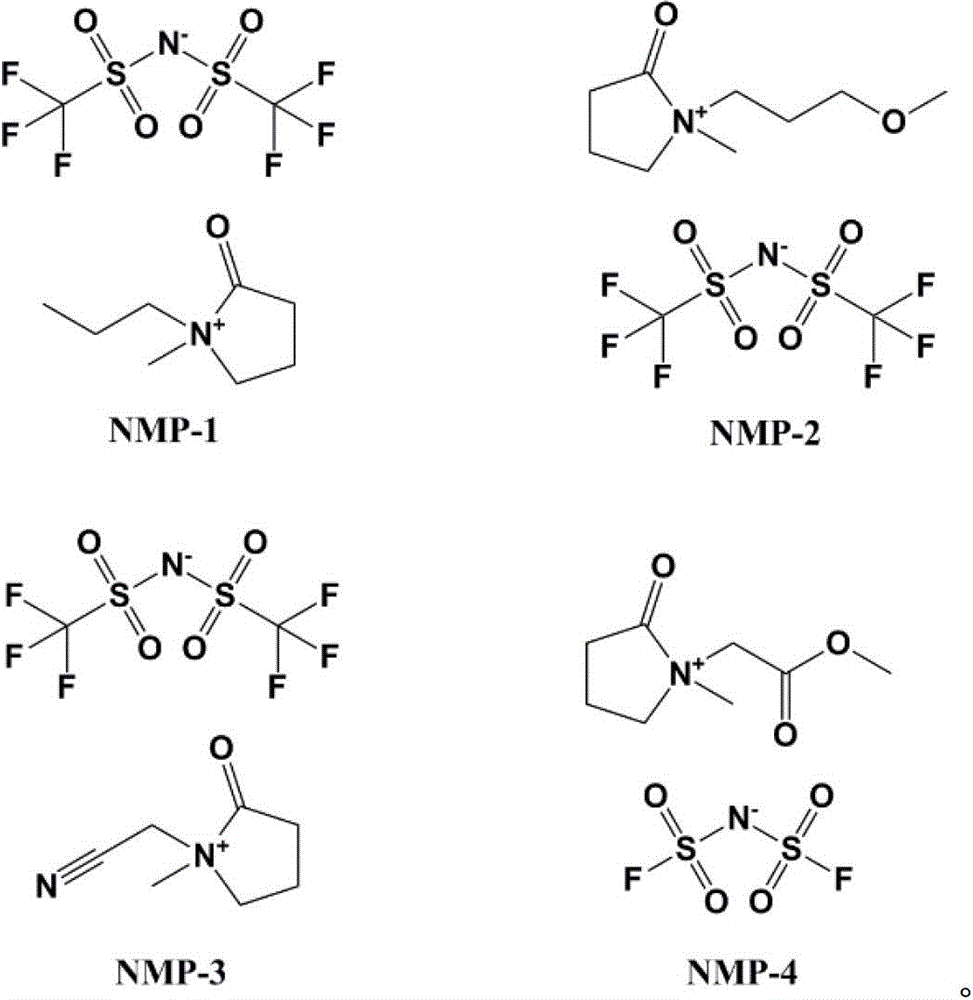
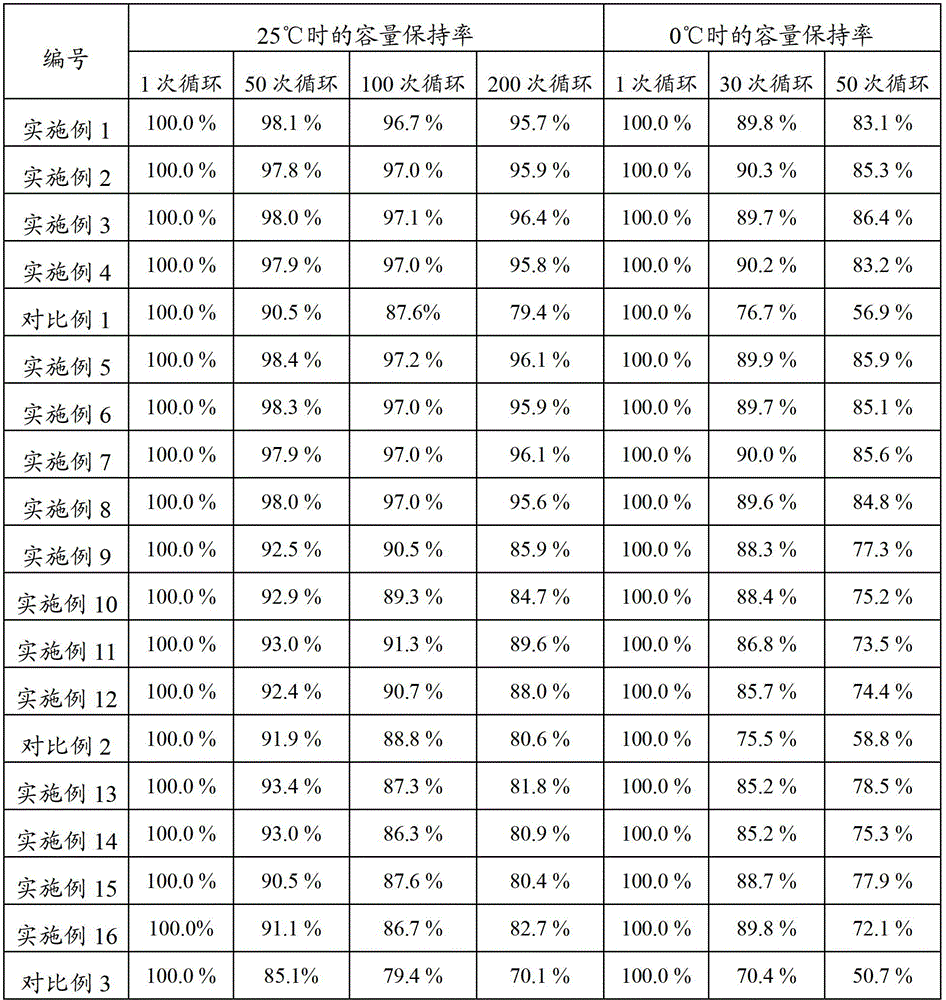
[0021] Example 1: The liquid-injected battery cell to be dehydrated is obtained by pre-processing such as stirring, coating, and winding, wherein the positive electrode is lithium cobaltate (LiCoO 2 ), the negative electrode is graphite, and the electrolyte is 1mol / L LiPF 6 / (EC / DMC / PC=1:1:1)+2.0%NMP-1+0.5%VC (vinylene carbonate).
Embodiment 2
[0022] Example 2: A liquid-filled battery cell to be dehydrated is obtained by pre-processing such as stirring, coating, and winding, wherein the positive electrode is lithium cobaltate (LiCoO 2 ), the negative electrode is graphite, and the electrolyte is 1mol / L LiPF 6 / (EC / DMC / PC=1:1:1)+5.0%NMP-3+0.5%VC.
Embodiment 3
[0023] Example 3: A liquid-filled battery cell to be dehydrated is obtained by pre-processing such as stirring, coating, and winding, wherein the positive electrode is lithium cobaltate (LiCoO 2 ), the negative electrode is graphite, and the electrolyte is 1mol / L LiPF 6 / (EC / DMC / PC=1:1:1)+3.0%NMP-1+3.0%NMP-3+2%VC.
PUM
| Property | Measurement | Unit |
|---|---|---|
| quality score | aaaaa | aaaaa |
| quality score | aaaaa | aaaaa |
Abstract
Description
Claims
Application Information
 Login to View More