
(Methyl) Acrylic compound, polyurethane (methyl) acrylic ester, and synthetic method
An acrylate and urethane-based technology, applied in polyurea/polyurethane adhesives, adhesive types, adhesives, etc., can solve problems such as the impact on display device performance, and achieve good storage stability and anti-yellowing properties , Good storage stability, not easy to oxidize
- Summary
- Abstract
- Description
- Claims
- Application Information
AI Technical Summary
Problems solved by technology
Method used
Image

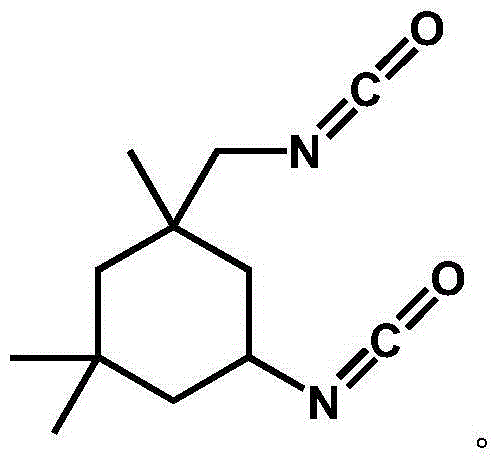
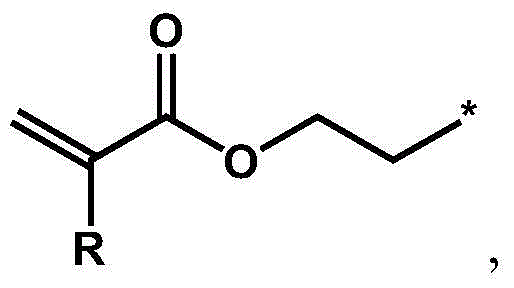
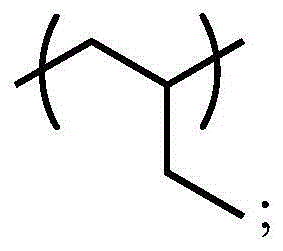
Examples
experiment example 1
[0098] Experimental Example 1: Oligomer C
[0099] The synthesis method of oligomer C can be divided into two stages, the first stage is roughly the same as that of Comparative Example 1, the difference is that when IEA is added, the equivalent ratio of isocyanate group / hydroxyl group is controlled to about 0.25. Afterwards, after confirming that the isocyanate group content in the mixture in the four-necked bottle is less than 0.5% by weight, the temperature is raised to 60° C. and IPDI is continued to be added dropwise to react with the hydroxyl group of about 50% molar equivalent (the 50% equivalent here is Polytail Based on all hydroxyl groups, including those that have reacted with IEA). After three hours of reaction, the end point of the reaction was determined by measuring the residual isocyanate group content.
PUM
| Property | Measurement | Unit |
|---|---|---|
| Functional group degree | aaaaa | aaaaa |
| Functional group degree | aaaaa | aaaaa |
Abstract
Description
Claims
Application Information
 Login to View More