
Display substrate, manufacturing method thereof and transparent display device
A display substrate and substrate technology, applied in semiconductor/solid-state device manufacturing, optics, instruments, etc., can solve problems such as low cut-off, complex structure of display devices, and affecting the production efficiency of display devices
- Summary
- Abstract
- Description
- Claims
- Application Information
AI Technical Summary
Problems solved by technology
Method used
Image


Examples
preparation example Construction
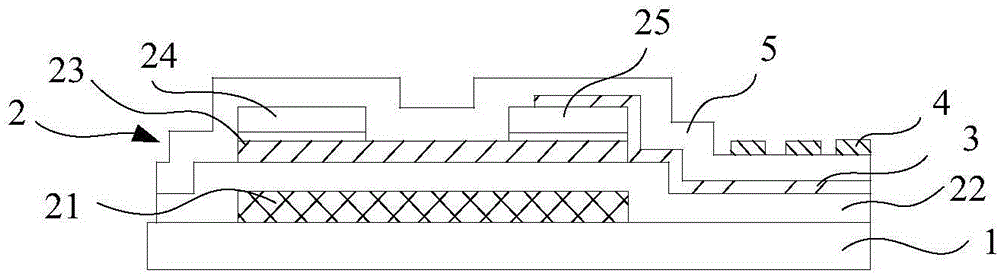
[0057] In addition, an embodiment of the present invention also provides a method for preparing a display substrate, the method including the following steps:
[0058] providing a substrate;
[0059] forming a first metal layer in the pixel area on the substrate;
[0060] A passivation layer is formed on the first metal layer, and the thickness of the passivation layer of multiple sub-pixel regions located in the same pixel region is different;
[0061] A second metal layer is formed on the passivation layer; and the first metal layer, the passivation layer and the second metal layer form a Faber cavity, and the Faber cavity allows light transmission of different wavelengths according to the thickness of the passivation layer. Pass.
PUM
| Property | Measurement | Unit |
|---|---|---|
| thickness | aaaaa | aaaaa |
| thickness | aaaaa | aaaaa |
Abstract
Description
Claims
Application Information
 Login to View More