
Asteroid attachment trajectory robust optimization method
An optimization method, asteroid technology, applied in the direction of non-electric variable control, instrument, height or depth control, etc., can solve the problems of reduced landing accuracy and uncertain parameters
- Summary
- Abstract
- Description
- Claims
- Application Information
AI Technical Summary
Problems solved by technology
Method used
Image

Examples
Embodiment Construction
[0057] In order to better illustrate the purpose and advantages of the present invention, the content of the present invention will be further described below in conjunction with the accompanying drawings and embodiments.
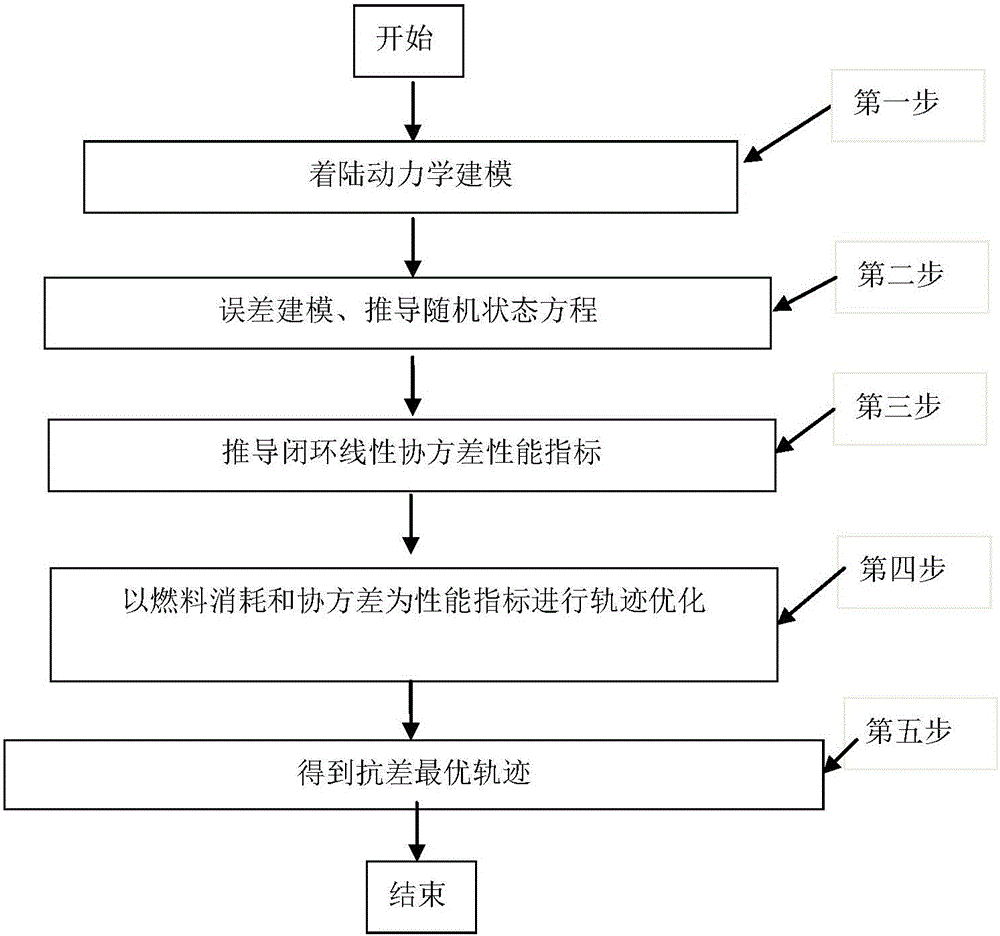
[0058] The specific process of a robust optimization method for asteroid attachment trajectory is as follows: figure 1 shown, including the following steps:
[0059] Step 1. Landing Dynamics Modeling
[0060] In the fixed coordinate system of small celestial bodies, the landing dynamic equation of the probe is expressed as:
[0061] x ·· = ω 2 x + 2 ω y · + ...
PUM
 Login to View More
 Abstract
Description
Claims
Application Information
 Login to View More