Metal material high-energy-beam additive/subtractive material and on-line laser ultrasonic detection composite processing method

A technology of laser ultrasonic and metal materials, which is applied in the analysis of materials, the analysis of solids using sonic/ultrasonic/infrasonic waves, and the material analysis using sonic/ultrasonic/infrasonic waves, etc. It can solve the problems that additive manufacturing parts cannot be detected and removed online, etc. Achieve the effect of reducing product defect rate, fast detection speed and high detection accuracy

CN107102061AActive Publication Date: 2017-08-29DALIAN UNIV OF TECH
4 Cites 36 Cited by

Patent Information

Authority / Receiving Office
CN · China
Current Assignee / Owner
Publication Date
2017-08-29

Smart Images

  • Figure 1
    Figure 1
  • Figure 2
    Figure 2
  • Figure 3
    Figure 3
Patent Text Reader

Abstract

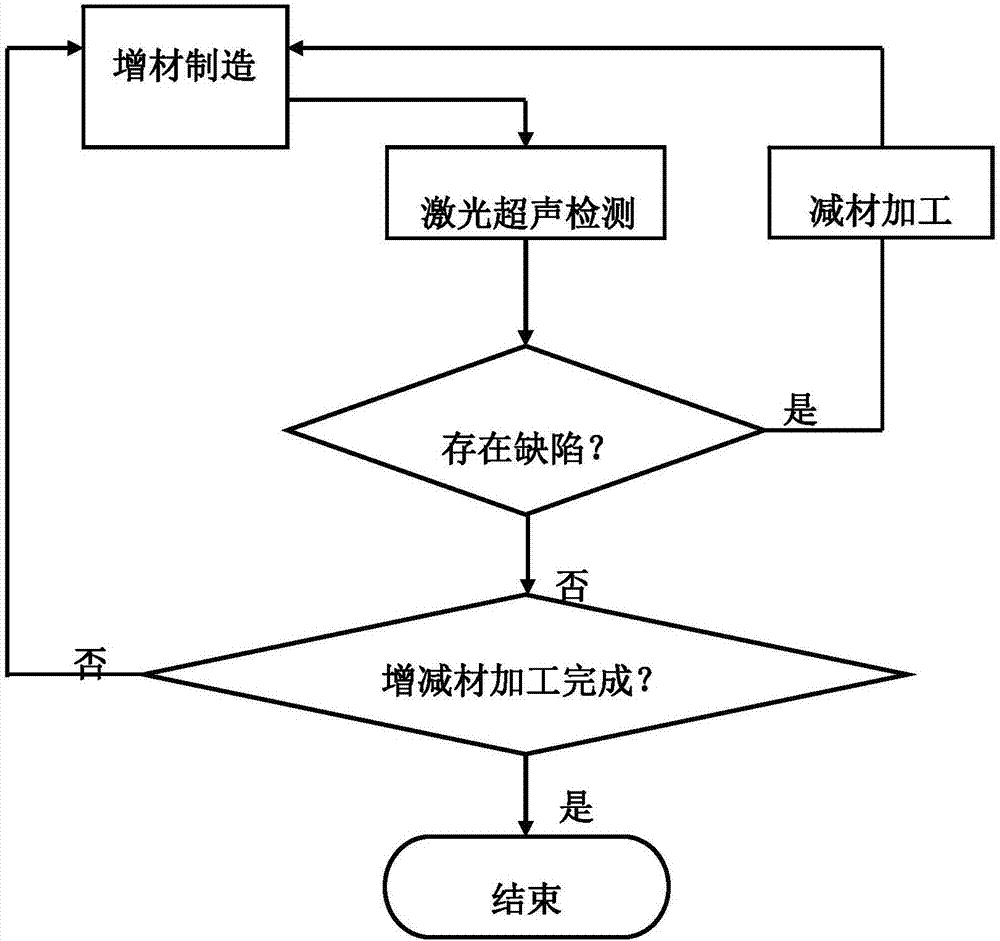
The invention relates to a metal material high-energy-beam additive / subtractive material and on-line laser ultrasonic detection composite processing method and belongs to the field of metal material additive / subtractive composite manufacturing (3D printing). The processing method includes the following steps: S1) additive moulding: performing layer-by-layer fusion / solidification stacking with a high-energy-beam fused metal material according to a predetermined route; S2) subtractive processing: performing subtractive processing to the deposited and shaped material to prepare a detection plane having high size-precision and surface quality; S3) laser ultrasonic detection: carrying out laser ultrasonic nondestructive detection on the surface to determine whether defects exist on the surface of or in interior of the material and determine the positions of the defects; and S4) detection determination and treatment: removing excessive surface or subsurface defects through subtractive processing, and adjusting an additive process to perform additive deposition until the whole metal component is completed, and if no defect exists, directly completing the on-line detection and performing high-quality work piece shaping circularly and repeatedly. The method solves a problem that a process of single additive manufacturing of components cannot achieve on-line detection and repair, and can reduce defection rate of products and save cost.
Need to check novelty before this filing date? Find Prior Art

Description

technical field

[0001] The invention relates to a metal material high-energy beam addition and subtraction material-on-line laser ultrasonic detection composite processing method in the field of metal material addition and subtraction composite manufacturing (3D printing). Background technique

[0002] Additive manufacturing is the discretization of three-dimensional solids into several two-dimensional planes, which are produced by superimposing materials layer by layer, and finally form three-dimensional parts. Subtractive manufacturing is the removal of raw materials through machining methods such as turning and milling to finally produce finished products. Additive and subtractive composite manufacturing is a combination of the two, and after a certain number of layers of additive manufacturing, a subtractive process is introduced to perform high-precision subtractive processing on deposited materials in real time. The organic combination of additive and subtractive proc...

Examples

Embodiment 1

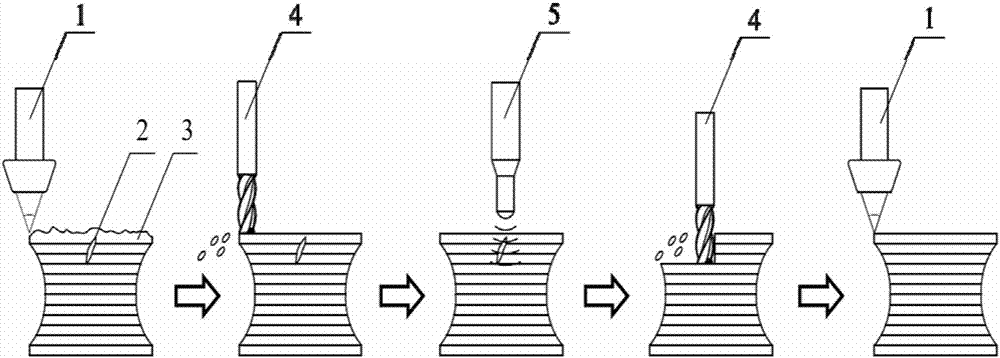
[0047] Such as figure 1 As shown, a metal material high-energy beam addition and subtraction-on-line laser ultrasonic detection composite processing method, the specific operation includes the following steps:

[0048] The high-energy beam spray head 1 forms a deposited workpiece 3 with a certain number of layers according to the preset planned layered cross-section high-energy beam scanning path;

[0049] According to the specific process parameter settings, the material reduction tool 4 performs necessary material reduction processing on the deposited workpiece 3, removes the step effect and processes the surface detection plane;

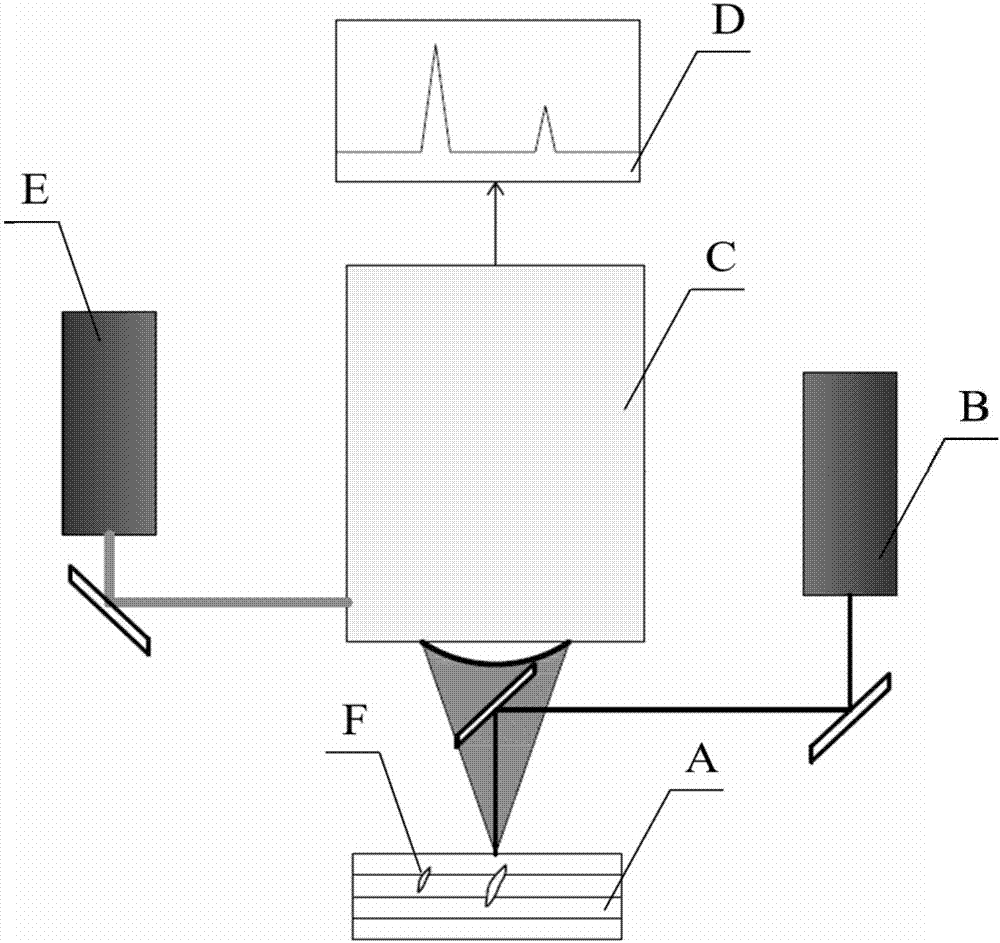
[0050] Planar scanning of the newly deposited material after material reduction is carried out by the laser ultrasonic probe 5, and the laser ultrasonic signal is used to determine whether there is a subsurface defect 2 on the surface or inside of the material and determine its position;

[0051] If an intolerable subsurface defect 2 is detected,...