

Primer group and kit for detecting and identifying clonorchis sinensis and/or haplorchis taichui
A technology for Clonorchis sinensis and Mononorchis sinensis, which is applied in the field of primer sets and kits for detecting and identifying Clonorchis sinensis and/or Mononorchis sinensis, and can solve the problem that PCR detection primers and methods are not suitable for clinical diagnosis and There are problems such as deviation and low efficiency in disease monitoring work and identification test results, so as to reduce the cost of detection and identification, improve the efficiency of detection and identification, and reduce the false negative rate.
- Summary
- Abstract
- Description
- Claims
- Application Information
AI Technical Summary
Problems solved by technology
Method used
Image

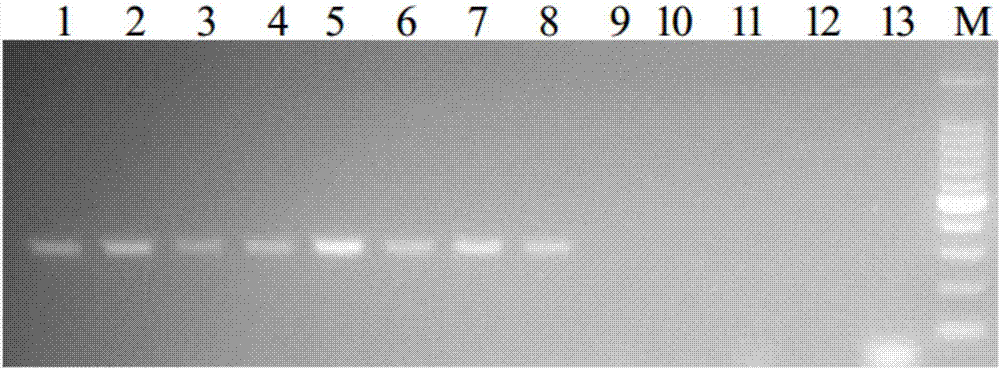
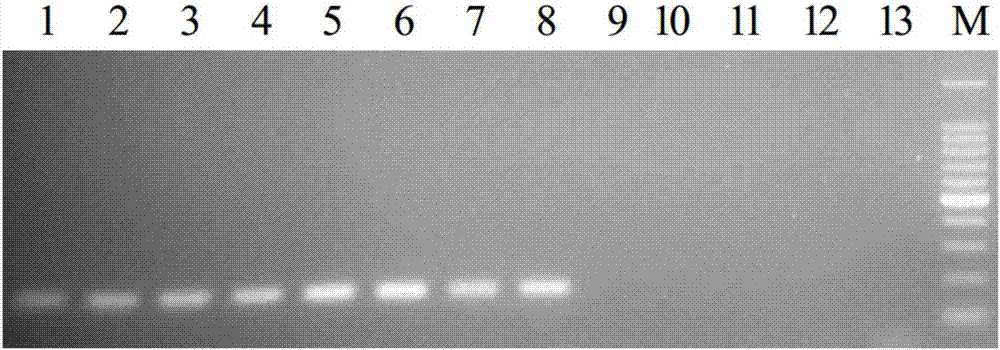
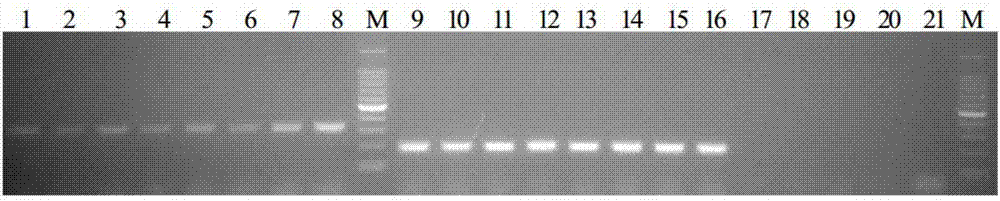
Examples
Embodiment 1
[0039]According to our long-term detection practice, for samples with low DNA template content (<1.0ng / μL), the sensitivity of PCR amplification using COX1 gene is significantly higher than that of PCR amplification based on ITS1 and ITS2 regions. This invention is based on the trematode genomic DNA extracted and purified by conventional methods from specimens such as digested adults, metacercariae and eggs, etc., and through a large number of comparative experiments in the early stage, the COX1 gene was selected as the PCR method to identify Clonorchis sinensis and fan. Target gene of Acanthorches sinensis. By optimizing the design of the primers, two pairs of highly specific and sensitive PCR detection primers were optimized; by optimizing the PCR reaction system and conditions, the simultaneous detection of the DNA of two trematodes in a single tube was successfully realized.
PUM
 Login to View More
 Abstract
Description
Claims
Application Information
 Login to View More