Double-layer tube numerical control bending die and forming method thereof

A technology of bending die and double-layer pipe, which is applied in the field of pipe bending processing, can solve the problems of low forming limit and difficulty in ensuring forming precision, and achieve the effects of improving material flow, high manufacturing precision and improving forming quality

CN108620466AActive Publication Date: 2018-10-09NORTHWESTERN POLYTECHNICAL UNIV +1
10 Cites 3 Cited by

Patent Information

Authority / Receiving Office
CN · China
Patent Type
Applications(China)
Current Assignee / Owner
Publication Date
2018-10-09

Smart Images

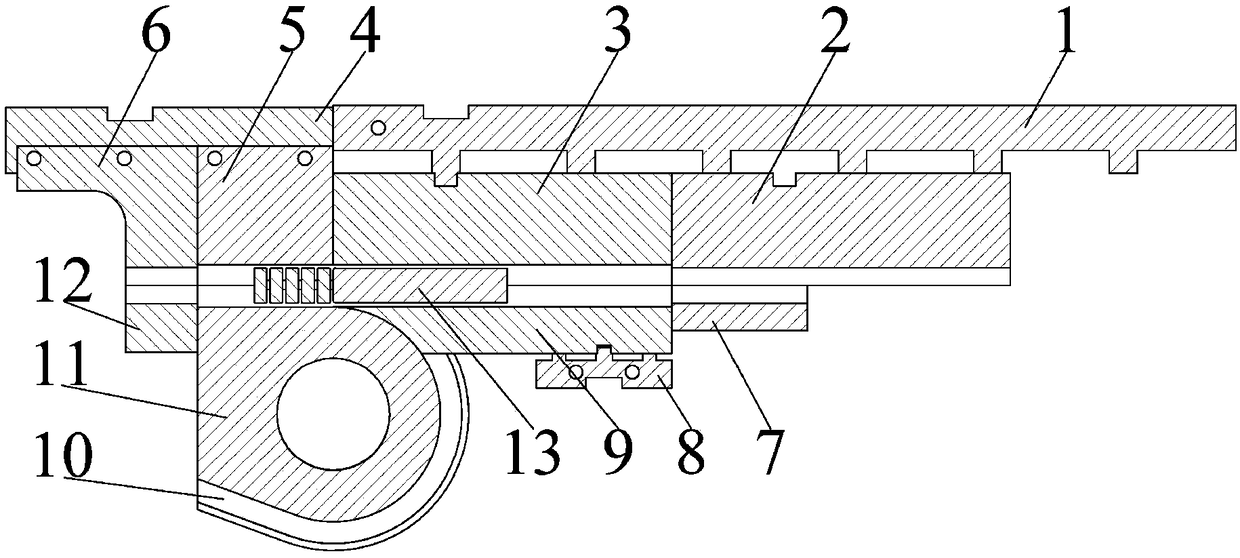
  • Figure 1
    Figure 1
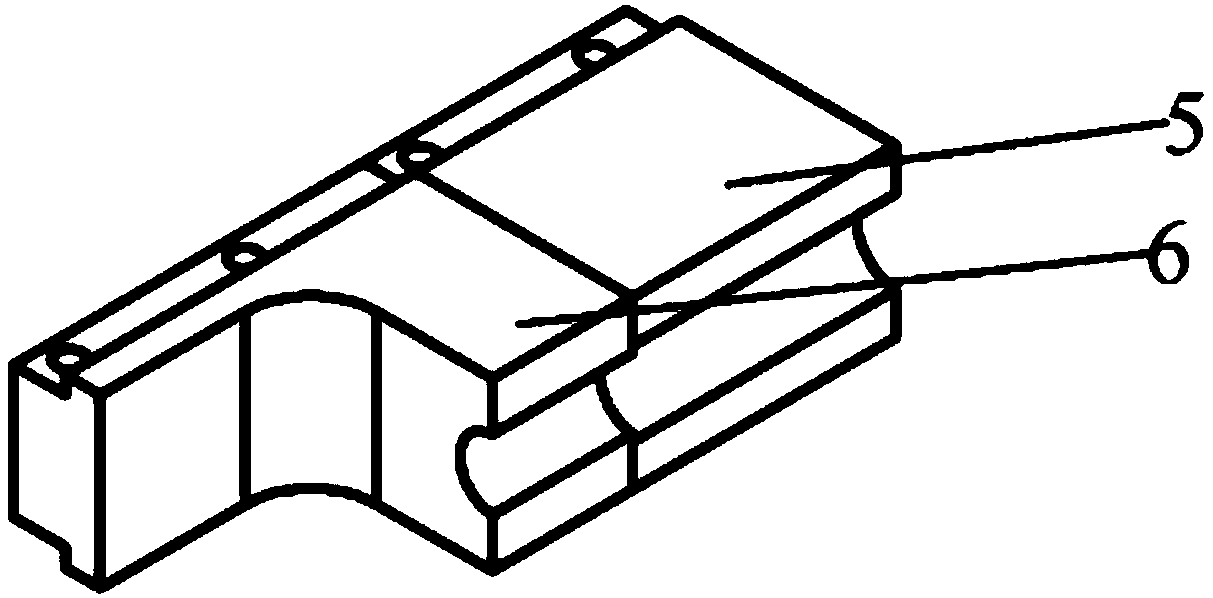
  • Figure 2
    Figure 2
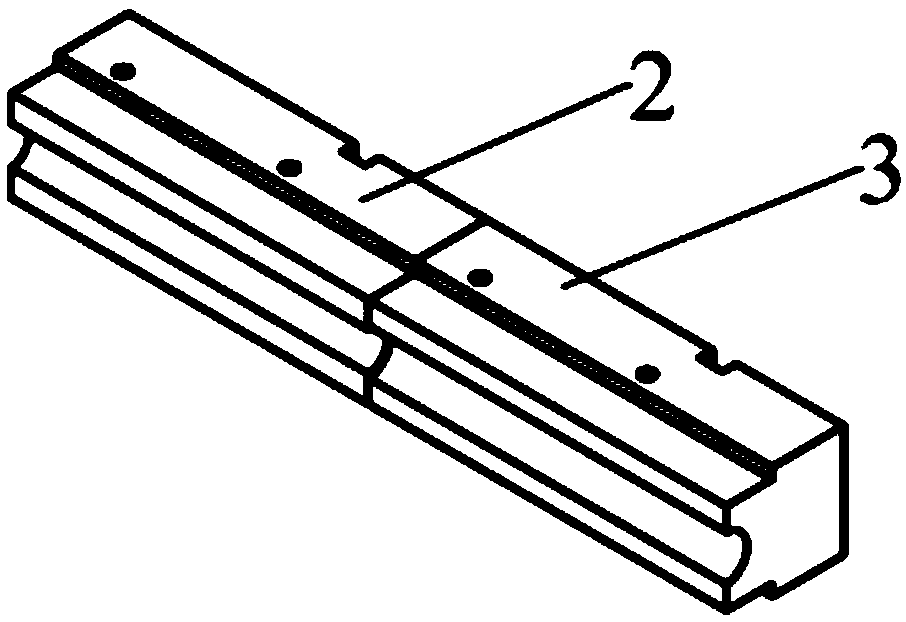
  • Figure 3
    Figure 3
Patent Text Reader

Abstract

The invention discloses a double-layer tube numerical control bending die and a forming method thereof. The die comprises pressure dies arranged in a stepped mode, a clamping die, a benign die body, an anti-wrinkling die, an auxiliary die and a core die, wherein the clamping die, the bending die body, the anti-wrinkling die, the auxiliary die and the core die are arranged in a stepped mode; the die is mounted on a tube bending machine and is used for bending a double-layer tube through the numerical control bending technology without conducting clearance sealing on packing of the double-layertube in the process, so that the manufacturing efficiency is improved, and the manufacturing cost is lowered. Secondly, the die adopts the stepped clamping method and can conduct clamping on an inner-layer tube and an outer-layer tube effectively, the phenomenon that the inner-layer tube slips in the bending process is avoided, and the forming quality of the double-layer tube is improved. Moreover, the bending die can effectively and tightly press the inner-layer tube and the outer-layer tube through the step-like pressure dies and the auxiliary die to achieve boosting on the inner-layer tubeand the outer-layer tube and improve material flow of bending plastic deformation. The double-layer tube numerical control bending die is ingenious in concept, compact in structure, reasonable in arrangement, high in manufacturing accuracy, high in working efficiency and low in energy consumption and has high engineering utilization value.
Need to check novelty before this filing date? Find Prior Art

Description

technical field

[0001] The invention relates to the technical field of pipe bending processing, in particular to a mold for numerically controlled bending of a double-layer pipe and a forming method thereof. Background technique

[0002] At present, high-performance and lightweight thin-walled conduit components are widely used in the fields of aviation, aerospace, navigation and automobile manufacturing. Thanks to its gap structure and low heat transfer coefficient between the two tubes, the double-layer tube is expected to meet the high-efficiency requirements of conduit parts for leak prevention and heat insulation, and has demonstrated its superiority over single-wall tubes characteristics and wide application prospects. However, traditional pipe bending processes, such as numerical control bending, press bending, push bending and free bending, are mostly aimed at the bending of single-wall pipes, and are not applicable to the overall bending of double-layer pipes with ...

Examples

Embodiment 2

[0059] The 6061-T4 aluminum alloy round pipe used in this embodiment realizes the double-layer pipe bending operation. The specification of the double-layer pipe is: the inner pipe Φ32mm×0.7mm, that is, the inner pipe diameter D1 is 32mm, and the wall thickness t1 is 0.7mm , The wall thickness factor D1 / t1 is 45.7; the outer tube Φ38mm×0.7mm, that is, the outer tube diameter D2 is 38mm, the wall thickness t2 is 0.7mm, and the wall thickness factor D2 / t2 is 54.3; the bending radius R=3D1 is required.

[0060] The equipment used in this embodiment is W27YPC-159 CNC pipe bending machine, and the specific implementation process includes the following steps:

[0061] The first step is blanking of the inner and outer tubes: determine the length of the outer tube of the double-layer tube according to the cavity of the outer tube of the mold, and determine the length of the inner tube of the double-layer tube according to the length of the inner tube cavity and the length of the outer ...