[0002] The bolt bearing capacity test is to put the corresponding pad on the bolt shaft (flat pad:
physical load, wedge: wedge load) through the tooling, and based on the tensile test method, apply force at a uniform speed to make the bolt locally deform and fracture and judge In the process of bolt bearing capacity, the existing GB stipulates that in addition to detecting the physical tension of the bolt, a wedge load test is required, and the wedge load test uses wedges with different angles for different types of bolts, such as steel structure bolts with 10° , the
steel frame bolts use 4°. Therefore, a set of
fastener fixtures must meet the requirements of the two kinds of bolts for the wedges and meet the convenience of clamping. At present, most of the major testing
machine manufacturers have a set of
barrel bolts for most of them. The bearing capacity fixture has the following problems. When clamping the bolts, the entire
barrel-shaped tooling needs to be placed on the
workbench, and the bolts are inserted into the
barrel to
expose the threaded part. Washers or wedge washers, after the test is completed, the clamping method has to be reversed and disassembled, which greatly affects the efficiency. There are a large number of washers and barrel-shaped tooling of various specifications. Tooling, leading to an increase in maintenance costs. In the prior art, for example, the invention patent with application number 201621461467.7 includes
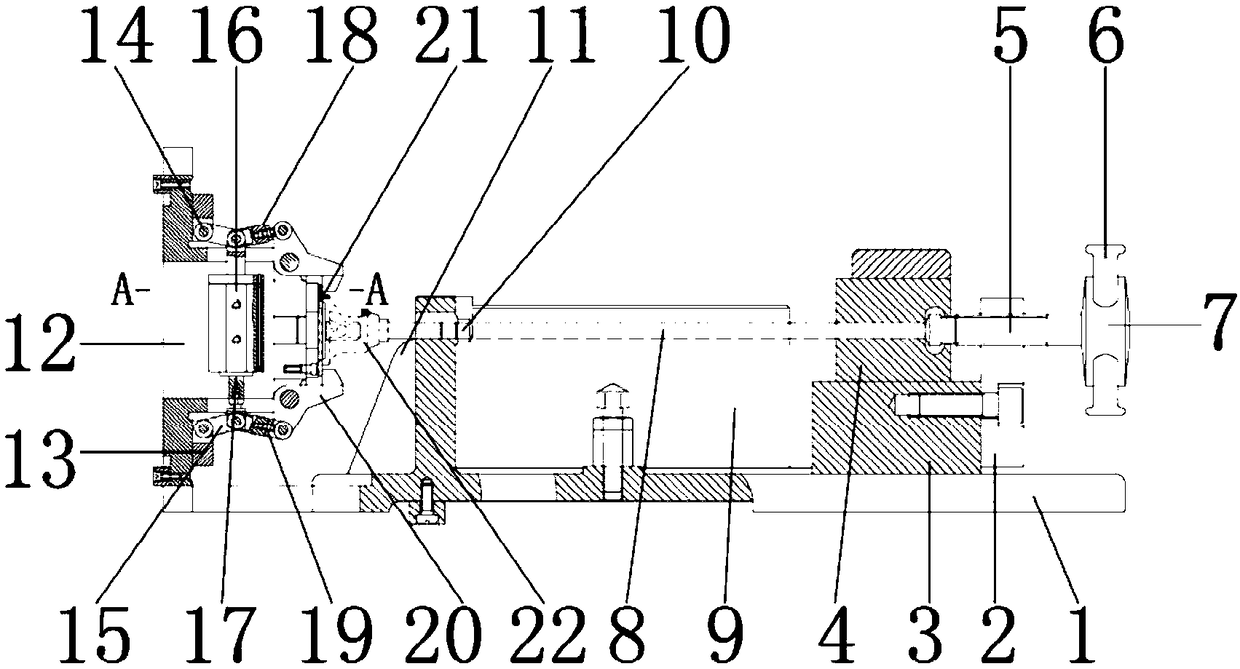
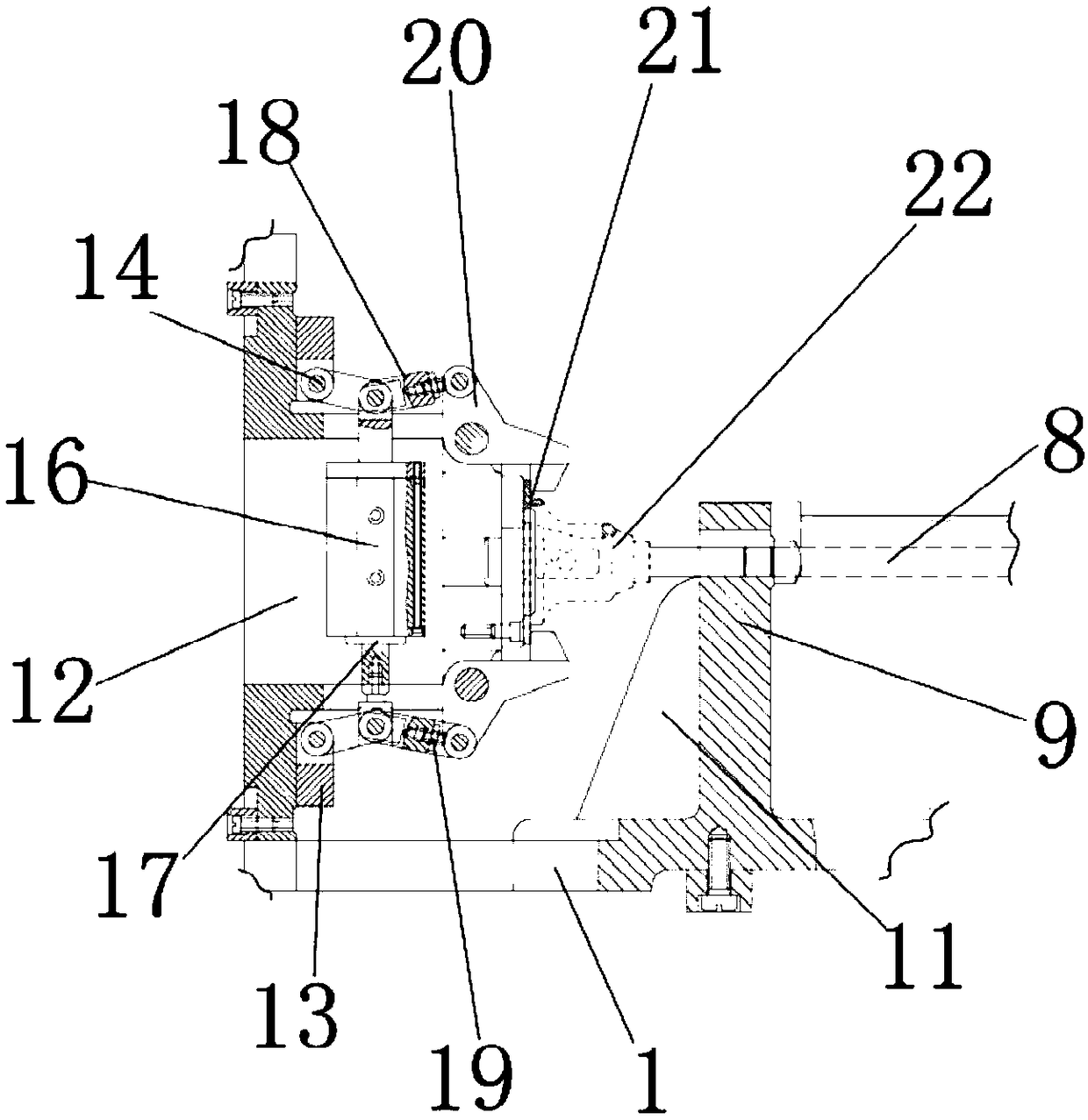
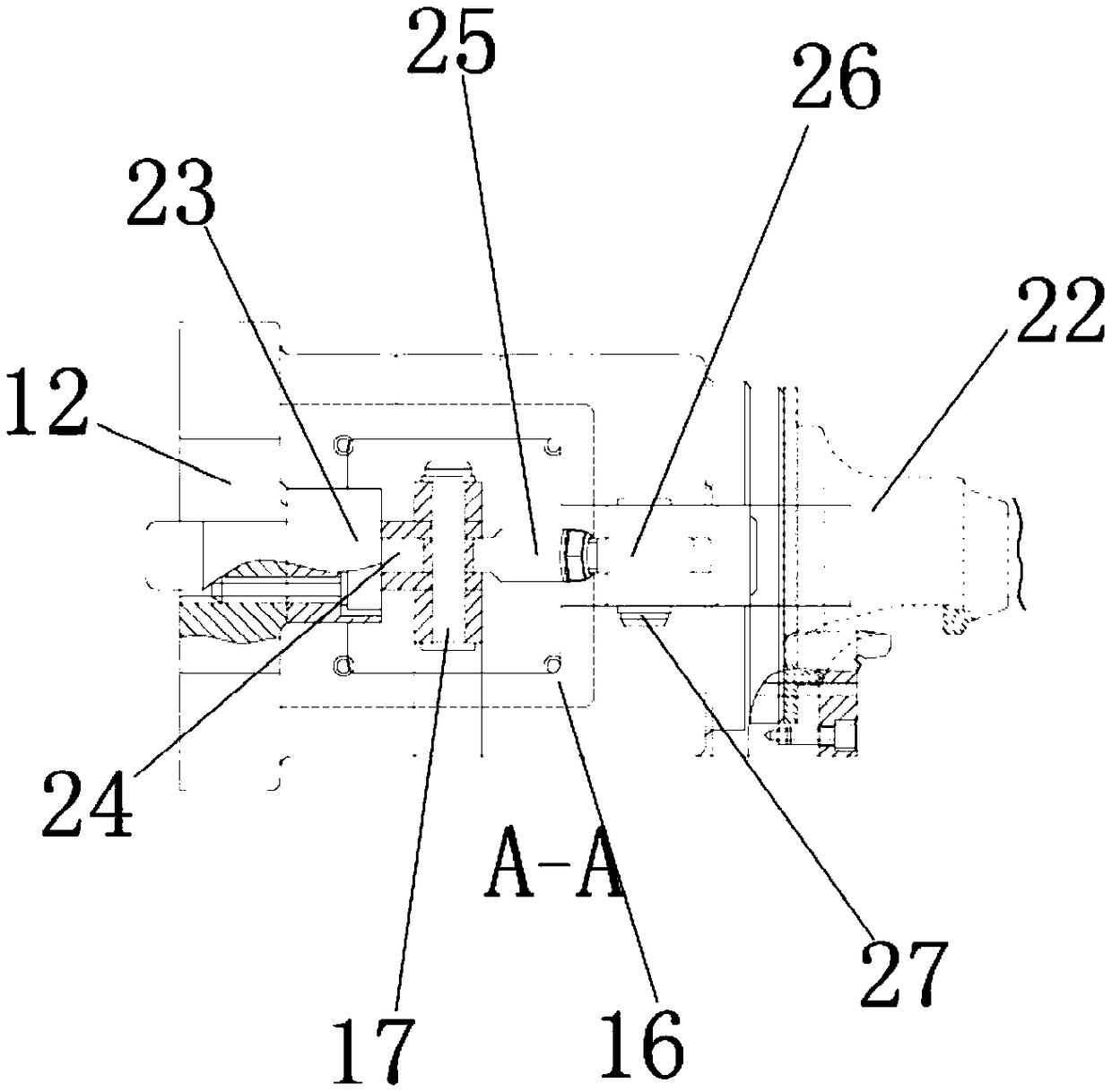
main bearing parts, bolt head sleeves, wedges or pads, and the main bearing parts are clamped by the sleeve. It is integrally formed with the rod part, the clamping part of the sleeve is in the shape of a cylinder, one end of the cylinder is fixed at the center of the connecting rod, and the other end of the cylinder is provided with an opening at the center of the cylinder. A side opening connected to the end face of the opening is provided on the side, a hollow clamping cavity is provided inside the cylinder, the opening communicates with the side opening, the clamping cavity communicates with the opening and the side opening, and the bolt head The upper sleeve is cylindrical with one end open and is composed of two symmetrical sleeve parts. The opening end of the bolt head sleeve is provided with a clamping part that matches the clamping cavity. The bolt head sleeve The center of the other end surface of the cylinder is provided with a through hole communicating with the inside of the cylinder. The wedge or pad is in the shape of a ring. One end of the wedge is flush and the other end has a slope. The pad The two ends of the block are flush, and the clamping part of the bolt head sleeve is arranged in the clamping cavity of the main bearing part so that the main bearing part is connected with the bolt head sleeve. The wedge or spacer It is arranged in the bolt head sleeve. Although the structure of the invention is simple, there are many shortcomings and defects. In the existing equipment, the design of the clamping cavity has defects. When in use, the inspected bolt is installed in the clamping cavity. When the bolt is under tension, the bolt will break from between the top and the rod, and the main bearing part is not equipped with a buffer device, so that the main bearing part that has not unloaded the tension is damaged or even damaged by the
recoil force, which affects the normal operation of the detection fixture and increases the detection The inspection and maintenance costs of the fixture are easy to cause the inspector to produce
work pressure and make the body feel tired, and when the bolt is pulled, the side opening is easy to shake because the bolt cap is mostly round or prismatic, not flat. Cause the bolts to fall from the side opening, which reduces the detection efficiency and increases the detection cost. Moreover, in order to avoid the above-mentioned technical problems, it is indeed necessary to provide a method for detecting and clamping the bearing capacity of high-strength bolts for
steel structures to overcome the defects in the prior art


 Login to View More
  Login to View More