
A super linear loudspeaker
A loudspeaker and super-linear technology, applied in the field of electric-acoustic conversion devices, can solve problems such as easy disconnection, difficulty in increasing power, unstable connection between voice coil lead wire and centering strut, etc., to suppress resonance, solve problems such as easy disconnection, low distortion effect
- Summary
- Abstract
- Description
- Claims
- Application Information
AI Technical Summary
Problems solved by technology
Method used
Image

Examples
no. 3 example
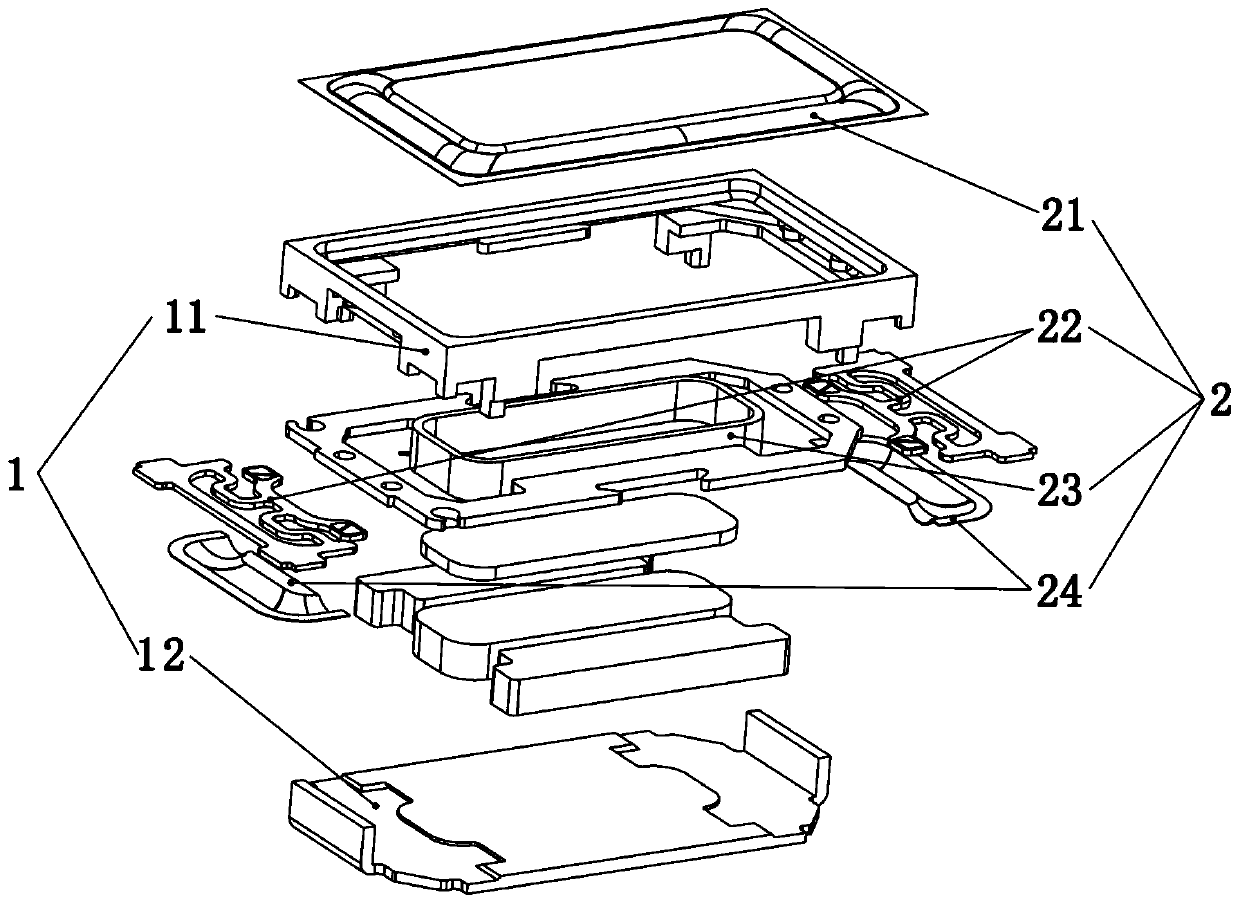
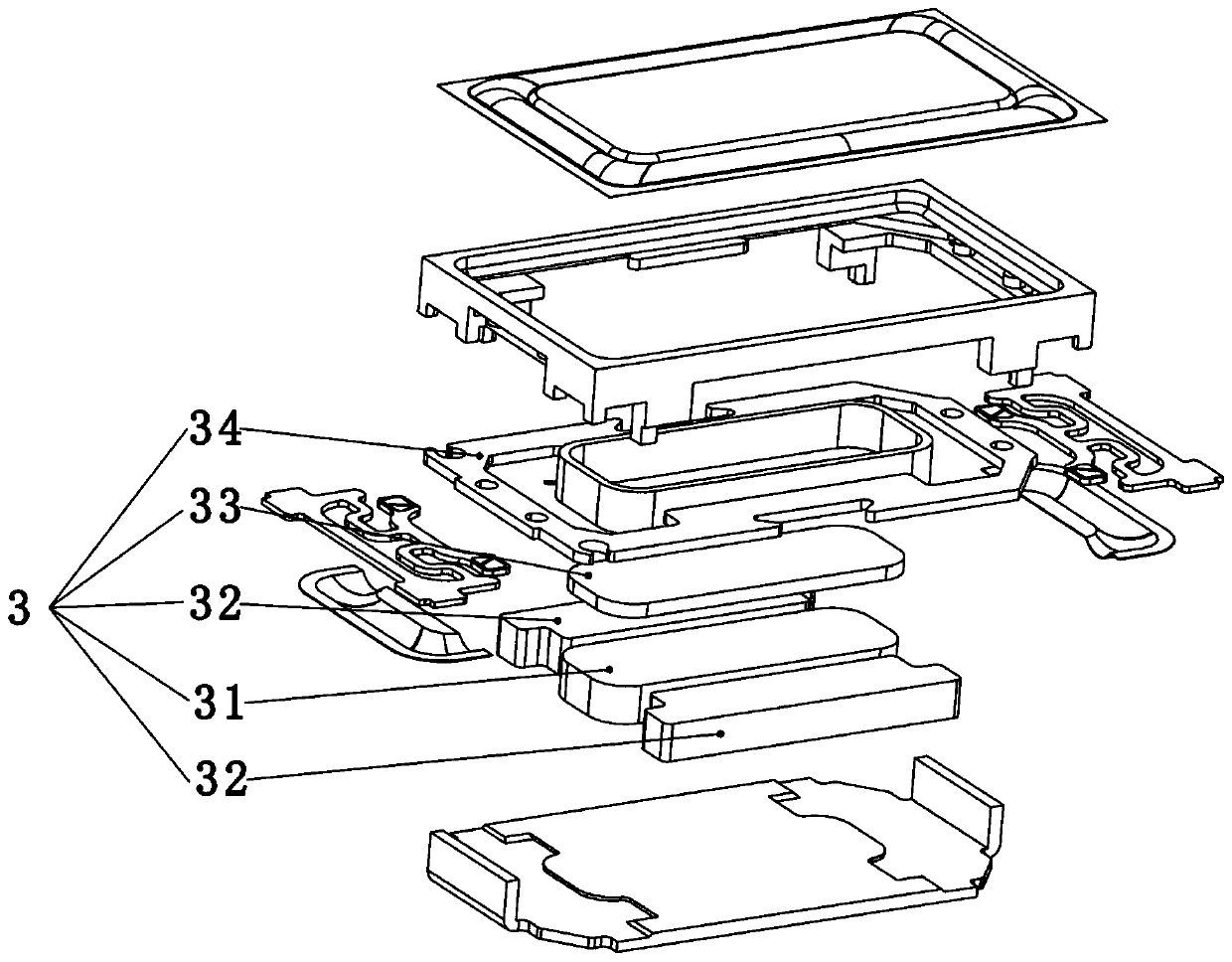
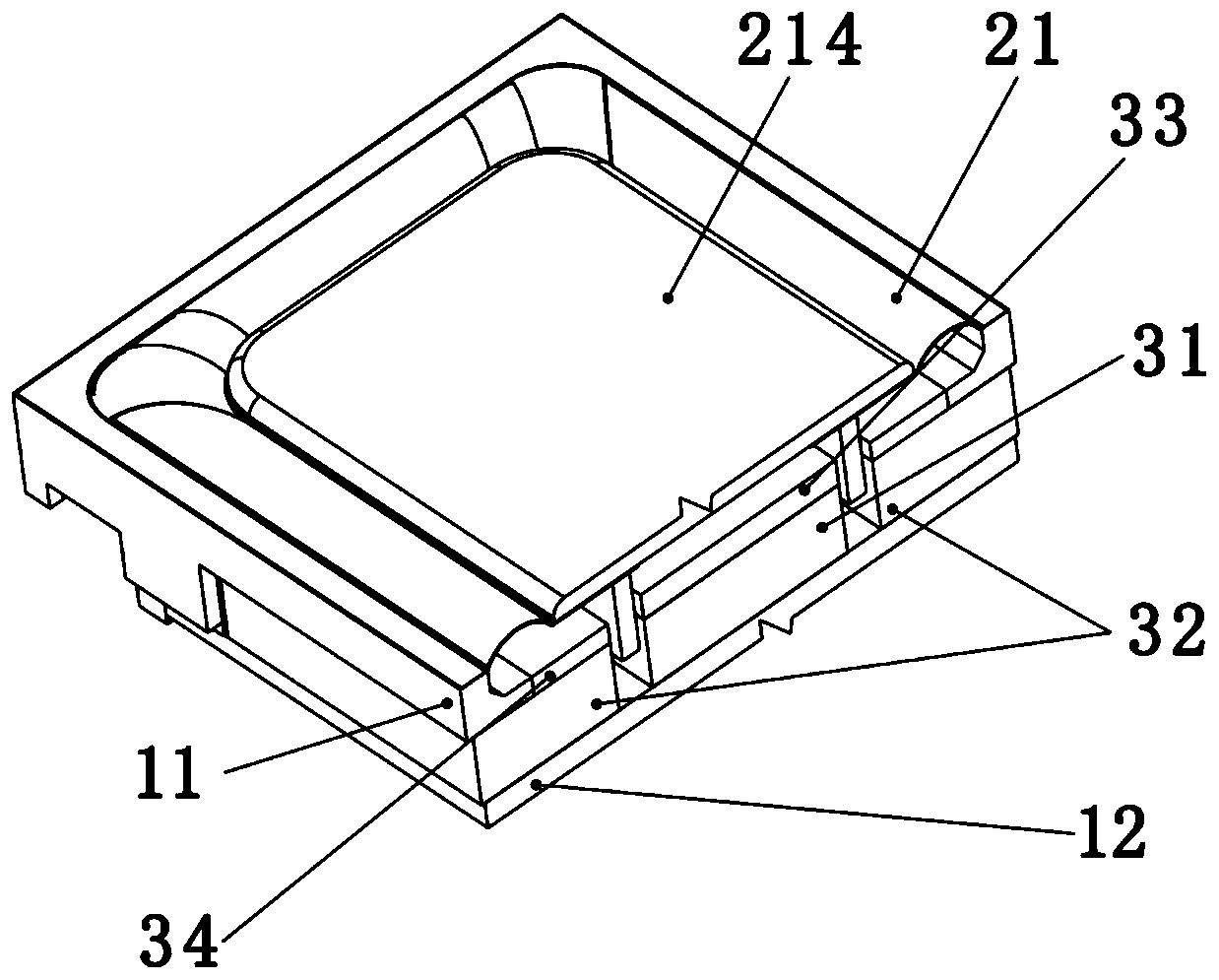
[0050] Based on the third embodiment, this application provides another embodiment. In the fourth embodiment, refer to Figure 11 , the damper 22 includes a receiving groove 228 , and the voice coil lead wire 231 is led out from the voice coil 23 and then accommodated in the receiving groove 228 . The accommodating groove 228 is used to define the position of the voice coil lead wire 231 , so that it is directly supported and fixed on the damper 22 after being drawn out from the voice coil 23 . In this case, when the voice coil lead wire 231 is led from the voice coil 23 to the damper 22, there is no need to have a suspended part, accompanied by the first limit surface 226 and the second limit surface 227, the voice coil lead wire 231 and the second limit surface 227. The voice coil 23 is fixedly connected with the positioning support as a whole, and the technical problem that the lead wire 231 of the voice coil is easy to break is solved under the condition that the polarizat...
no. 5 example
[0052] The fifth embodiment of the present invention provides a conductive glue, which is applied to the bonding of the voice coil 23 , the voice coil lead wire 231 and the damper 22 in the first to the second embodiments. The conductive glue contains the following raw materials in parts by weight: 40%-60% of UV resin, 10%-20% of acrylamide and / or acrylate monomer, 5%-10% of crosslinking agent, 1%-2% of initiator %, 1%-3% of dispersant, 10%-20% of conductive filler and 5%-10% of ethanol, the cross-linking agent is selected from inorganic nanoparticles, and the conductive glue is cured by ultraviolet light.
[0053] Optionally, the acrylamide and / or acrylate monomer is selected from N-isopropylacrylamide, N-methylolacrylamide, N,N-dimethylacrylamide, methacrylamide, acrylic acid Or methacrylic acid contains any one or more mixtures of carboxyl or amides. After the acrylamide and / or acrylate monomer is polymerized, it forms an interpenetrating cross-linked network with the cure...
Embodiment 6
[0071] This embodiment provides a conductive glue, which is prepared according to the following steps:
[0072] S1. Add tris(hydroxymethyl)aminomethane to distilled water to obtain a 10mo / L buffer, add 3% hydrochloric acid to 200mL of the buffer, adjust the pH to 8.5, and then add 10g of graphene oxide , ultrasonically dispersed for 60 min, then added 2 g of dopamine hydrochloride and stirred at room temperature for 8 h to obtain a mixed solution;
[0073] S2, centrifuging the mixed solution for 30 minutes, removing unreacted monomers, and drying to obtain modified graphene oxide;
[0074] S3, graphene oxide is subjected to high temperature heat treatment, N 2 The atmosphere is protected, the heating rate is 5°C / min, and the temperature is raised to 800°C and kept for 30min to obtain graphene.
[0075] S4. Add 5 g of sodium methylene dinaphthalene sulfonate and 10 g of graphene into 40 g of UV resin, mechanically stir for 1 h, and then ultrasonically disperse for 15 min to m...
PUM
 Login to View More
 Abstract
Description
Claims
Application Information
 Login to View More