Distributed transaction processing system and method based on broadcast channel
A technology of distributed transaction and broadcast channel, applied in the field of distributed transaction processing based on broadcast channel, can solve the problems of long processing flow, high consumption of computing and bandwidth resources, and poor system scalability.
- Summary
- Abstract
- Description
- Claims
- Application Information
AI Technical Summary
Problems solved by technology
Method used
Image

Examples
Embodiment 1
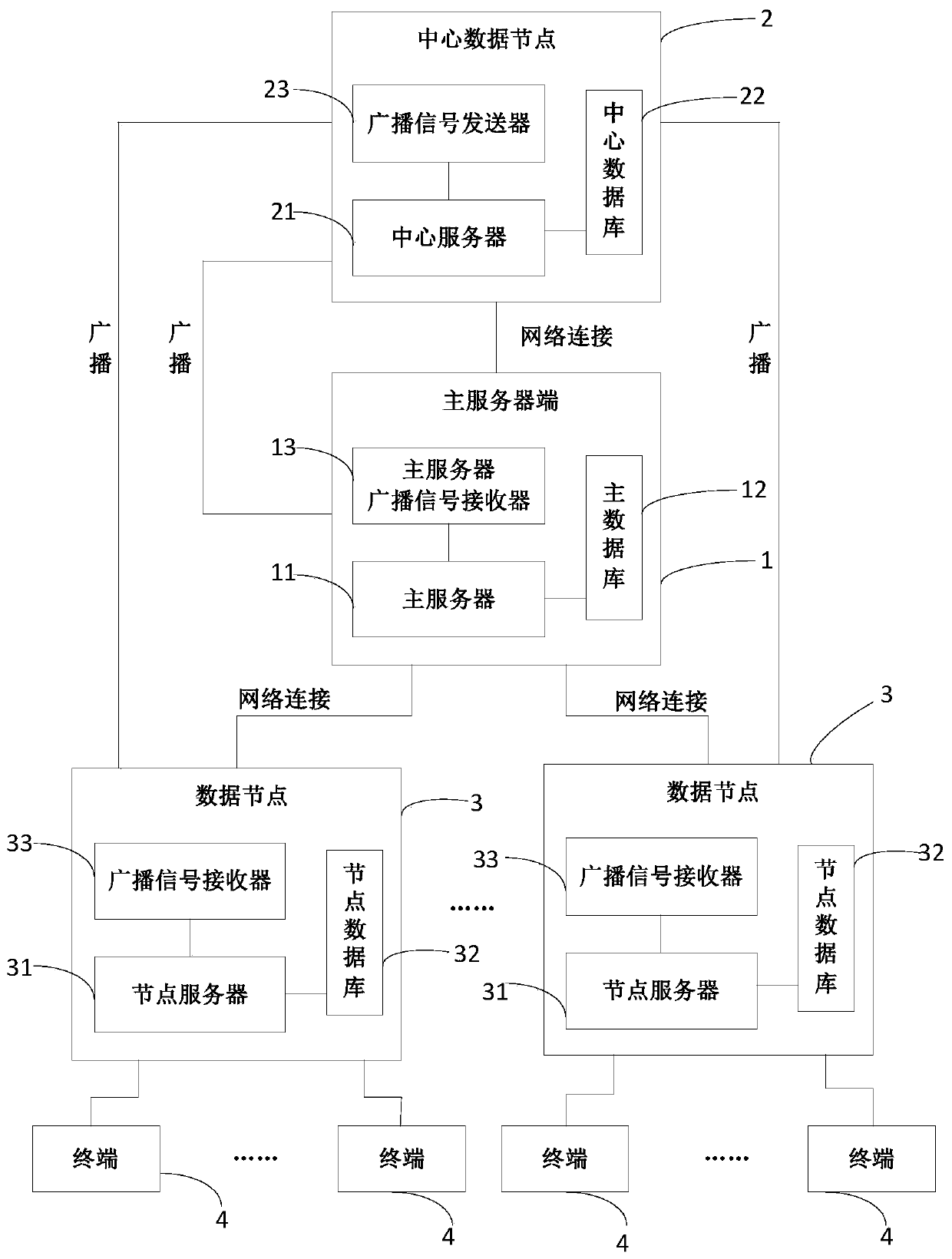
[0078] Such as figure 1 As shown, the broadcast channel-based distributed transaction processing system includes a main server end 1, a central data node 2, multiple data nodes 3 and multiple terminals 4; wherein:
[0079] The main server end 1 is connected to the central data node 2 in network communication, and is simultaneously connected to the plurality of data nodes 3 in network communication;
[0080] The terminal 4 is communicatively connected to the data node 3, and one data node 3 is communicatively connected to one or more terminals 4;
[0081] The central data node 2 performs data transmission through a broadcast channel, and establishes a broadcast communication connection with the main server end 1 and the data node 3 respectively.
[0082] In the specific implementation process, the user sends a data update request to the data node 3 through the terminal 4, and the data node 3 transmits the data update request to the main server 1 through the network, and the ma...
Embodiment 2
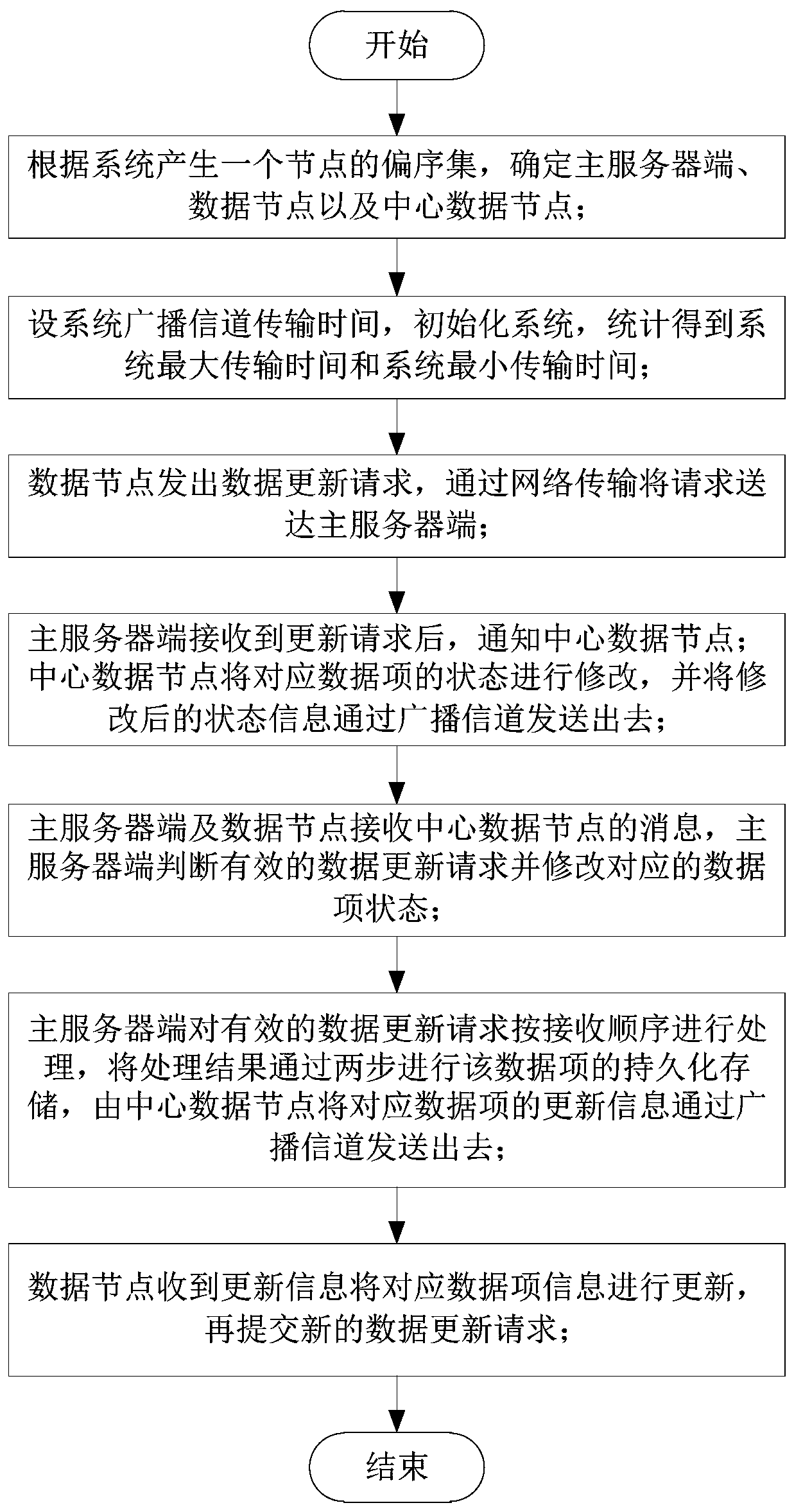
[0099] Such as figure 2 As shown, based on the system described in Embodiment 1, a distributed transaction processing method based on a broadcast channel is provided, including the following steps:
[0100] S1: Generate a partially ordered set P of nodes according to the system i , i∈[0,n], where P 0 As the main server end, other data nodes as the system; the central data node C of the system is set, and the central data node C has a broadcast sending function;
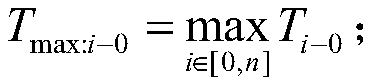
[0101] S2: Set the transmission time of the system broadcast channel as T, initialize the system, and obtain the maximum transmission time T of the system through statistics max:i-0 and the system minimum transmission time T min:i-0 ,in:
[0102]
[0103]
[0104] S3: data node P i Issue a data update request, and send the request to the main server P through network transmission 0 ;
[0105] S4: main server side P 0 After receiving the update request, notify the central data node C; the central data no...
Embodiment 3
[0141] More specifically, for a data item to be updated through a distributed system, the method introduces a broadcast variable type whose status is: {boardcast-read, boardcast-lock}, indicating "readable" and "locked" statuses, update The version number is boardcast-revision, and the update version number of the data item will change with the number of data update submissions; the attributes of the broadcast type are stored in the main server P 0 on, other data nodes P i The update status of the corresponding data item will be obtained through the broadcast channel.
[0142] In the specific implementation process, the data node P i The processing flow within is as follows:
[0143] Assume that Data is the globally consistent broadcast type data that the system is interested in, ValueChange is the expectation of the local application on the Data change, and realchange is the final Data change obtained by the local application. Since the boardcast-revision update is mainly ...
PUM
 Login to View More
 Abstract
Description
Claims
Application Information
 Login to View More
PatSnap Eureka turns technology decisions into work you can execute. Powered by our Innovation Knowledge Graph, it runs expert workflows across engineering, life sciences, materials and intellectual property. Get your review-ready output in minutes.


