Multi-layer residual coefficient image coding method based on compressed sensing

A technology of compressed sensing and residual coefficients, applied in image communication, digital video signal modification, electrical components, etc., can solve the problems of reducing the amount of data transmitted by codecs and low rate-distortion performance of compressed sensing image coding schemes

CN110248190AActive Publication Date: 2019-09-17XI AN JIAOTONG UNIV
6 Cites 16 Cited by

Patent Information

Authority / Receiving Office
CN · China
Current Assignee / Owner
Publication Date
2019-09-17

Smart Images

  • Figure 1
    Figure 1
  • Figure 2
    Figure 2
  • Figure 3
    Figure 3
Patent Text Reader

Abstract

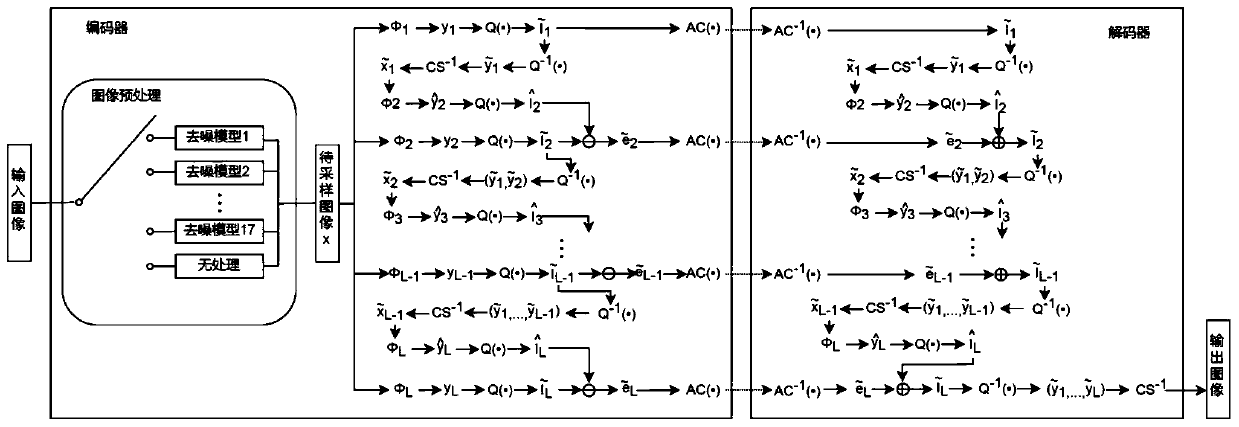
The invention discloses a multi-layer residual coefficient image coding method based on compressed sensing. The method comprises the steps of dividing noise into 17 layers and training the 17 layers; substituting the 17 newly trained denoising models into an LDAMP iteration algorithm to complete compressed sensing image reconstruction; carrying out compressed sensing reconstruction on each layer and predicting a lower-layer measurement value to obtain a residual error, and carrying out quantization by adopting a block adaptive quantizer with the same quantization bit depth in the coding method; wherein the information needing to be transmitted by the current layer of the image coding end is the difference value between the quantization result of the real measurement value and the quantization result of the prediction measurement values of the reconstructed images of the measurement values of all previous layers of the layer; and the current layer of the image decoding end receiving the transmission information of the corresponding layer of the coding end, obtaining a measurement value or a residual coefficient after adaptive arithmetic decoding, and the image reconstruction of the current layer of the decoding end utilizing the received and recovered image measurement values of all previous layers. According to the multi-layer residual coefficient image coding method based on compressed sensing provided by the invention, the rate distortion performance of image coding based on image compressed sensing reconstruction can be effectively improved.
Need to check novelty before this filing date? Find Prior Art

Description

technical field

[0001] The invention belongs to the technical field of image compression, and in particular relates to a multi-layer residual coefficient image coding method based on compressed sensing. Background technique

[0002] Compressed sensing technology refers to the technology of reconstructing signals or images at a sampling rate lower than Nyquist. It is widely used in image processing, image retrieval, CT image reconstruction and other fields. The peak signal-to-noise ratio (PSNR) is an important indicator for judging image quality. In the field of image compression, the higher the PSNR of image recovery under the same sampling rate, the clearer the image recovery and the better the performance of the compression algorithm. The current image coding technology based on compressed sensing basically only quantizes, codes, transmits and reconstructs the measured values, which has a large gap in rate-distortion performance compared with traditional image coding techn...

Examples

Embodiment Construction

[0061] The present invention provides a multi-layer residual coefficient image coding method based on compressed sensing, which reduces the amount of transmitted information and improves rate-distortion performance by layering and using all previous layer information in the next layer to perform image reconstruction, prediction and calculation residuals. Purpose, and the compression sensing image reconstruction methods at the image codec end all utilize the enhancement method based on the LDAMP algorithm proposed by the present invention.

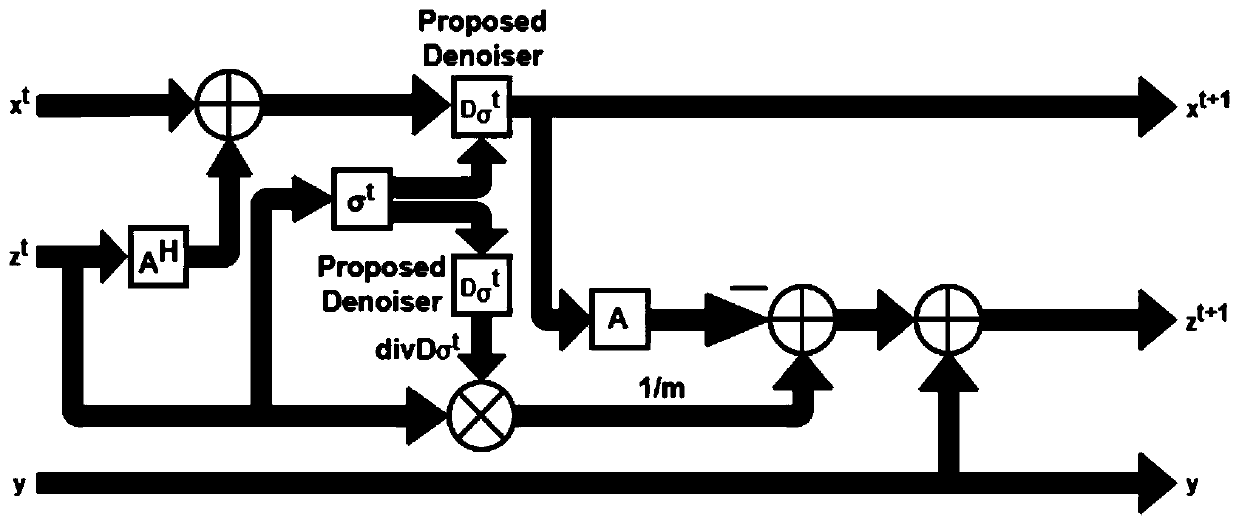
[0062] The implementation steps of the enhancement method based on the LDAMP algorithm are as follows:

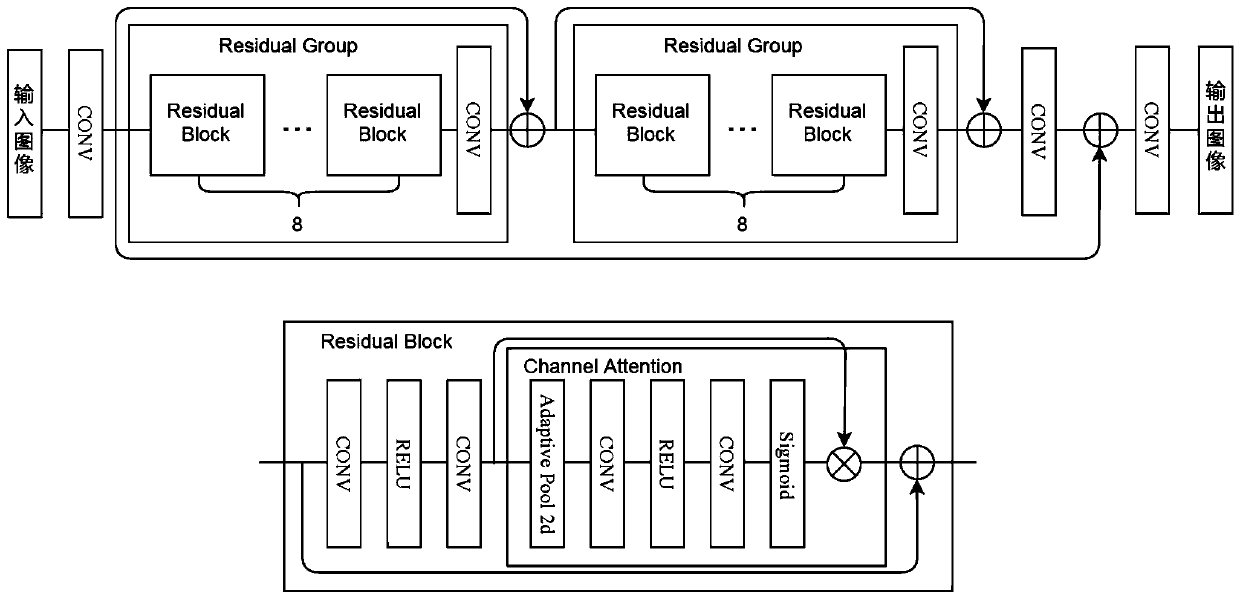
[0063] S101, the noise is carefully layered, and the noise is divided into 17 layers (the original LDAMP noise is divided into 10 layers);

[0064] Based on noise standard deviation, the stratification scope of floors 1-17 is shown in Table 1

[0065] Table 1 Schematic diagram of the fine-grained stratification of the noise standard dev...