
Radioactive source positioning reconstruction method based on multi-energy system response matrix
A system response and radioactive source technology, applied in the field of radioactive source positioning and reconstruction based on the multi-energy system response matrix, can solve the problem of different gamma ray penetration ability and detector response, and achieve the effect of strong portability
- Summary
- Abstract
- Description
- Claims
- Application Information
AI Technical Summary
Problems solved by technology
Method used
Image

Examples
Embodiment 1
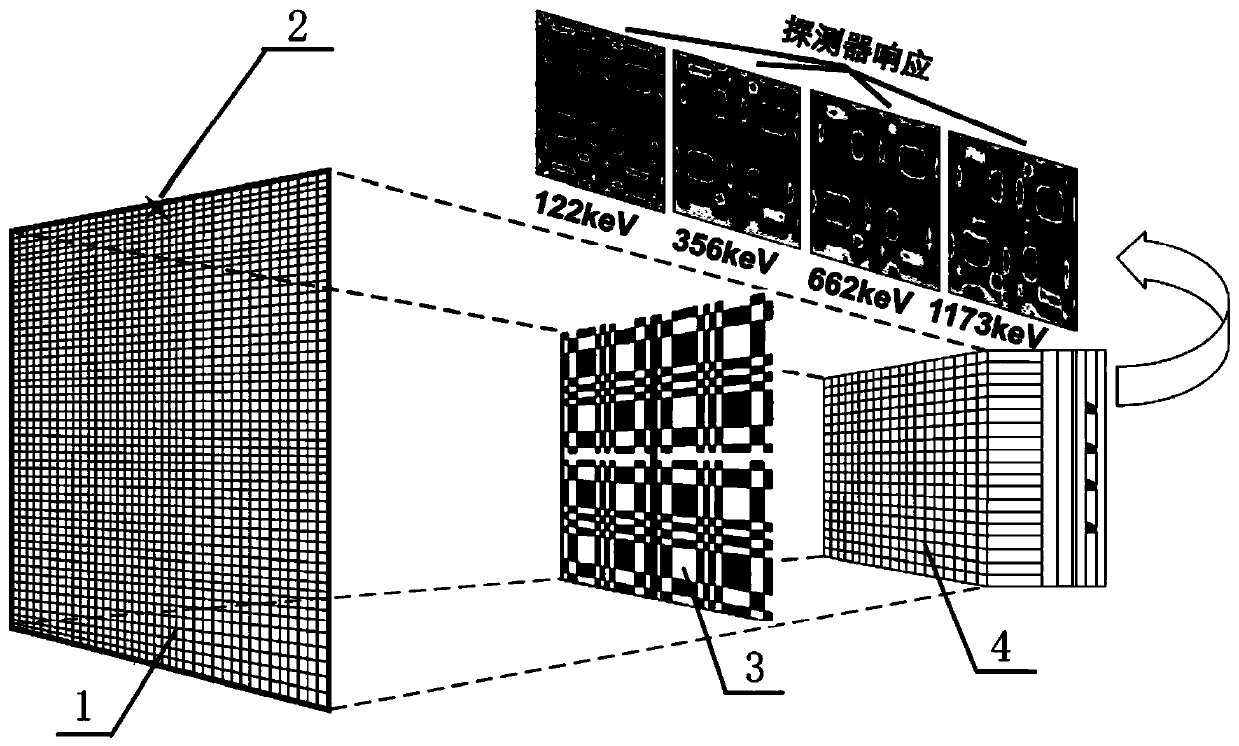
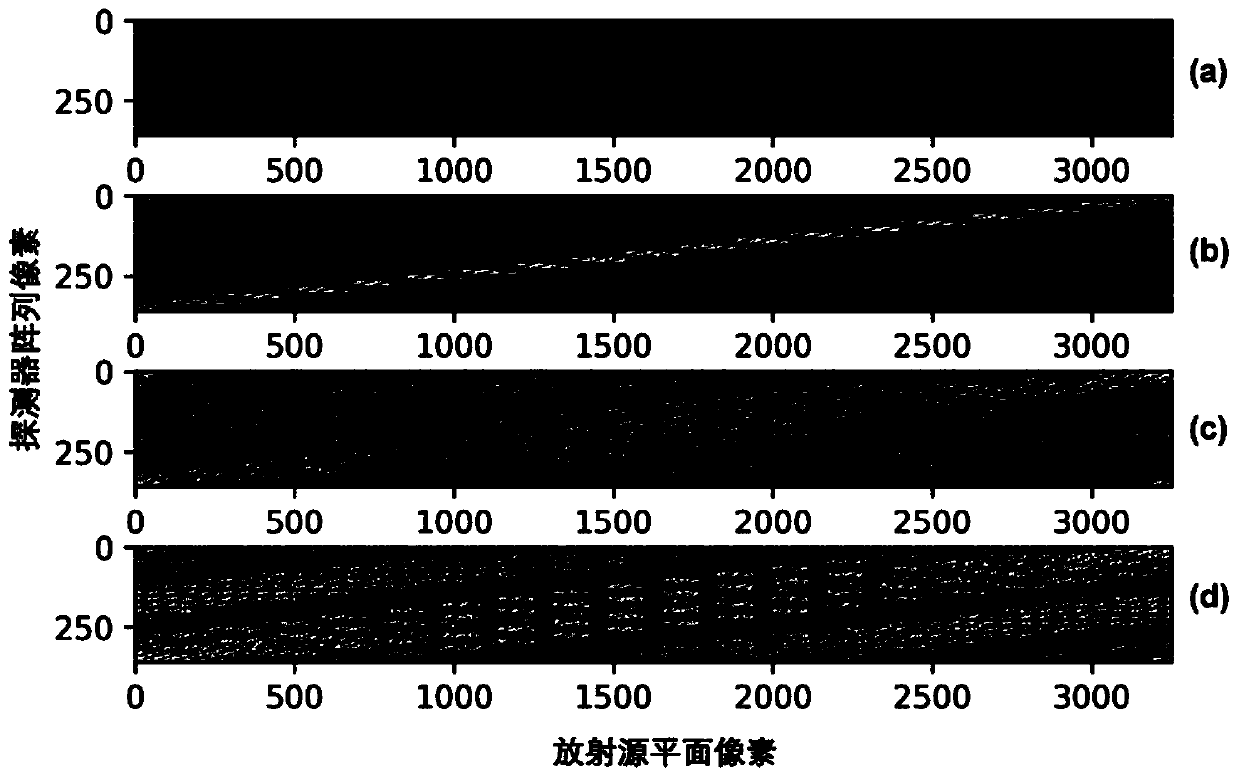
[0054] Embodiment 1: see Figure 1 to Figure 4 , a radioactive source location and reconstruction method based on a multi-energy system response matrix, using a coded aperture imaging system for measurement, the coded aperture imaging system includes a coded plate 3 and a detector group 4, wherein the detector group 4 is A×A Detectors distributed in a matrix, the radioactive source plane 1 detected by the detector group 4 through the coding plate 3 is M×M pixel positions, including the following steps:
[0055] (1) Divide the energy range that the coded aperture imaging system can detect into N energy windows, and open up a memory space with a size of A×A for each energy window to store the count data of A×A detectors , and the initial value of the detector count is zero;
[0056] An energy value is selected in each energy window as a characteristic energy value under the energy window; in this embodiment, we select an energy value at or near the median of each energy window....
Embodiment 2
[0076] Example 2: see figure 1 Referring to Figure 8, in order to better illustrate the memory space of this embodiment, we give specific examples as follows:
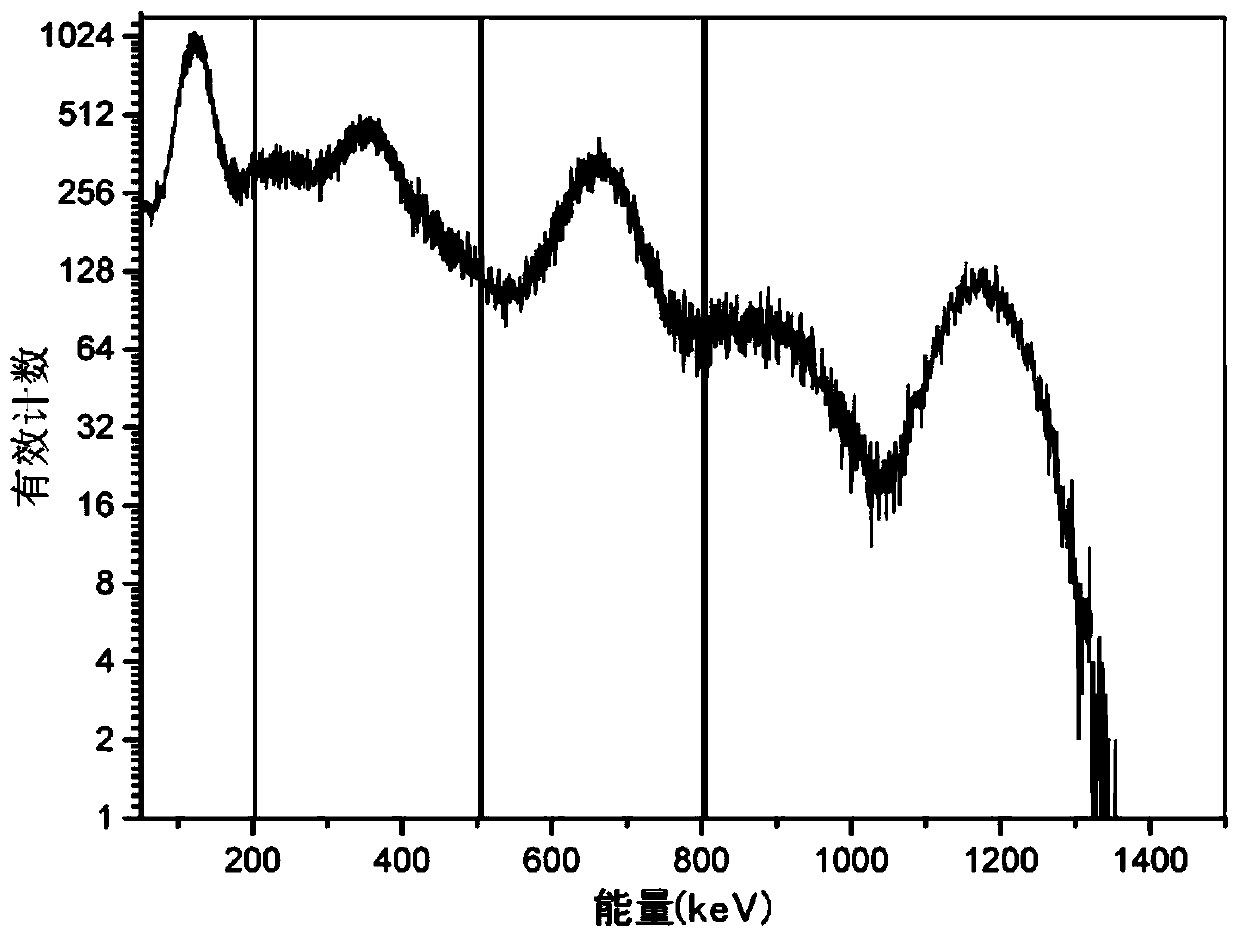
[0077] (1) The common gamma energy range is 50keV-1.5MeV. We also set the energy range that the coded aperture imaging system can detect to 50keV-1.5MeV, and divide the entire energy spectrum in this range into 4 energy windows , are energy window 1: 50-200keV, energy window 2: 200-500keV, energy window 3: 500-800keV, energy window 4: 800-1500keV;
[0078] We open up a memory space for each energy window, assuming that the detector group 4 is a 3×3 array, that is, 9 detectors, then the memory space is also a 3×3 matrix, and the 9 detectors and the memory space The nine elements correspond to each other;
[0079] In each energy window, we have to choose an energy value as the characteristic energy value under the energy window. Here, we respectively take 122keV, 356keV, 662keV, and 1173keV as the characteristic energy...
PUM
 Login to View More
 Abstract
Description
Claims
Application Information
 Login to View More