
Method for solving SEVM model problem based on artificial bee colony algorithm
An artificial bee colony algorithm and model technology, applied in calculation models, biological models, calculations, etc., can solve the problems of complex genetic operation process, many control variables, and large amount of calculation, and achieve simple iterative operation process and few control variables , the effect of strong search ability
- Summary
- Abstract
- Description
- Claims
- Application Information
AI Technical Summary
Problems solved by technology
Method used
Image

Examples
Embodiment 1
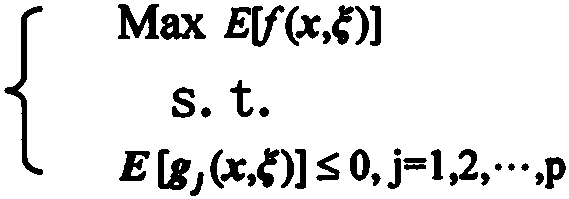
[0051] Solve the following SEVM single-objective model:
[0052]
[0053] where the random variable ξ 1 , ξ 2 , ξ 3 They are subject to uniform distribution U(1,2), normal distribution N(3,1) and exponential distribution EXP(4) respectively.
Embodiment 2
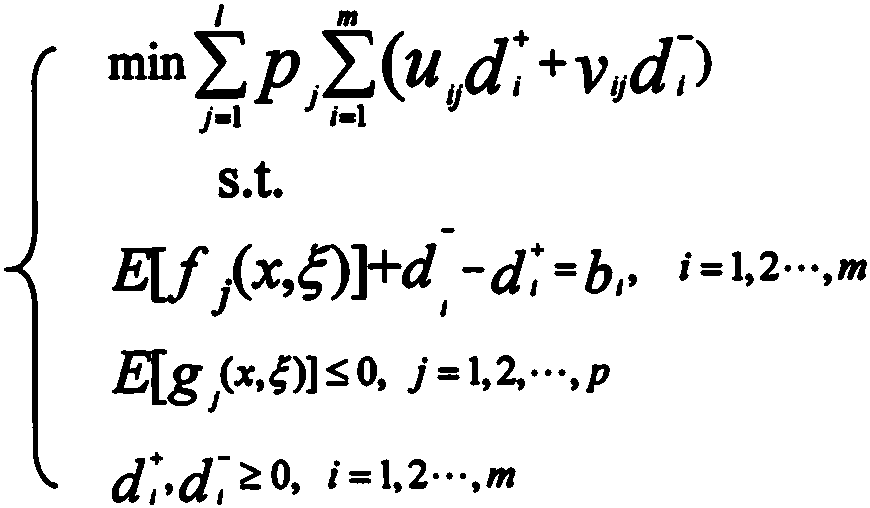
[0055] Solve the following SEVM goal program:
[0056]
[0057] In the formula, ξ 1 Subject to normal distribution N(1, 1), ξ 2 Subject to normal distribution N(2,1), ξ 3 Subject to normal distribution N(3,1), ξ 4 Obey the normal distribution N (4, 1).
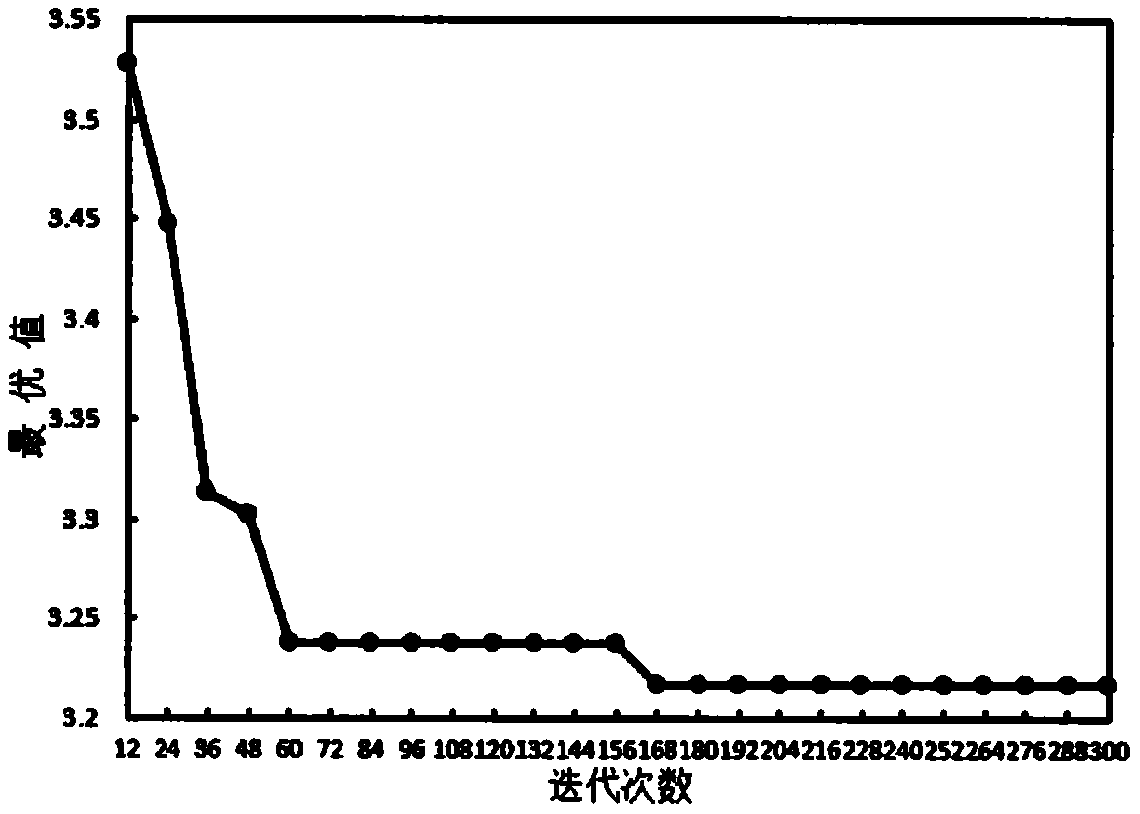
[0058] For Example 1: Population size: 30; Number of random simulations: 3000; Number of iterations: 300; Number of runs: 1. In addition, the number of honey bees and follower bees is 15, and the threshold limit is 15.
[0059] For example 2, population size: 30; number of random simulations: 5000; number of iterations: 2000; number of runs: 1. In addition, the number of honey bees is 15, the number of follower bees is 15, and the threshold limit is 15.
[0060] The main configuration of the computer is: memory: 8GB; CPU frequency: 3.0GHz; operating system: win10; VisualC++6.0 to write and run the program.
[0061] In Example 1: the hybrid intelligent algorithm is executed once, and the obtained optimal solution and ...
PUM
 Login to View More
 Abstract
Description
Claims
Application Information
 Login to View More