Multi-target energy management method in HEV self-adaptive cruise based on MPC

An adaptive cruise and energy management technology, applied in data processing applications, registration/instruction of vehicle operation, instruments, etc., to reduce energy consumption, reduce environmental damage, and ensure safety

CN111231930AActive Publication Date: 2020-06-05CHONGQING UNIV
4 Cites 5 Cited by

Patent Information

Authority / Receiving Office
CN · China
Current Assignee / Owner
Publication Date
2020-06-05

Smart Images

  • Figure 1
    Figure 1
  • Figure 2
    Figure 2
  • Figure 3
    Figure 3
Patent Text Reader

Abstract

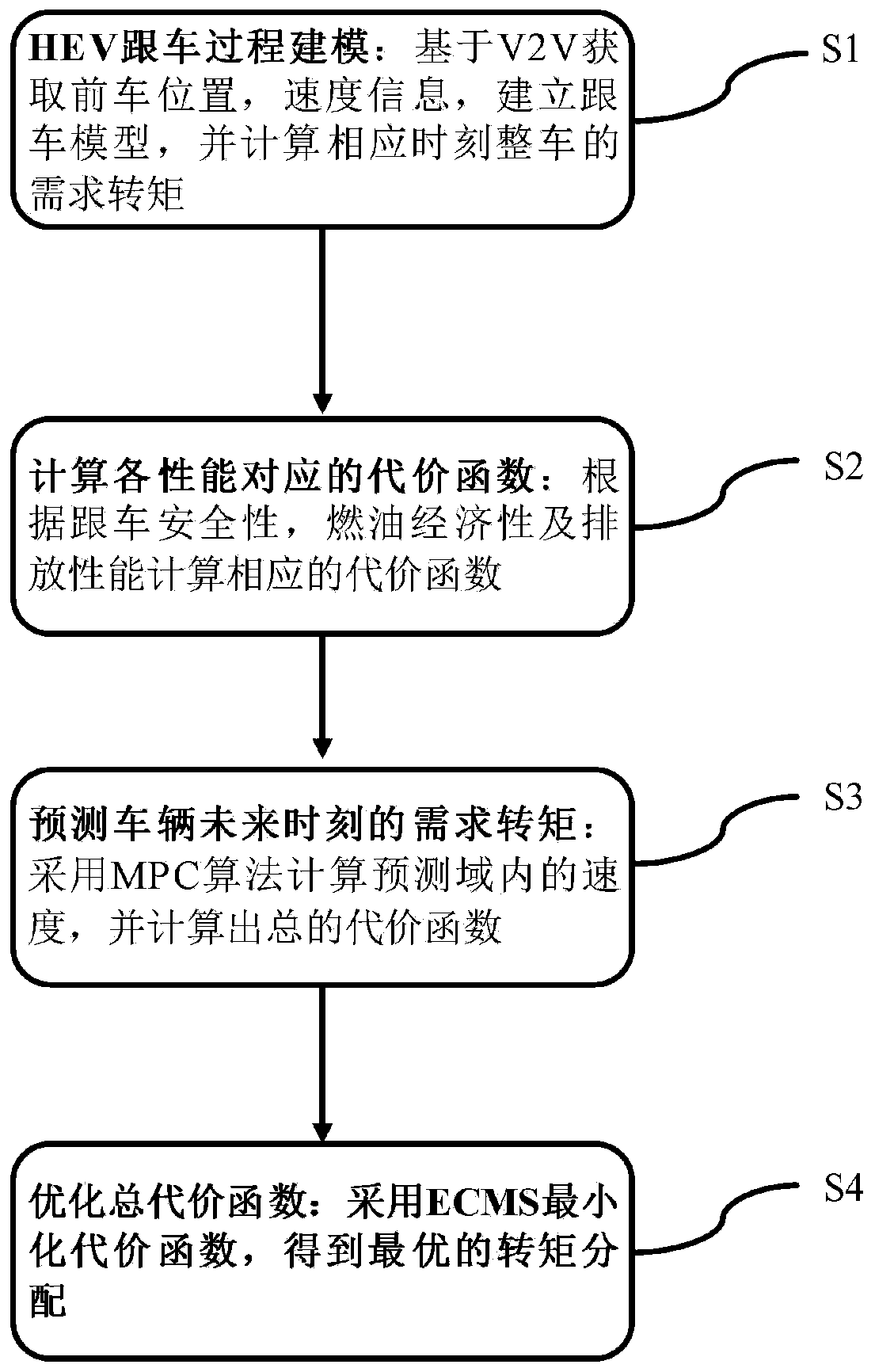
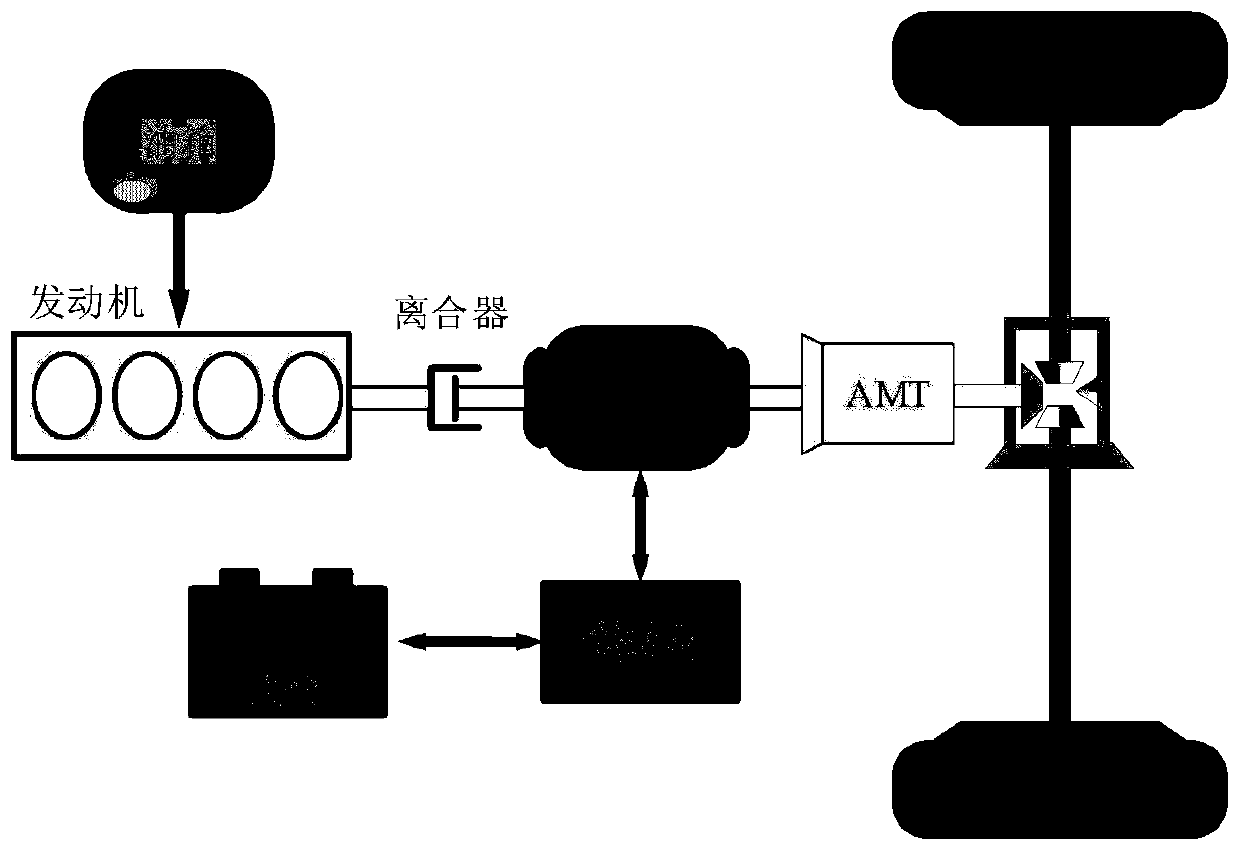
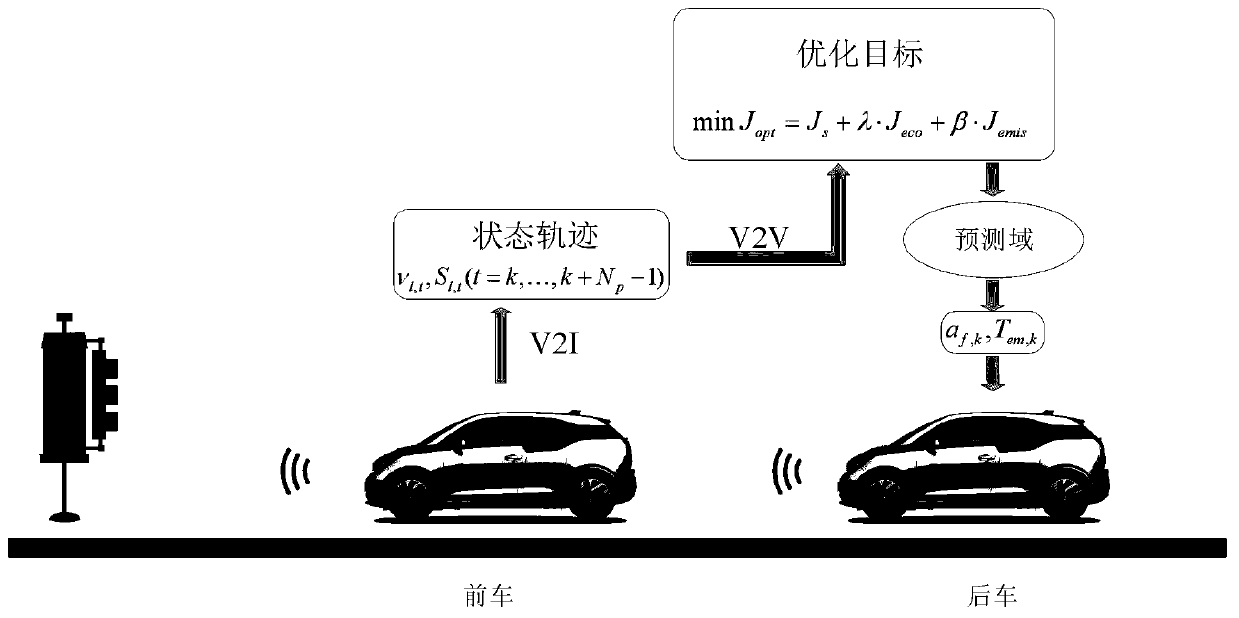
The invention relates to a multi-target energy management method in HEV self-adaptive cruise based on MPC, and belongs to the field of new energy vehicles. The method comprises the steps that S1, performing HEV following process and power traditional system modeling, calculating the required torque of a whole vehicle at the corresponding moment, and considering an engine emission model; S2, considering each comprehensive performance requirement in the car following process, and respectively calculating cost functions corresponding to the car following safety, the fuel economy and the emissionperformance; S3, adopting an MPC algorithm to predict the required torque of the vehicle at the future moment, and therefore a total cost function in a prediction domain is worked out; and S4, according to the total cost function obtained in the S3, minimizing the target function to obtain optimal torque distribution, so that the engine works in a high-efficiency region. The safety, the fuel economy and the low emission performance of the automobile in the following process are considered, and energy consumption and pollution of automobile emissions to the environment can be reduced while thetraffic pressure is relieved.
Need to check novelty before this filing date? Find Prior Art

Description

technical field

[0001] The invention belongs to the field of new energy vehicles, and relates to a multi-objective energy management method in hybrid electric vehicle HEV adaptive cruise based on model predictive control (Model Predictive Control, MPC). Background technique

[0002] Hybrid electric vehicles (HEVs) have lower energy consumption and fewer harmful emissions than conventional fuel-powered vehicles due to more degrees of freedom provided by reversible energy storage devices and electric motors. In HEVs, the Energy Management Strategy (EMS) has a significant impact on fuel economy. The design and performance of EMS are affected by external factors such as traffic conditions, future traffic information, and road conditions.

[0003] At the same time, researchers are vigorously developing technologies for connected vehicles (CAVs). Through vehicle-to-vehicle (V2V) and vehicle-to-infrastructure (V2I), these technologies enable vehicles to share and exchange informa...

Examples

Embodiment Construction

[0051] Embodiments of the present invention are described below through specific examples, and those skilled in the art can easily understand other advantages and effects of the present invention from the content disclosed in this specification. The present invention can also be implemented or applied through other different specific implementation modes, and various modifications or changes can be made to the details in this specification based on different viewpoints and applications without departing from the spirit of the present invention. It should be noted that the diagrams provided in the following embodiments are only schematically illustrating the basic concept of the present invention, and the following embodiments and the features in the embodiments can be combined with each other in the case of no conflict.

[0052] Wherein, the accompanying drawings are for illustrative purposes only, and represent only schematic diagrams, rather than physical drawings, and should...