
Water vapor cycle based on supercritical and subcritical heat regeneration
A supercritical, water-vapor technology, applied in steam engine installations, machines/engines, mechanical equipment, etc., can solve the problems of complex equipment and pipeline structure and low income.
- Summary
- Abstract
- Description
- Claims
- Application Information
AI Technical Summary
Problems solved by technology
Method used
Image

Examples
Embodiment 1
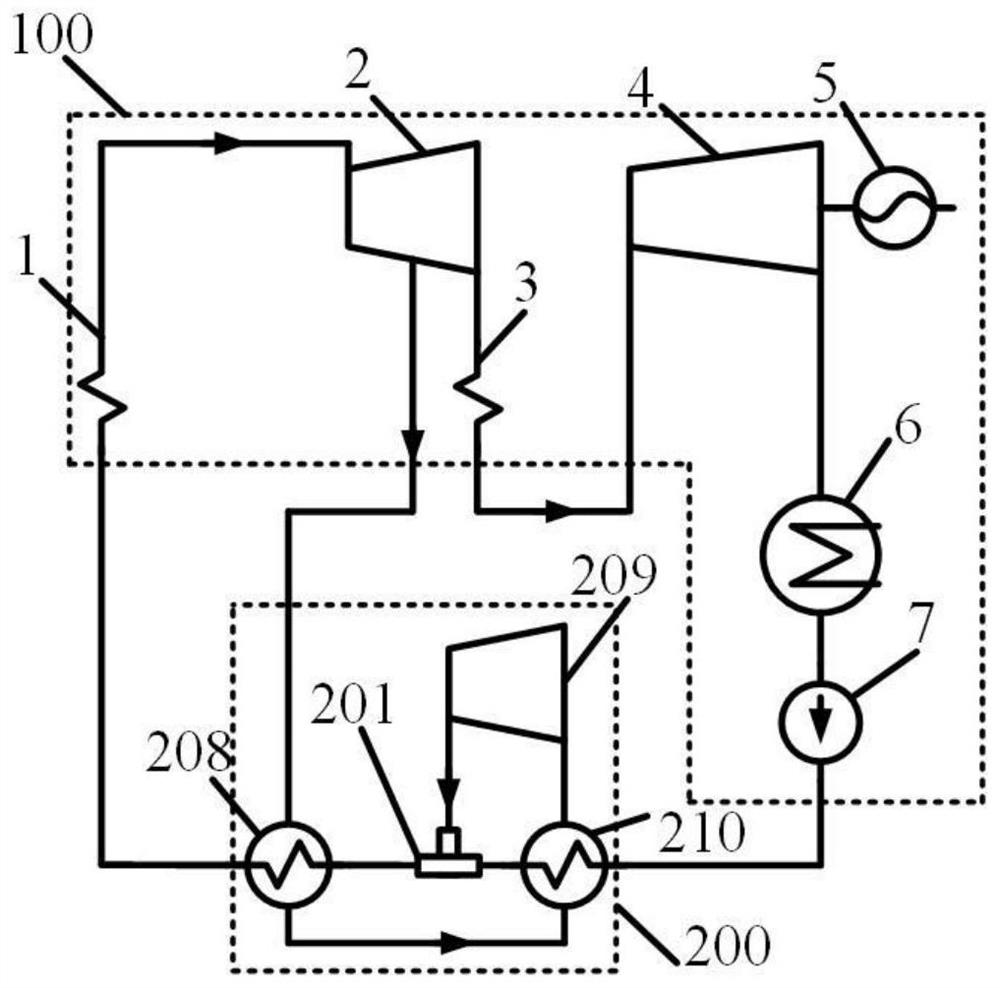
[0031] When Example 1 works,
[0032] In the compression supercritical heat recovery system 200, the low temperature working medium (low temperature water) entering from the low temperature water inlet of the compression supercritical heat recovery system 200 (the low temperature water inlet of the second high temperature regenerator 210) passes through the second high temperature heat recovery system. After exchanging heat with the high-temperature steam flowing out of the first high-temperature regenerator 208, the high-temperature steam flowing out of the first compressor 209 joins at the main tee 201, and then enters the first high-temperature regenerator 208 together with the compressor. The high-temperature steam inlet of the supercritical heat recovery system 200 (the high-temperature steam inlet of the first high-temperature regenerator 208) flows into the high-temperature steam with a steam pressure of 22.1-26MPa for heat exchange and is heated to 400°C-490°C; the seco...
Embodiment 2
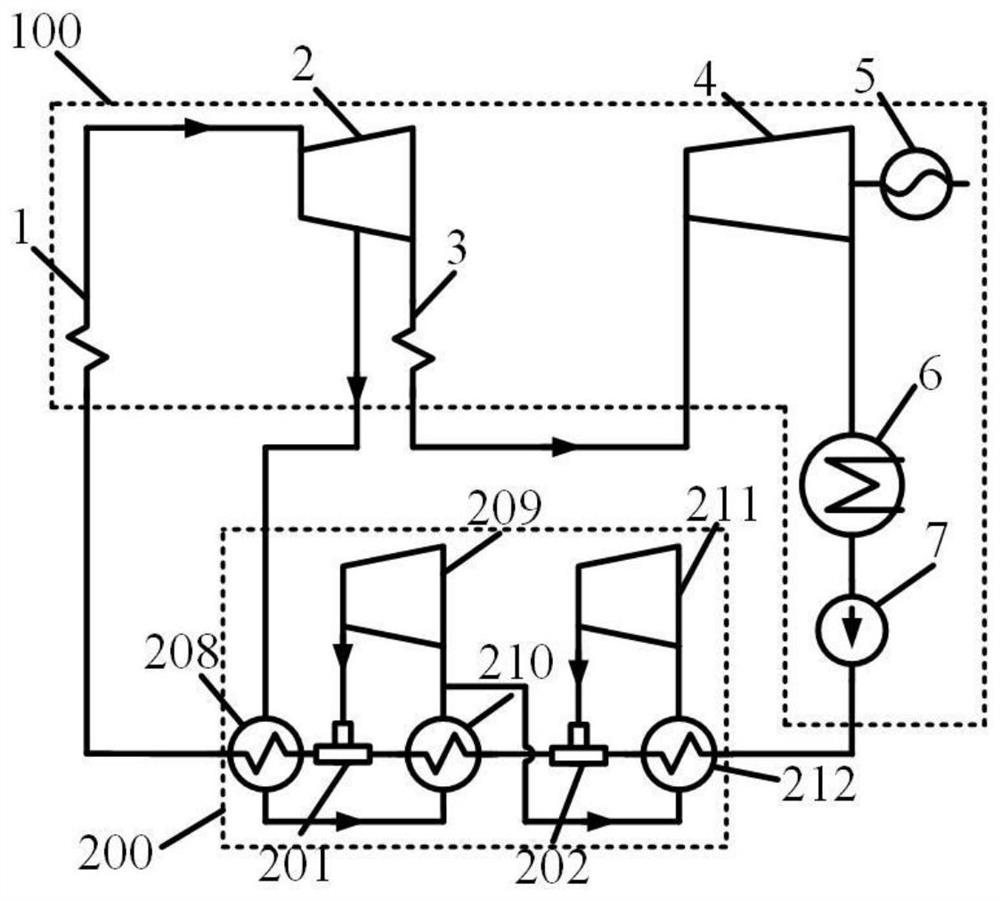
[0035] When Example 2 works,
[0036] In the compression supercritical heat recovery system 200, the low temperature water entering from the low temperature water inlet of the compression supercritical heat recovery system 200 (the low temperature water inlet of the third high temperature regenerator 212) passes through the third high temperature regenerator 212 and the second After heat exchange, the high-temperature steam flowing out of the high-temperature regenerator 210 merges with the low-temperature steam flowing out of the second compressor 211 at the auxiliary tee 202, and then enters the second high-temperature regenerator 210 and the first high-temperature regenerator 208 After exchanging heat, the outgoing high-temperature steam merges with the low-temperature steam compressed by the first compressor 209 at the main tee 201, and then enters the high-temperature steam inlet of the first high-temperature regenerator 208 and the compression supercritical heat recovery ...
Embodiment 3
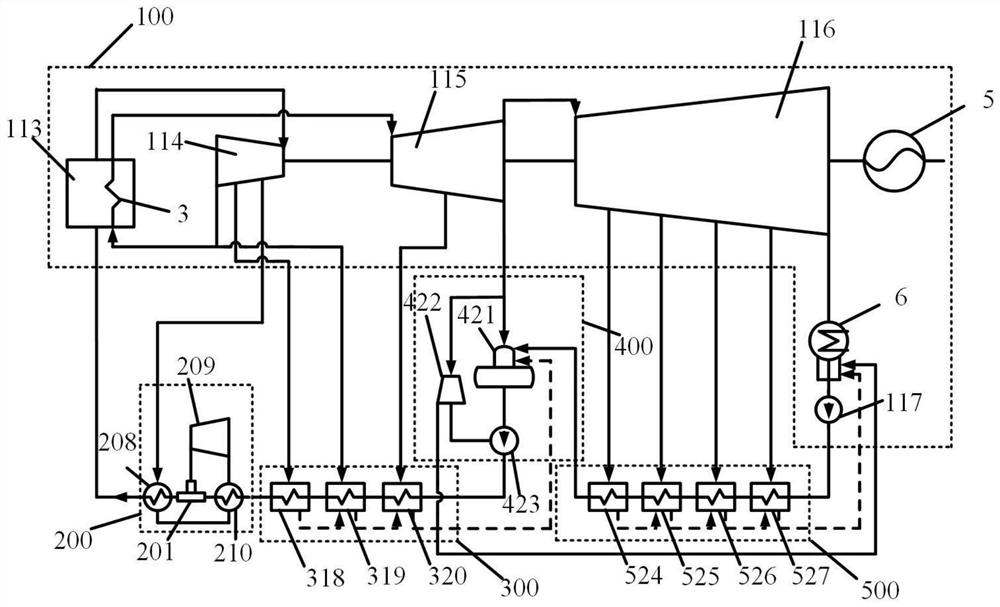
[0043] When working in Example 3,
[0044] In the compression supercritical heat recovery system 200, the low-temperature steam with a temperature of 321°C entering from the low-temperature water inlet of the compression supercritical heat recovery system 200 (the low-temperature water inlet of the second high-temperature regenerator 210) passes through the second high-temperature heat recovery system. After exchanging heat with the high-temperature steam flowing out of the first high-temperature regenerator 208, the high-temperature steam flowing out of the first compressor 209 at the main tee 201 merges with the low-temperature steam flowing out of the first compressor 209, and then enters the first high-temperature regenerator 208 together with the compressor The high-temperature steam inlet of the supercritical heat recovery system 200 (the high-temperature steam inlet of the first high-temperature regenerator 208 ) flows into the high-temperature steam for heat exchange, a...
PUM
 Login to View More
 Abstract
Description
Claims
Application Information
 Login to View More