
Converter circuit, corresponding device and method
A circuit and logic circuit technology, applied in the field of converter circuits, can solve the problems of hysteresis controller differential steady-state PWM frequency, slow transient response, etc., to achieve enhanced transient response, wide output range, and improved inductor current conversion rate Effect
- Summary
- Abstract
- Description
- Claims
- Application Information
AI Technical Summary
Problems solved by technology
Method used
Image

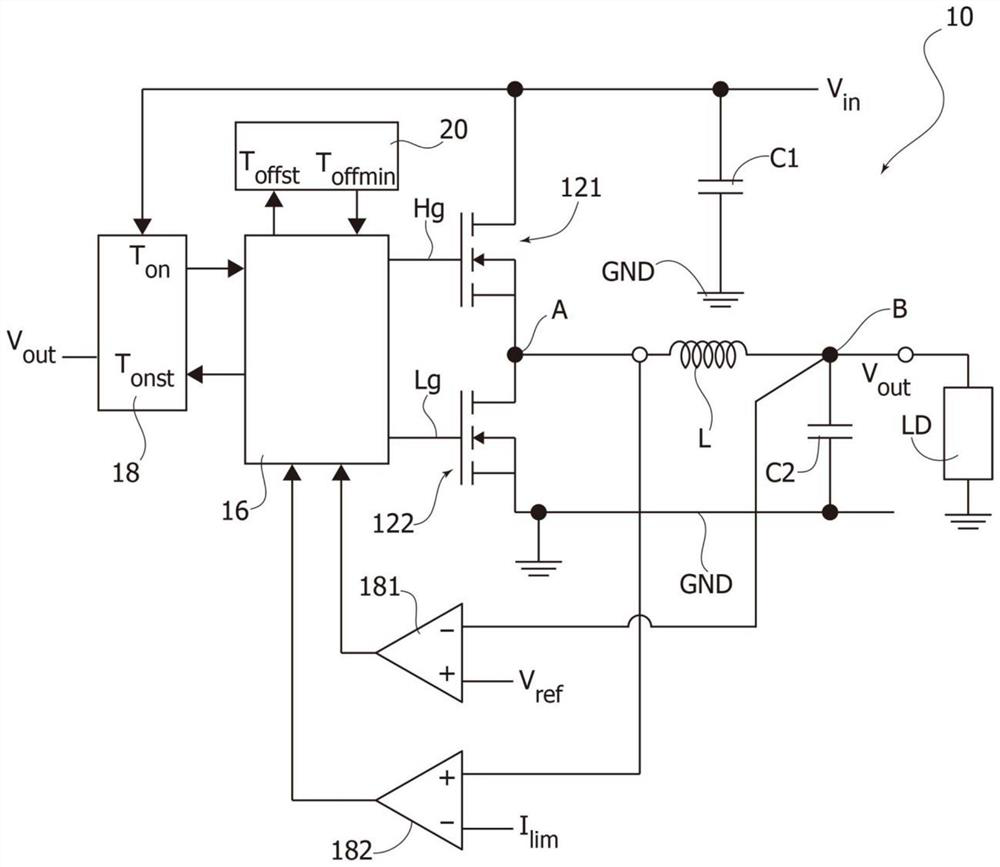
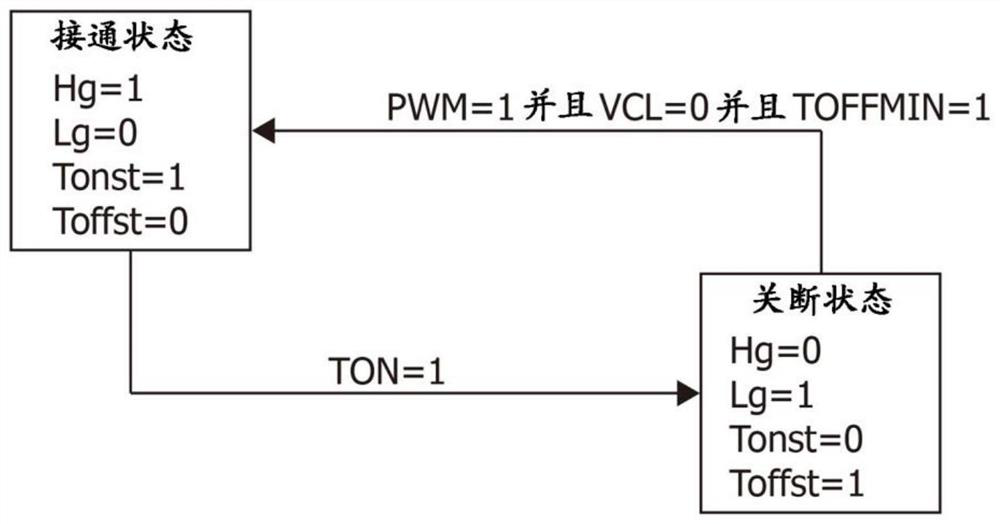
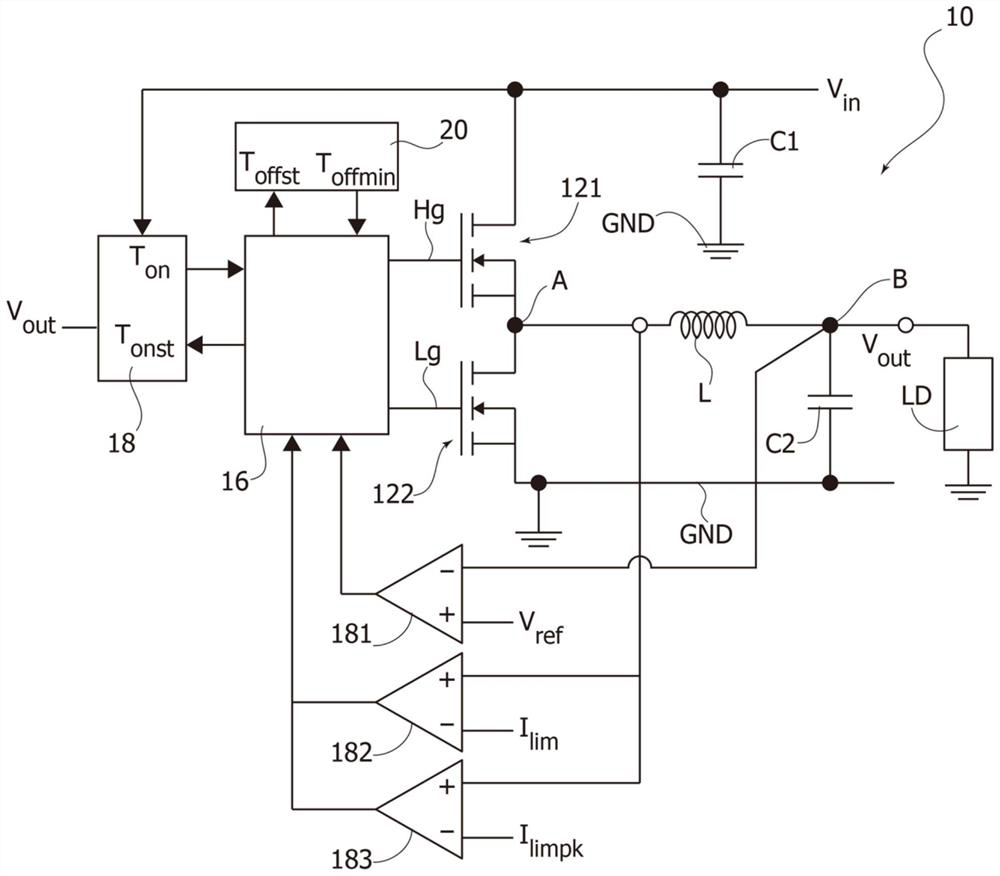
Examples
Embodiment Construction
[0038] In the ensuing description, one or more specific details are set forth in order to provide an in-depth understanding of examples of the described embodiments. Embodiments may be obtained without one or more of the specific details, or with other methods, components, materials, etc. In other instances, known structures, materials, or operations are not shown or described in detail so as not to obscure aspects of the embodiments.
[0039] References to "an embodiment" or "one embodiment" in the context of the present description are intended to indicate that a particular configuration, structure or characteristic described with respect to the embodiment is included in at least one embodiment. Thus, phrases such as "in an embodiment" or "in one embodiment," which may appear at one or more points in the description, are not necessarily referring to the same embodiment.
[0040] Furthermore, particular configurations, structures or characteristics may be combined in any sui...
PUM
 Login to View More
 Abstract
Description
Claims
Application Information
 Login to View More