
Oil extraction process method for heavy oil well
A technology for heavy oil reservoirs and oil production wells, which is applied in the field of conventional heavy oil wells in the field of conventional heavy oil wells to reduce viscosity, blockage, adjust and increase efficiency, and can solve problems such as uneven water injection effects, increased water injection production costs, and high construction risks. The effect of uneven water injection effect, reduction of water flooding production cost, and broad prospect of technology market
Patent Information
- Authority / Receiving Office
- CN · China
- Patent Type
- Applications(China)
- Current Assignee / Owner
- Publication Date
- 2022-02-25
Smart Images
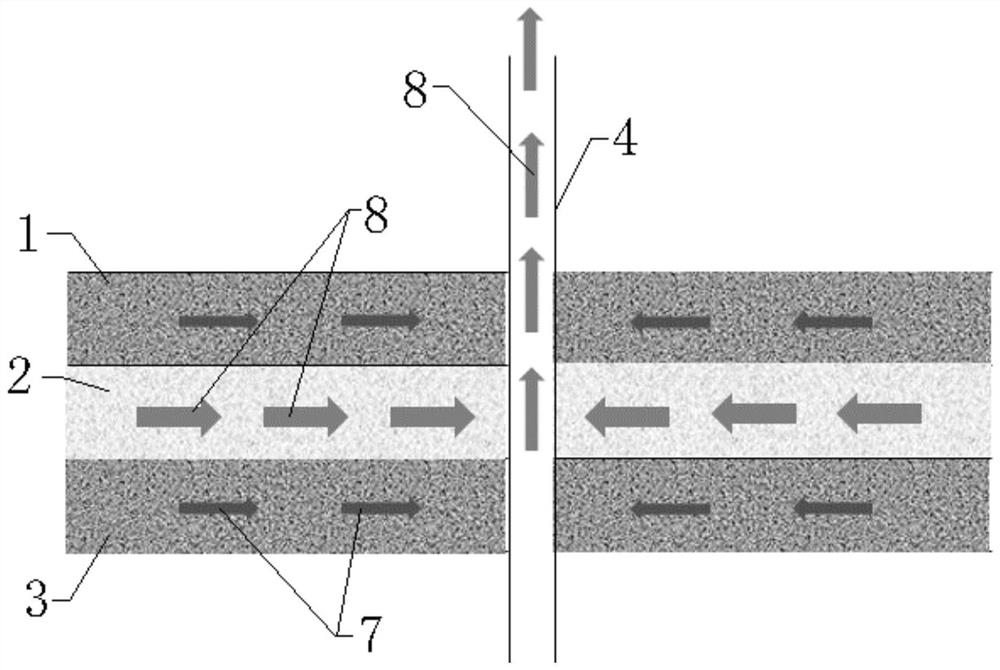
Figure 1 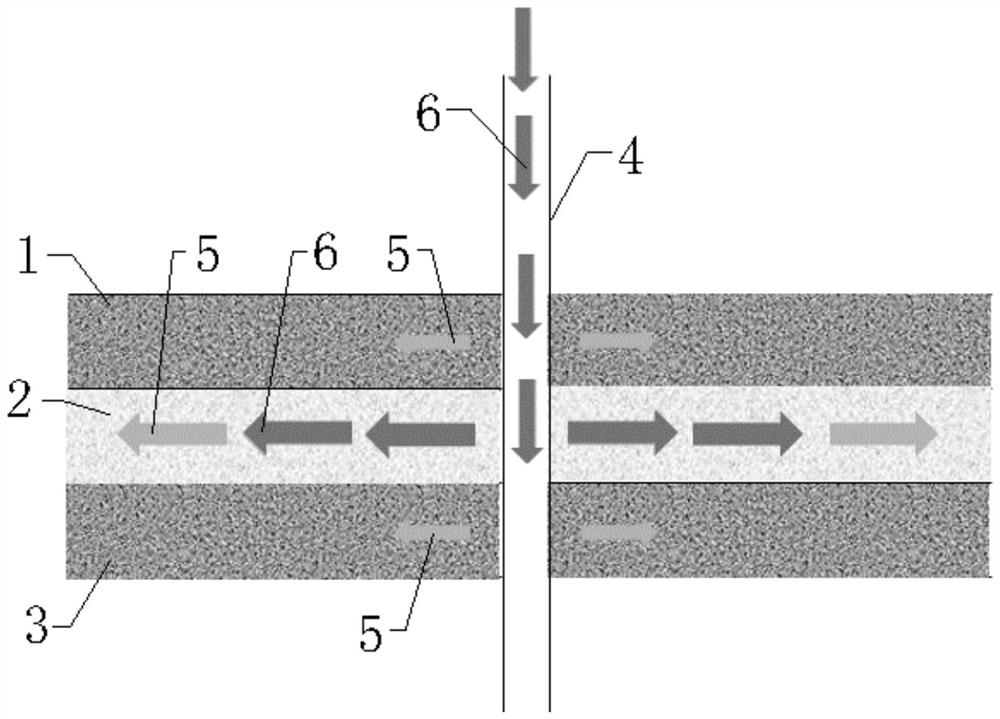
Figure 2 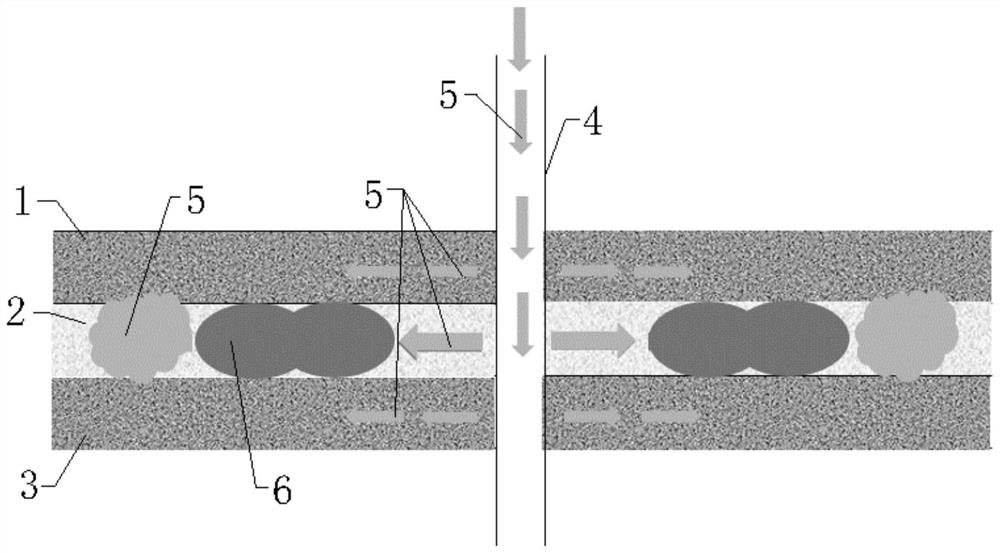
Figure 3
Abstract
Description
technical field
[0001] This article involves but is not limited to a heavy oil well recovery technology, especially relates to but is not limited to a conventional heavy oil well viscosity reduction blockage adjustment compound enhanced oil recovery technology. Background technique
[0002] By the end of 2019, the tertiary geological reserves of heavy oil reservoirs in the Bohai region accounted for 58.2% of the total reserves, and conventional heavy oil accounted for 72% of the heavy oil reserves. Conventional heavy oil is an important part of the oil reservoirs in the Bohai region. However, there are some problems in the development and production of conventional heavy oil as follows: (1) The effect of water injection is uneven, the water content of oil wells varies greatly, and the plane contradiction is prominent; (2) After the dominant seepage channel is formed, the injection water circulates ineffectively, which increases the cost of water injection production; 3) The ...
Examples
Embodiment 1
[0062] The oil well described in this embodiment is a directional well, the crude oil viscosity of this well is 8000mPa.s (according to GB / T265-1988 standard), and the crude oil density is 0.94g / cm 3 , the colloidal asphaltene content is 37wt.%, the wax content is 6.68wt.%, the oblique thickness of the oil layer is 46.3m, the vertical thickness is 23.1m, the average porosity of the reservoir is 29.8%, and the target formation from 3352.8m to 3492.6m can be regarded as Oil layer 1, oil layer 2 and oil layer 3, among them, 3352.8m to 3393m can be regarded as oil layer 1 with a permeability of 38mD and a vertical thickness of 9.2m; 3402.5m to 3418.9m can be regarded as oil layer 2 with a permeability of 1056mD and a vertical thickness of 3.1m ; 3424.7 to 3492.6m can be regarded as oil layer 3, the permeability is 51mD, the vertical thickness is 10.8m, the water content of the well is 94.2%, and the daily oil production is 20m 3 / d, recovery degree 15.5%;
[0063] The first fluid...
Embodiment 2
[0078] The oil well described in this embodiment is another directional well different from that of Embodiment 1, the crude oil viscosity of this well is 9500mPa.s, and the crude oil density is 0.95g / cm 3 , the colloidal asphaltene content is 39wt.%, and the wax content is 7.68wt.%. Compared with Example 1, the crude oil viscosity, density, colloidal asphaltene content and wax content of this well are higher, and the oblique thickness of the oil layer is 55.9 m, vertical thickness 37.1m, average reservoir porosity 30.5%, target formations from 3766.2m to 3961.9m can be regarded as oil layer 1, oil layer 2 and oil layer 3, 3766.2m to 3846.7m can be regarded as oil layer 1, and the permeability is 60mD , the vertical thickness is 19.2m; 3859.6m to 3884.1m can be regarded as the oil layer 2, the permeability is 1700mD, and the vertical thickness is 3.5m; 3888.6 to 3961.9m can be regarded as the oil layer 3, the permeability is 79mD, and the vertical thickness is 14.4m, and the emb...