Swanson is similarly unconcerned about the examinee
response time.
This type of measurement is subject to a number of errors that make
response time results relatively imprecise.
The effects of recent foods and beverages, medicines, amount of sleep and other factors that affect
alertness or drowsiness all influence response speed and accuracy, so that measurements on any single day may not represent actual average performance level.
A key source of measurement error is change in motivation to respond quickly.
Typically the error rate increases (incorrect responses are made more frequently) when people try harder to react quickly.
Response speed may also vary from second to second and minute to minute as a result of boredom with the test, short-term fatigue from repeated motion, eye strain from
staring at the computer screen, and stimulus patterns that confuse the user and cause response errors.
All of these factors together make precise performance measurement all but impossible.
The average value of 0.63 has not changed appreciably during the last two decades, indicating that attempts to improve
measurement reliability have generally met with little success.
He cannot drive and cannot find work because his coordination and memory are affected.
His relatively expensive medicines give no apparent benefit.
The medicines do however dry his mouth and cause his teeth to crack, causing him to lose three teeth during the last several months.
His physician advised him to take a recommended performance
test battery just once a year because he cannot afford the cost of more frequent evaluations.
He must therefore wait for very long periods of time before obtaining objective evidence that his medications are or are not helping him--time he can ill afford since his
disease is growing steadily worse.
And of course after such long waiting periods, any performance benefits provided by his medications may be cancelled by the steady decline from his chronic illness.
If his medicines are effective, his annual decline may be decreased by half a percentage point or perhaps several percentage points--however he most probably cannot measure this benefit because once-a-year testing is not accurate enough to measure changes smaller than 5%.
So the test results for which SF must wait so long, and pay so much for, are largely worthless to him and his physician since they will not be precise enough to indicate whether his medicines helped him.
This type of data trimming certainly reduces variability--but it also reduces the amount of useable data and therefore reduces
measurement precision, which is related to the amount of data.
Such gradual improvement can
mask benefits of medication or other health strategies, or can
mask harm due to
exposure to pollutants, fatigue, etc.
This practice-until-no-more-improvement-occurs strategy was not generally successful since improvement typically occurs over hundreds or even thousands of responses.
This strategy is of course impractical for people like SF when the expense and effort of travel and testing are high.
None have evidently attempted to determine the precision with which response time measurements are made.
Their use of the
phrase "test-retest reliability" illustrates the difficulty that can arise when a term used to define
measurement precision is given different meanings by different investigators.
No discussion of performance
measurement precision or test-retest reliability is provided, and there is no determination of the precision with which response time measurements are made.
His choice of 7 or 10 digit sequences quite likely results in
frustration for individuals who cannot
handle such long numbers and reduced precision for individuals who can
handle 10 digits readily.
Buschke's 1993 "cognitive
speedometer" (1993; U.S. Pat. No. 5,230,629) involves relatively sophisticated control measurements but also does not determine measurement precision or employ
signal-sequence restrictions.
He does attempt to control the speed-accuracy ratio by keeping errors below an upper limit but does not ask examinee's to proceed quickly enough to make at least a minimum number of errors.
He also does not encourage examinees to proceed quickly enough to make a minimum acceptable number of errors and therefore allows more response speed variability than optimal.
Keller's response speed and accuracy
measurement device (1992; U.S. Pat. No. 5,079,726) also does not allow the same digit twice in a row within each 5 digit
signal, and several other restrictions are also imposed.
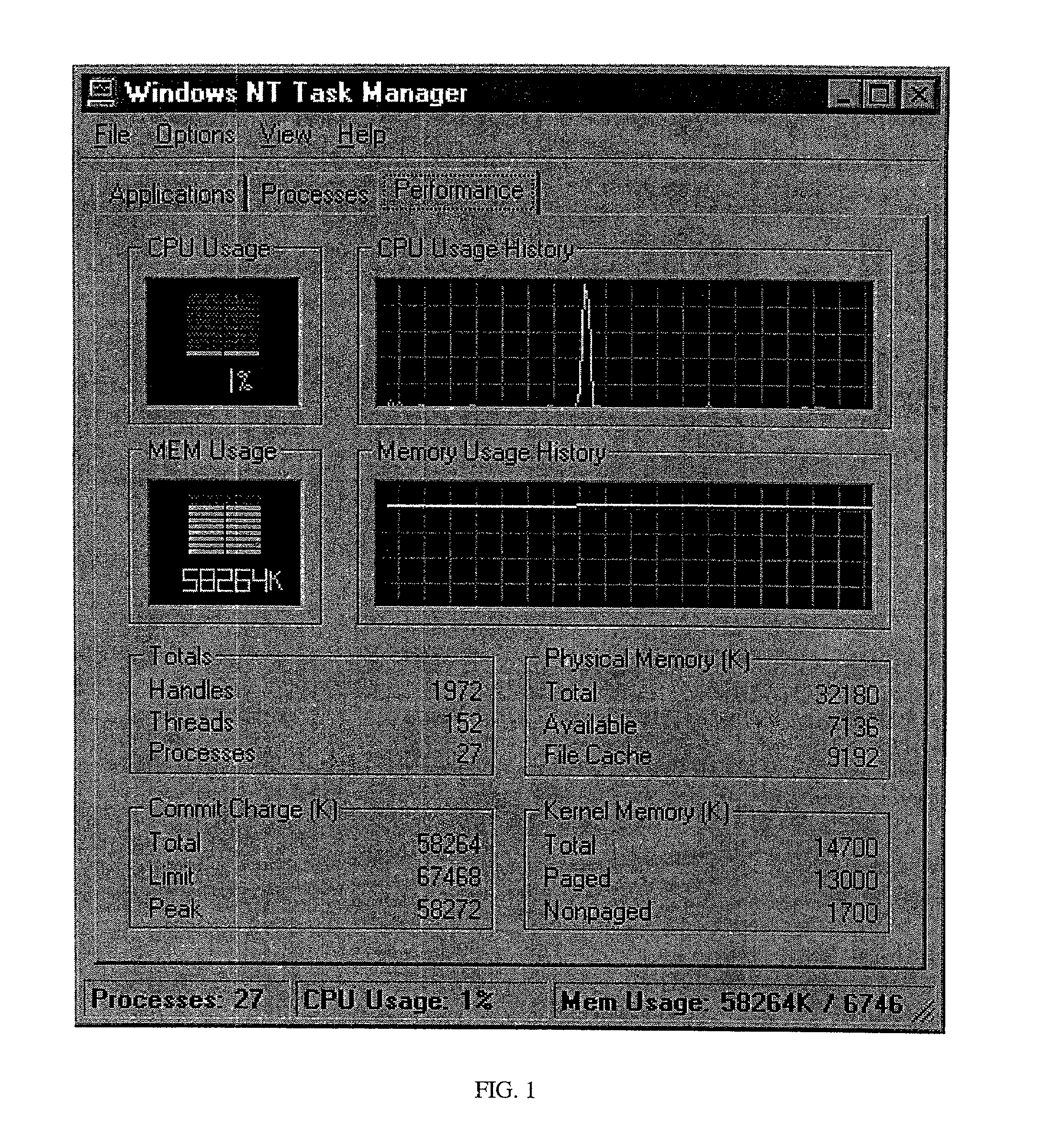
The problem is particularly severe in the most powerful, modern computers, which have large numbers of background processes.


 Login to View More
  Login to View More