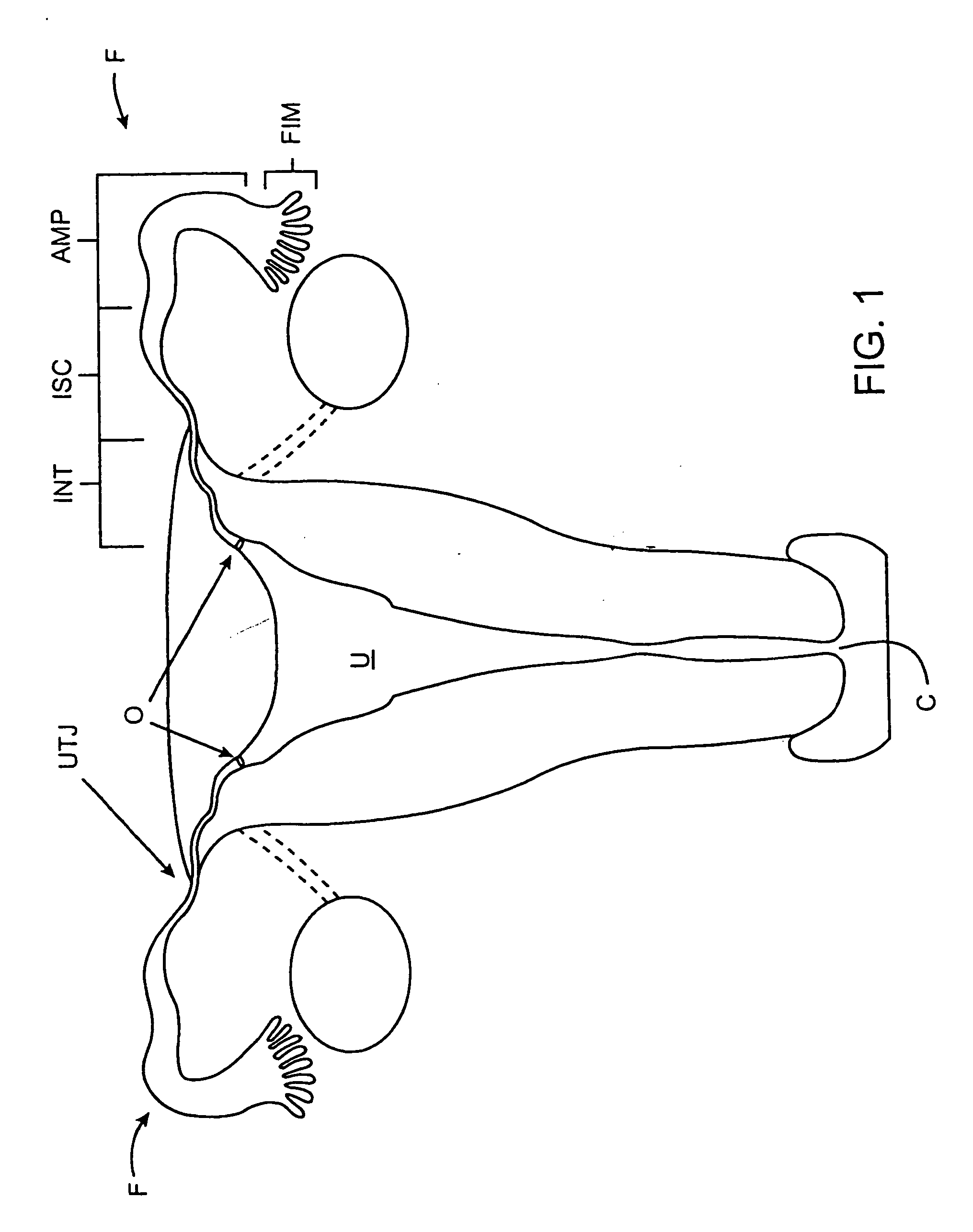
[0010] The present invention generally provides improved medical devices, systems, and methods. The techniques of the present invention are particularly useful for improving the ease, speed, and reliability with which
contraceptive devices can be deployed transcervically into an
ostium of a
fallopian tube. The invention generally provides intrafallopian contraceptive systems having a
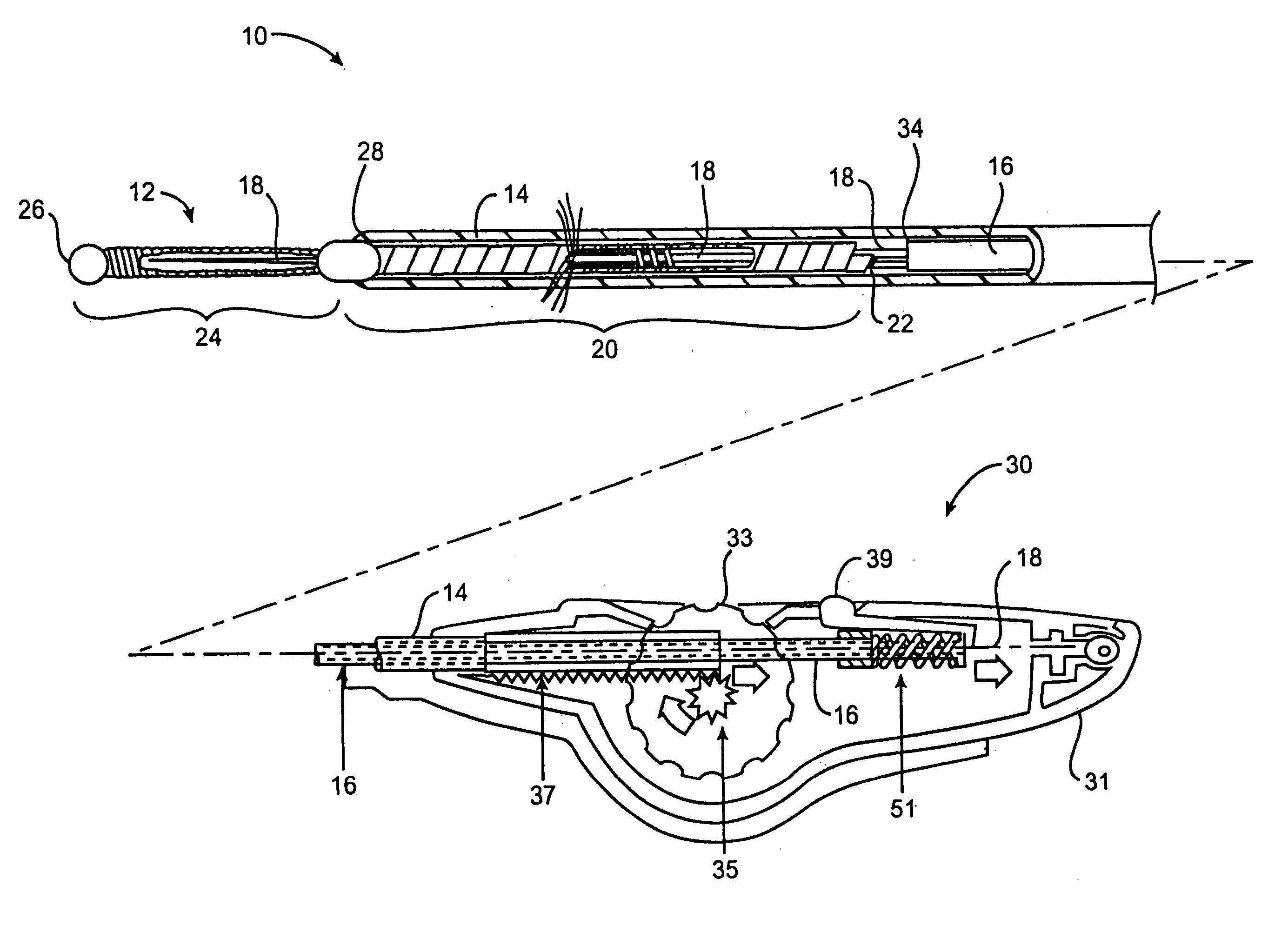
handle adapted for manipulation and actuation by a single hand of a healthcare provider. Typically, the
handle includes at least one
actuator which can be manipulated by the same hand used to grip the handle. In many embodiments, the healthcare provider can advance the contraceptive device into an
ostium of a
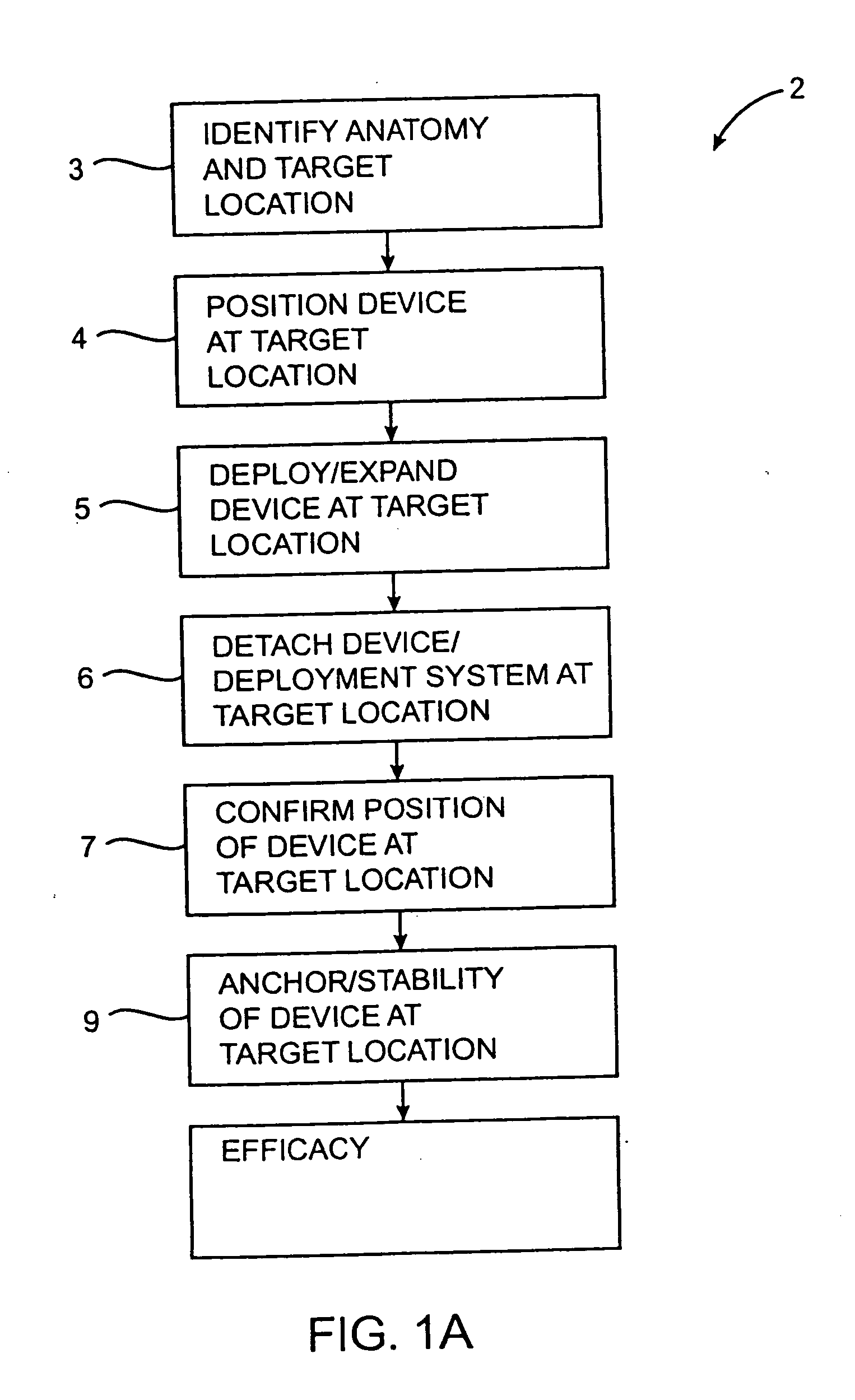
fallopian tube by manipulating the handle, can withdraw a sheath from around the contraceptive device, can expand the contraceptive device from a small profile configuration to a large profile configuration, and / or can detach the expanded contraceptive device from the remaining components of the contraceptive
system, ideally all with one hand. Advantageously, this leaves the other hand free to grasp and manipulate a hysteroscope, allowing the healthcare provider to orient the
system toward the tubal ostium and effect its deployment while optically viewing and verifying the deployment, rather than relying on coordinating the efforts of two separate individuals to access the
target site and deploy the contraceptive device. Deployment may, alternatively, be directed under a variety of
imaging modalities, including
ultrasound,
fluoroscopy, or possibly even with tactile guidance. Mechanically
coupling the various elongate deployment components to a common proximal housing can also avoid
confusion over which component is to be moved, and which is to be maintained at a
fixed position. Hence, the invention facilitates deployment of intrafallopian
contraceptive devices in a wide variety of healthcare settings.
[0012] Preferably, the contraceptive
delivery system will further include a sheath having a lumen that slidably receives the receptacle so that movement of the at least one
actuator withdraws the sheath proximally from the contraceptive device. This arrangement allows the healthcare provider to maintain the position of the contraceptive device by holding the handle at a
fixed position with the same hand that is used to move the
actuator. This leaves the other hand free to support the hysteroscope, which will often be used to optically direct the deployment procedure.
[0014] In some embodiments, a first movement of a dual-function actuator relative to the handle moves the sheath relative to the first elongate body without moving the second elongate body relative to the first elongate body. A second movement of the dual-function actuator after the first movement moves the second elongate body relative to the first elongate body. Optionally, a latch may releasably restrain movement of the second elongate body relative to the first elongate body. As the first elongate body will often releasably hold the contraceptive device, this can keep the device at the target location during at least a part of the deployment procedure. The first elongate body may threadingly engage the contraceptive device, and may be decoupled from the contraceptive device by rotating the handle or a decoupling actuator.
[0016] In yet another aspect, the invention provides a
medical device comprising an elongate guiding structure having a proximal end and a distal end. The guiding structure is laterally flexible and increases in flexibility toward the distal end so that the guiding structure is suitable for distally tracking a body lumen. A proximal handle is affixed adjacent the proximal end of the guiding structure. The handle has a slot that laterally receives the guiding structure adjacent the distal end. A
detent is capable of restraining the guiding structure within the slot to facilitate introducing the
distal portion into a lumen.
[0018] Generally, a hysteroscope is manipulated by another hand of the healthcare worker to orient the contraceptive device toward the ostium while the healthcare worker views an image of the ostium with the hysteroscope. This allows the healthcare worker to simultaneously manipulate these two components of the contraceptive
delivery system, avoiding complex coordination between two individuals.



 Login to View More
  Login to View More